
Journal of Earth Sciences, Geology and Geospatial Research (Annual (One issue per year))
Publish Your Next High-Impact Research with JESG
Join a global community of researchers and contribute to a sustainable future.
Editorial Board
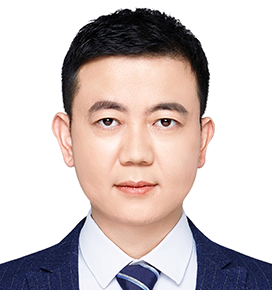
Haijun Qiu (Ph.D) (Editor-in-Chief)
[Institutional Profile Link]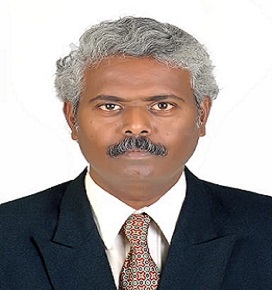
S Balaselvakumar (Ph.D) (Deputy Editor)
[Institutional Profile Link]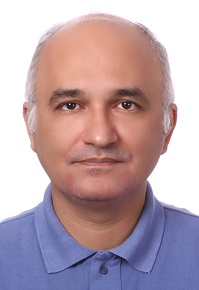
Ali Mohammadzadeh (Ph.D) (Deputy Editor)
[Institutional Profile Link]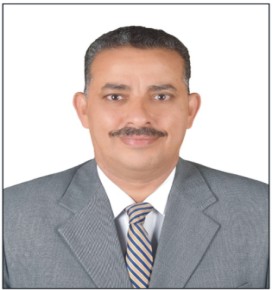
Mokhles Kamal Azer (Ph.D) (Associate Editor)
[Institutional Profile Link]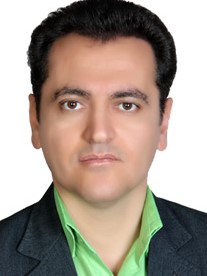
Majid Nemati (Ph.D) (Associate Editor)
[Institutional Profile Link]
Linchuan Fang (Ph.D) (Associate Editor)
[Institutional Profile Link]
Yousef Bahrami (Ph.D) (Section Editor)
[Institutional Profile Link]
Xiao Tan (Ph.D) (Section Editor)
[Institutional Profile Link]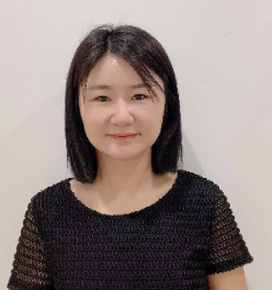
Ling Zeng (Ph.D) (Section Editor)
[Institutional Profile Link]
Bappa Mukherjee (Ph.D) (Editor-Member)
[Institutional Profile Link]Article Processing Timeline
- 1 2-5 Days Initial Quality & Plagiarism Check
- 2 15-30 Days Peer Review Feedback
- 3 45-60 Days Total Article Processing Time
Editorial & Publication Information
| Language of Publication | English |
| Type of Peer Review | Single-Blind |
| Manuscript Acceptance Rate | 17% |
| Recommended Similarity Limit | Below 18% |
| Publishing Model | Open Access |
Every submission is reviewed by the editors and checked for originality as part of the journal's assessment process. The acceptance rate is drawn from journal-level editorial records and is subject to change. Similarity reports are evaluated by the editors, and decisions are never based on the similarity percentage alone.
About the Journal
The Journal of Earth Sciences, Geology and Geospatial Research is an international, peer-reviewed, open-access scholarly journal dedicated to publishing high-quality research that advances the understanding of Earth's systems, geological processes, geospatial technologies, and sustainable management of natural resources. The journal provides a multidisciplinary platform for geoscientists, geologists, environmental scientists, geographers, engineers, remote sensing specialists, policymakers, and researchers to disseminate innovative scientific discoveries, emerging methodologies, and practical applications that address contemporary challenges affecting the Earth and its environment.
The journal welcomes original research articles, review articles, case studies, short communications, technical notes, and perspective papers spanning the broad disciplines of Earth sciences, geology, geophysics, geochemistry, geomorphology, hydrogeology, mineral and energy resources, tectonics, seismology, volcanology, paleontology, environmental geology, climatology, ocean and atmospheric sciences, cryosphere research, remote sensing, geographic information systems (GIS), geographic information science (GIScience), geospatial analytics, Earth observation, spatial modeling, and environmental monitoring. Particular emphasis is placed on interdisciplinary research that integrates geological sciences with advanced geospatial technologies, artificial intelligence, data analytics, and computational methods to improve scientific understanding and support evidence-based decision-making.
The journal encourages research that contributes to sustainable resource management, natural hazard assessment, disaster risk reduction, climate resilience, environmental conservation, land-use planning, urban and regional development, ecosystem monitoring, water resource management, renewable energy exploration, carbon management, and geospatial intelligence. Studies that address the impacts of climate change, environmental degradation, biodiversity conservation, and sustainable development through innovative geoscientific and geospatial approaches are particularly welcomed.
All submitted manuscripts undergo a rigorous and transparent peer-review process conducted by independent experts to ensure scientific quality, originality, methodological rigor, and ethical integrity. As an open-access journal, all published articles are freely and permanently accessible worldwide, promoting unrestricted dissemination of knowledge, interdisciplinary collaboration, and greater visibility and impact for published research.
Committed to excellence in scholarly publishing, the Journal of Earth Sciences, Geology and Geospatial Research strives to advance scientific understanding of Earth's dynamic systems while supporting sustainable environmental stewardship and technological innovation. Through timely publication, high editorial standards, and global accessibility, the journal serves as a trusted resource for researchers, practitioners, educators, and policymakers working to address present and future challenges in Earth sciences, geology, and geospatial research.
Editorial and Peer-Review Policy
Journal of Earth Sciences, Geology and Geospatial Research adheres to a strict single-blind peer-review process to maintain the quality, integrity, and scientific validity of all published work.
Key features include:
- Each manuscript is reviewed by at least two independent experts in the field, along with an academic editor.
- Reviewers know who the authors are, but the authors remain unaware of the reviewer's identities.
- The evaluations emphasize scientific merit, originality, methodological rigor, ethical compliance, and how well the work fits within the journal's scope.
- Every submission goes through plagiarism checks and ethical compliance assessments before the review process begins.
- The final decision on publication is based on the reviewer's recommendations and the editor's evaluation.
Publication Frequency & Format
This journal comes out Annual (One issue per year). Accepted articles are made available online in both HTML and PDF formats, ensuring that scholarly work is accessible and disseminated promptly.
Open Access Policy
At Colloquys Publishing, we are committed to advancing scholarly communication through an Open Access publishing model that ensures research is freely and permanently accessible to readers worldwide. All articles accepted for publication are made available online without subscription or access barriers, enabling researchers, educators, practitioners, policymakers, and the public to benefit from high-quality scholarly research.
Our Open Access approach promotes the broad dissemination of knowledge, encourages global collaboration, and enhances the visibility and impact of published research. By providing unrestricted access to peer-reviewed articles, we support the exchange of scientific knowledge across disciplines while fostering transparency, innovation, and academic excellence.
Authors retain the copyright to their original work while granting Colloquys Publishing the non-exclusive rights required to publish, distribute, and maintain the scholarly record. Published content may be accessed, shared, and reused in accordance with the applicable publication licence, provided appropriate credit is given to the original authors and source.
Indexing & Archiving
Journal of Earth Sciences, Geology and Geospatial Research is dedicated to upholding high standards with the goal of being included in reputable scientific indexing and abstracting services. The journal also ensures long-term digital preservation through recognized archives and repositories, guaranteeing permanent access and discoverability.
Manuscript Submission
Authors are encouraged to submit their manuscripts through the journal's Online Submission System or by emailing them directly to the Editorial Office at support@colloquys.com.
Manuscripts must adhere to the journal's author guidelines regarding structure, formatting, referencing style, ethical approvals, and necessary disclosures (such as conflicts of interest and funding).
Publication Ethics & Integrity
Journal of Earth Sciences, Geology and Geospatial Research follows internationally recognized standards for publication ethics and research integrity, which include (but are not limited to):
- Make sure you have ethical approval.
- Ensure informed consent and guarantee confidentiality.
- Declare any conflicts of interest.
- Be transparent about data availability.
- Clarify authorship criteria and the roles of contributors.
- Conduct anti-plagiarism checks.
- Have a clear policy for retraction and correction.
 Abstract
 HTML
HTML
 PDF
PDF