
Journal of Earth Sciences, Geology and Geospatial Research (Annual (One issue per year))
Majid Nemati (Ph.D)
| Affiliation | Department of Geology, Shahid Bahonar University of Kerman, Iran |
|---|---|
| University / Institution | Shahid Bahonar University of Kerman |
| Department | Department of Geology |
| Designation | Professor |
| nematimajid_1974@uk.ac.ir | |
| Country | Iran |
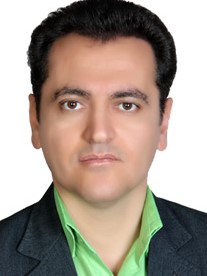
Prof. Majid Nemati is a Professor in the Department of Geology, Faculty of Science, and serves as the Head of the Earthquake Research Center at Shahid Bahonar University of Kerman, Iran. Born on 16 September 1974 in Saveh, Iran, he specializes in Earthquake Seismology, Seismotectonics, Active Tectonics, and Earthquake Hazard Assessment.
He earned his Ph.D. (2011) and M.Sc. (2006) in Earthquake Seismology from the Institute of Geophysics, University of Tehran, following a B.Sc. in Mining Engineering from the Isfahan University of Technology (1996).
Prof. Nemati began his professional career as a Mine Engineer in the coal mines of Tabas, eastern Iran (1996–1999). He then served as an Expert in the Geological Survey of Iran, contributing to the Geochemistry and Seismotectonics groups from 1999 to 2010. Since 2011, he has been a Professor in the Department of Geology at Shahid Bahonar University of Kerman and has concurrently served as the Head of the Earthquake Research Center.
His research focuses on earthquake seismology, seismotectonics, seismic hazard and risk assessment, crustal deformation, active faults, geomorphology, engineering geology, and geophysical analysis. He has authored numerous research articles in leading national and international journals, participated in prestigious international conferences, and has made significant contributions to advancing earthquake science and tectonic studies in Iran and surrounding regions. His work continues to support the understanding of seismic hazards and the development of effective earthquake risk mitigation strategies.