The Editorial Board of the journal is responsible for maintaining the quality and integrity of the journal's content. The board members are experts in their respective fields and play a crucial role in the peer review process, ensuring that all articles published meet the highest academic standards.
The Editorial Board is committed to upholding the principles of academic excellence, transparency, and ethical publishing practices. They work closely with authors, reviewers, and the editorial team to facilitate a smooth publication process.
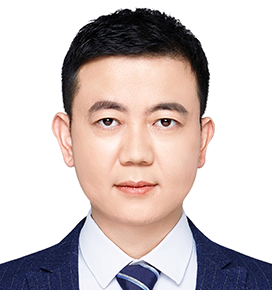
Prof. Haijun Qiu is a Professor and Deputy Dean of the College of Urban and Environmental Sciences at Northwest University, Xi'an, China. He obtained his B.Sc. (2007) and Ph.D. (2012) from Northwest University and completed postdoctoral research at the Institute of Mountain Hazards and Environment, Chinese Academy of Sciences (CAS) from 2014 to 2017. He was a Visiting Scholar at the University of Michigan and the University of Montana during 2017–2018 before becoming a full Professor at Northwest University in 2019. His research focuses on mountain hazard monitoring, landslide early warning, remote sensing, InSAR, geohazard risk mapping, climate change impacts, and disaster prevention. He has been recognized as a National-level Young Talent, High-level Scientific and Technological Leading Talent of the Ministry of Natural Resources, Leading Talent in Scientific and Technological Innovation of Shaanxi Province, Outstanding Young Scientist of Shaanxi Province, and recipient of the "Most Beautiful Geographical Science and Technology Worker" award from the Geographical Society of China. He has published 85 SCI journal articles as first/corresponding author, including 11 ESI Hot Papers and 15 Highly Cited Papers, and has obtained 17 invention patents, 5 software copyrights, and authored 5 books.
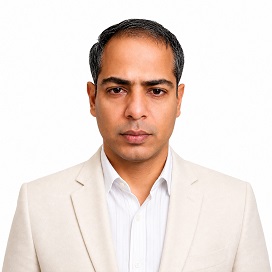
Professor Ali Mohammadzadeh is a Tenured Professor and Head of the LiDAR Laboratory at K.N. Toosi University of Technology, Tehran. He holds a Ph.D. in Civil-Surveying Engineering (2009) and has an H‑index of 29 with over 75 journal publications. His research centers on Artificial Intelligence (Fuzzy Logic, ANNs, and Deep Learning) for remote sensing, alongside extensive work in LiDAR technology across terrestrial, mobile, UAV, aerial, and satellite platforms. He applies advanced image processing, pattern recognition, and machine learning to multi-source optical, thermal, and multispectral data, with strong interests in remote sensing calibration and in‑situ measurements. A major focus is disaster management, developing AI-driven solutions for dust storms, fires, earthquakes, and flooding. He also leads in bio‑geomatics, exploring remote sensing applications in forestry and medical imaging. Previously Faculty Vice‑Dean for Research and Head of the Photogrammetry & Remote Sensing Department, he has supervised over 30 M.Sc. and 6 Ph.D. graduates and serves as Associate Editor for Frontiers in Remote Sensing.
Dr. Linchuan Fang, a Globally Recruited Professor at Wuhan University of Technology, specializes in soil ecology and environmental sciences, with research interests in biogeochemical cycling, soil–plant–microbe interactions, and elemental behavior in terrestrial ecosystems. He has published over 150 SCI papers in high-impact journals, including Nature Communications, Geology, Global Change Biology, and Environmental Science & Technology, garnering over 13,000 citations, with an H-index of 70, and 30 of his papers rank in the top 1% most cited in ecology and environmental science. He has been listed among Stanford University’s Top 2% Scientists worldwide for 2023–2025. Beyond his research, Dr. Fang has demonstrated strong editorial leadership. He currently serves as Deputy Editor-in-Chief of Plant-Environment Interactions and as Guest Editor for Environmental Technology & Innovation and Soil Ecology Letters, where he has managed special issues and overseen rigorous peer review. He also holds key professional roles, including Deputy Director of the Key Laboratory of Green Utilization of Critical Non-metallic Mineral Resources and membership on the Soil Chemistry Committee of the Chinese Soil Science Society.
Prof. Majid Nemati is a Professor in the Department of Geology, Faculty of Science, and serves as the Head of the Earthquake Research Center at Shahid Bahonar University of Kerman, Iran. Born on 16 September 1974 in Saveh, Iran, he specializes in Earthquake Seismology, Seismotectonics, Active Tectonics, and Earthquake Hazard Assessment.
He earned his Ph.D. (2011) and M.Sc. (2006) in Earthquake Seismology from the Institute of Geophysics, University of Tehran, following a B.Sc. in Mining Engineering from the Isfahan University of Technology (1996).
Prof. Nemati began his professional career as a Mine Engineer in the coal mines of Tabas, eastern Iran (1996–1999). He then served as an Expert in the Geological Survey of Iran, contributing to the Geochemistry and Seismotectonics groups from 1999 to 2010. Since 2011, he has been a Professor in the Department of Geology at Shahid Bahonar University of Kerman and has concurrently served as the Head of the Earthquake Research Center.
His research focuses on earthquake seismology, seismotectonics, seismic hazard and risk assessment, crustal deformation, active faults, geomorphology, engineering geology, and geophysical analysis. He has authored numerous research articles in leading national and international journals, participated in prestigious international conferences, and has made significant contributions to advancing earthquake science and tectonic studies in Iran and surrounding regions. His work continues to support the understanding of seismic hazards and the development of effective earthquake risk mitigation strategies.
Ling Zeng is an Associate Professor at Chengdu University of Technology, China. She received her Ph.D. in Geosciences from China University of Geosciences (Beijing) in 2014. Before joining Chengdu University of Technology, she worked as a postdoctoral researcher and visiting scholar at Nanyang Technological University, Singapore.
Her research focuses on geostatistics, spatial and spatiotemporal modeling, machine learning and deep learning applications in geosciences, environmental pollution assessment, remote sensing, soil heavy metal mapping, AI-assisted geological data analysis, and time series prediction. In particular, she has developed strong expertise in deep-learning-based time series forecasting and data-driven modeling for meteorological and environmental applications, including PM2.5 forecasting, ozone prediction, air quality assessment, and the interpretation of meteorological and gaseous pollutant factors.
Dr. Zeng has published extensively on soil heavy metal interpolation, environmental risk assessment, remote sensing-based geological identification, geological image analysis, and atmospheric pollution modeling. Her recent work integrates statistical diagnostics, machine learning, deep learning, SHAP-based interpretability, temporal fusion transformers, and hybrid spatiotemporal models to improve the prediction and explanation of complex environmental processes.
She has also contributed to applied research through several patents, including methods for pollution evaluation, soil heavy metal prediction, and rock and mineral identification using artificial intelligence. She is the sole author of UNetGE Software V1.0 and has co-authored academic books on geoscience data analysis and geostatistics in the AI era.
Her work bridges geoscience, artificial intelligence, statistics, environmental science, and meteorological data analytics, aiming to support more accurate environmental assessment, pollution forecasting, geological interpretation, and sustainable resource and air quality management.
Dr Xiao Tan currently works at the College of Water Conservancy and Hydropower Engineering, Hohai University. Xiao does research in (i) Monitoring and Assessment of Behaviours of Infrastructures Based on Distributed Fibre Optic Sensors; (ii) Intelligent and Resilient Pipelines; (iii) Structural Health Monitoring; (iv) Structural Strengthening and Retrofits.
Developing cutting-edge computational strategies in Mineral Prospectivity, Remote Sensing, Geochemistry, and Landslide.
Prof. Mokhles K. Azer is a distinguished Egyptian geologist and Research Professor at the National Research Centre (NRC), Egypt. Born in Assiut in 1972, he earned his B.Sc. in Geology from Assiut University in 1994, followed by an M.Sc. (2000) and Ph.D. (2004) from Cairo University. He joined the NRC as a research assistant and progressed through the academic ranks to become a Research Professor in 2014. From 2018 to 2024, he served as Head of the Department of Geological Sciences. His scientific excellence has been recognized through numerous prestigious awards, including the State Incentive Award in Basic Science, the NRC Scientific Appreciation Award, the NRC Scientific Excellence Award, the Misr El-Kheir Foundation Award for Best Scientific Publications, and several other national honors.
Prof. Azer has made significant contributions to geoscience research, participating in 37 national and international research projects as a principal investigator, co-investigator, and team member. His scholarly output includes one book, six book chapters, more than 145 internationally indexed research papers, and numerous conference presentations and abstracts. His work has received widespread recognition, reflected in an H-index of 33 (Scopus) and 38 (Google Scholar), with nearly 4,000 citations. He has also supervised 33 postgraduate theses, including 19 Ph.D. and 14 M.Sc. dissertations, and has undertaken scientific missions at the California Institute of Technology (Caltech), USA.
In addition to his research achievements, Prof. Azer plays an active role in scientific leadership and academic service. He teaches postgraduate courses, serves on the Permanent Scientific Committee for Geology and Geophysics, and is a member of the Petroleum and Mineral Resources Research Council at Egypt’s Ministry of Higher Education and Scientific Research. He has organized and delivered numerous international workshops and training programs, participated as a keynote speaker at many conferences, and serves as a reviewer and editorial board member for several international journals. He is also an active member of various national and international scientific societies and contributes to the evaluation of academic and research excellence across Egyptian universities and research institutions.