Journal of Earth Sciences, Geology and Geospatial Research (single issue)
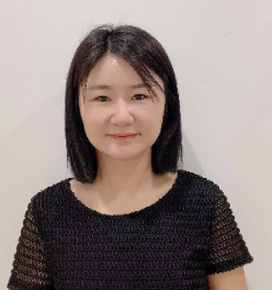
Ling Zeng (Ph.D)
Affiliation: Geomathematics Key Laboratory of Sichuan Province
University / Institution: Chengdu University of Technology
Department: School of Mathematical Science
Designation: Associate Professor
Email: zengling18@cdut.edu.cn
Country: China
Biography
Ling Zeng is an Associate Professor at Chengdu University of Technology, China. She received her Ph.D. in Geosciences from China University of Geosciences (Beijing) in 2014. Before joining Chengdu University of Technology, she worked as a postdoctoral researcher and visiting scholar at Nanyang Technological University, Singapore.
Her research focuses on geostatistics, spatial and spatiotemporal modeling, machine learning and deep learning applications in geosciences, environmental pollution assessment, remote sensing, soil heavy metal mapping, AI-assisted geological data analysis, and time series prediction. In particular, she has developed strong expertise in deep-learning-based time series forecasting and data-driven modeling for meteorological and environmental applications, including PM2.5 forecasting, ozone prediction, air quality assessment, and the interpretation of meteorological and gaseous pollutant factors.
Dr. Zeng has published extensively on soil heavy metal interpolation, environmental risk assessment, remote sensing-based geological identification, geological image analysis, and atmospheric pollution modeling. Her recent work integrates statistical diagnostics, machine learning, deep learning, SHAP-based interpretability, temporal fusion transformers, and hybrid spatiotemporal models to improve the prediction and explanation of complex environmental processes.
She has also contributed to applied research through several patents, including methods for pollution evaluation, soil heavy metal prediction, and rock and mineral identification using artificial intelligence. She is the sole author of UNetGE Software V1.0 and has co-authored academic books on geoscience data analysis and geostatistics in the AI era.
Her work bridges geoscience, artificial intelligence, statistics, environmental science, and meteorological data analytics, aiming to support more accurate environmental assessment, pollution forecasting, geological interpretation, and sustainable resource and air quality management.