
Journal of Global Public Health and Healthcare Innovation (Annual (One issue per year))

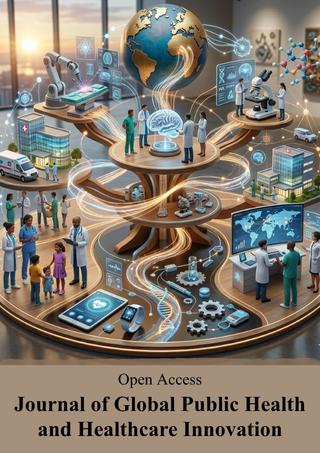
Editorial Board
The Editorial Board of the journal is responsible for maintaining the quality and integrity of the journal's content. The board members are experts in their respective fields and play a crucial role in the peer review process, ensuring that all articles published meet the highest academic standards.
The Editorial Board is committed to upholding the principles of academic excellence, transparency, and ethical publishing practices. They work closely with authors, reviewers, and the editorial team to facilitate a smooth publication process.
Editor-in-Chief
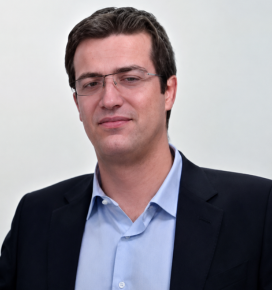
Giuseppe Lanza (Ph.D, M.D.)
Editor-in-Chief- Department: General Surgery and Medical-Surgical Specialties
- Affiliation: General Surgery and Medical-Surgical Specialties, University of Catania, Catania
- Designation: Professor
- Country: Italy
- Email: glanza@oasi.en.it
Giuseppe Lanza, MD PhD, is Full Professor of Advanced Medical and Surgical Technical Sciences at the University of Catania (Italy). He further trained at the Department of Neuroscience and Clinical Neurophysiology of the Newcastle University (UK) as Visiting Clinical Research Fellow, where he was also selected for a Scientific Fellowship promoted by the European Federation of Neurological Societies. From 2013, he has been working as Consultant Neurologist and Chief of the Clinical Neurophysiology Research Unit at the Oasi Research Institute-IRCCS in Troina (Italy), a WHO collaborating Center for Neurosciences. More recently, Prof. Lanza obtained the Master of Science in Clinical Research and in Neurorehabilitation, as well as the international “Elio Lugaresi Award” by the World Sleep Society. He authored >200 publications in international peer-reviewed Journals and has given talks at numerous Conferences/Meetings. Current h-index is 48 (Scopus), along with >5,300 citations. Clinical-research interests include: clinical neurophysiology, neurosonology, non-invasive brain stimulation, and neuroplasticity.
Editorial Members
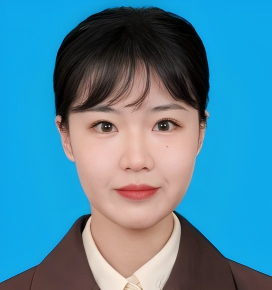
Jiarui Fan (Ph.D.)
Editorial Member- Department: School of Economics and Mangement
- Affiliation: School of Economics and Mangement
- Designation: Lecturer
- Country: China
- Email: fanjiarui@stu.xjtu.edu.cn
Dr. Jiarui Fan is a lecturer at the Economic Management School, Xi'an University and a researcher specializing in public management, complex networks, and health-related behavioral modeling. Holding a Ph.D. in Management from Xi'an Jiaotong University, Dr. Fan’s interdisciplinary research employs advanced computational frameworks—including Agent-Based Modeling and deep reinforcement learning architectures—to analyze dynamic social structures and collective action. This methodological innovation has driven significant contributions to epidemiological modeling, notably assessing the efficacy of targeted health interventions and resource-constrained medical facilities (such as Fangcang shelter hospitals) during public health emergencies. Furthermore, Dr. Fan conducts extensive field research on grassroots governance and rural revitalization, generating vital insights into the social determinants of health, livelihood sustainability, and health equity among marginalized transitioning populations. By bridging computational simulation with public administration theory, Dr. Fan aims to advance data-driven innovations in global healthcare policy.

Dr Imtiaz Husain (Ph.D)
Editorial Member- Department: Department of Artificial Intelligence and Mathematical Sciences
- Affiliation: Department of Artificial Intelligence and Mathematical Sciences, Sindh Madressatul Islam University, Karachi, Sindh
- Designation: Assistnat Professor
- Country: Pakistan
- Email: imtiaz@smiu.edu.pk
Dr Imtiaz Husain is an Assistant Professor in the Department of Artificial Intelligence and Mathematical Sciences at Sindh Madressatul Islam University (SMIU), Karachi, Pakistan. He holds a Ph.D. in Mathematics and has advanced academic training in Artificial Intelligence and Computing, with over 23 years of teaching, research, and academic leadership experience. His research interests include artificial intelligence, machine learning, deep learning, mathematical and statistical modeling, computational intelligence, healthcare analytics, biomedical signal processing, explainable AI, multimodal data analysis, and predictive healthcare systems.
He has authored numerous research articles published in reputable national and international journals and has contributed extensively to interdisciplinary research projects integrating artificial intelligence with healthcare, speech processing, environmental studies, and public health. His current research focuses on AI-driven stress detection, large language models, multimodal data analysis, computational intelligence, and intelligent decision-support systems for real-world applications.
In addition to his teaching and research responsibilities, he serves as the Managing Editor of the International Journal of Artificial Intelligence and Mathematical Sciences (IJAIMS) and has extensive experience in scholarly publishing, peer review, editorial management, research quality assurance, and publication ethics. He also contributes to curriculum development, postgraduate research supervision, academic governance, and institutional research initiatives at SMIU.
He has successfully secured multiple competitive research grants, supervised postgraduate researchers, developed the undergraduate curriculum in Artificial Intelligence, and actively participates in national and international conferences, workshops, and professional organizations. His work reflects a strong commitment to advancing artificial intelligence, data-driven innovation, and interdisciplinary research that addresses contemporary scientific and societal challenges.
As a member of the Editorial Board of the Journal of Global Public Health and Healthcare Innovation, he is committed to promoting high-quality, ethical, and impactful research that advances global public health, healthcare innovation, and the responsible application of artificial intelligence in medicine and health sciences.
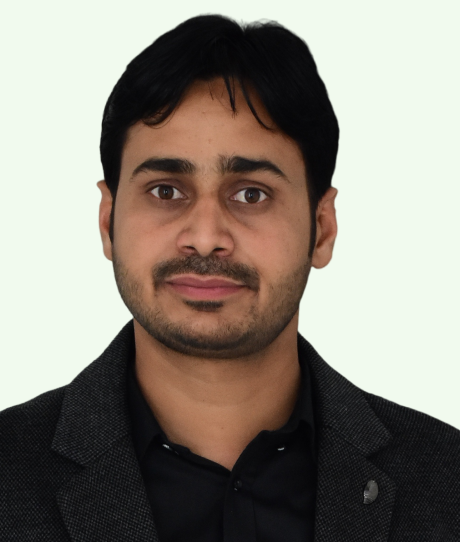
Dr Zahid Hussain Deshwali (PhD)
Editorial Member- Department: Nursing
- Affiliation: Department of Nursing, Balaji College of Nursing Rajasthan University of Health Sciences, Bhilwara, Rajasthan
- Designation: Professor cum Vice Principal
- Country: India
- Email: info@balajicollegeofnursing.org
Dr Zahid Hussain Deshwali is a Professor cum Vice Principal with over 13 years of experience in nursing education, clinical training, academic leadership, and community health. He holds a Ph.D. in Nursing from Malwanchal University, Indore; an M.Sc. in Medical-Surgical Nursing; and a B.Sc. in Nursing. Throughout his academic and professional career, he has been actively involved in teaching, mentoring nursing professionals, leading community health initiatives, implementing national health programmes, and promoting quality healthcare practices.
His research interests include nursing education, infectious diseases, public health, digital health, evidence-based practice, healthcare quality improvement, community health, and medical-surgical nursing. Dr Deshwali has authored several peer-reviewed publications in national and international journals and serves as a reviewer and editorial board member for academic journals. He is committed to advancing nursing education, healthcare quality, research, and community health through teaching, innovation, interdisciplinary collaboration, and professional excellence.

Thobile Malinga (M.Phil)
Editorial Member- Department: Cochrane South Africa
- Affiliation: Cochrane South Africa, University of Fort Hare, Alice, Eastern Cape, South Africa
- Designation: Scientist
- Country: South Africa
- Email: thobile.malinga@mrc.ac.za
Thobile Lorraine Malinga (née Shabalala) has over 25 years of experience in the healthcare sector and more than 20 years of experience in clinical research and clinical trials. She holds a Bachelor of Nursing, a Master of Nursing in Health Service Management (HIV Management), a Master of Philosophy in Cancer Science, and is currently pursuing a Ph.D. in Ethnobotany at the University of Fort Hare. Her academic training includes qualitative and quantitative research methods, biostatistics, and certifications in Good Clinical Practice, Good Participatory Practice, Elementary Critical Care, and Best Practices in HIV/AIDS Care and Support.
Throughout her career, Thobile has served in several research and healthcare roles, including Research Nurse at the Aurum Institute, Senior Research Nurse at the Desmond Tutu TB Centre, Senior Scientist at Cochrane South Africa, and currently Scientist at the South African Medical Research Council (SAMRC). Her expertise includes clinical trial governance, systematic and rapid reviews, evidence synthesis, health policy development, technical report writing, protocol development, and peer-reviewed scientific publications. She has authored and co-authored numerous research articles and conference presentations, contributed to WHO Africa health policy initiatives, and completed the MAC AIDS Fund Leadership Initiative. Her research interests focus on community health, public health, vaccine research, HIV/AIDS, cancer prevention, clinical trials, and evidence-based healthcare. Her career objective is to continuously enhance healthcare productivity through research, healthcare support, and management while advancing community health-based research programs.
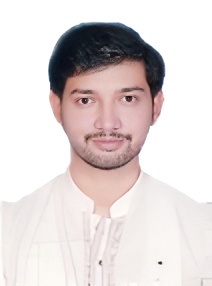
Muhammad Asif (Ph.D)
Editorial Member- Department: School of Public Health, Cheeloo college of Medicine
- Affiliation: School of Public Health, Cheeloo College of Medicine, Shandong University, Jinan, Shandong, China
- Designation: Post Doctoral Fellowship
- Country: China
- Email: muhammadasif@sdu.edu.cn
Muhammad Asif, PhD, is a Postdoctoral Fellow at the Institute of Eco-Health, School of Public Health, Cheeloo College of Medicine, Shandong University, China. He is a molecular parasitologist and biotechnologist with expertise in tick-borne diseases, zoonotic pathogens, molecular epidemiology, One Health surveillance, host-vector-pathogen interactions, and disease prediction. He received his PhD in Biotechnology from Bahauddin Zakariya University, Multan, Pakistan, where his doctoral research focused on the molecular detection of blood-borne pathogens in cattle from South Punjab.
Dr. Asif’s research integrates field surveillance, molecular diagnostics, sequencing, phylogenetic analysis, bioinformatics, and epidemiological data interpretation to understand the distribution and transmission of vector-borne and zoonotic pathogens. His technical expertise includes DNA/RNA extraction, PCR, RT-PCR, qPCR-related workflows, ELISA, NGS sample preparation, WES/WGS data interpretation, sequence analysis, mutation analysis, phylogenetics, and GenBank submissions. He is also experienced in R, Python, MEGA, BioEdit, SnapGene, EndNote, and molecular epidemiology data handling.
His research portfolio includes studies on Anaplasma, Theileria, Babesia, Rickettsia, Brucella, Toxoplasma, and tick species of veterinary and public health importance. He has published first-author and co-authored research articles in peer-reviewed journals, contributed book chapters, and submitted more than 300 sequences to GenBank. His current postdoctoral work focuses on tick-borne diseases, zoonotic pathogen surveillance, molecular detection, sequence interpretation, disease prediction, and international collaborative research.
Before joining Shandong University, Dr. Asif served as an Assistant Professor and Lecturer in Biology in Pakistan, where he taught life sciences and trained students in laboratory and research methods. His long-term research goal is to develop integrated One Health-based surveillance, diagnostic, and prediction platforms for emerging vector-borne and zoonotic diseases.

Kinjal Nayak (Ph.D)
Editorial Member- Department: Department of Epidemiology
- Affiliation: Epidemiology, Kent State University, Kent
- Designation: Health Data Scientist
- Country: United States
- Email: knayak@kent.edu
Dr. Kinjal Nayak is an epidemiologist and health data scientist with expertise in transforming complex healthcare, clinical, and population-level data into actionable insights. Her experience spans the full data lifecycle, including data management, cleaning, validation, statistical analysis, data visualization, reporting, and communication of findings to both technical and non-technical audiences. She is proficient in R, SAS, SPSS, STATA, Python, Tableau, and Power BI, with expertise in advanced statistical modeling, causal inference, predictive analytics, machine learning, and real-world data analysis. Her research focuses on identifying health trends and disparities, evaluating interventions, developing reproducible analyses, and translating findings into evidence-based recommendations that improve healthcare efficiency, health equity, organizational performance, and population health.