
Advanced Data Science and Computational Intelligence (Annual (One issue per year))


Deyu Lin (Ph.D)
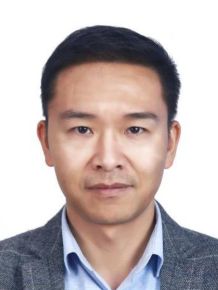
| Affiliation | School of Software, Nanchang University, Nanchang, Jiangxi, China |
|---|---|
| University / Institution | Nanchang University |
| Department | School of Software |
| Designation | Associate Professor |
| Deylin@ncu.edu.cn | |
| Country | China |
Prof. Deyu Lin is an Associate Professor in the School of Software at Nanchang University, China. He received his Ph.D. in Computer Architecture from Xidian University in 2019. During his doctoral studies, he was a Joint Ph.D. Researcher at the University of Leeds, UK, from 2017 to 2018. He subsequently held postdoctoral research positions at Shanghai Jiao Tong University, China, and Nanyang Technological University, Singapore. He has also served as a Guest Professor at Gongqing College of Nanchang University.
Since 2013, Prof. Lin has been dedicated to advancing energy-efficient technologies for Wireless Sensor Networks (WSNs), developing extensive expertise in energy sustainability, wireless communications, and intelligent networking. His current research interests include Wireless Sensor Networks (WSNs), the Internet of Things (IoT), Simultaneous Wireless Information and Power Transfer (SWIPT)-enabled communication systems, edge and fog computing, artificial intelligence, federated learning, intelligent transportation systems, and wireless communications.
Over the past decade, Prof. Lin has established a strong research record through high-quality publications in leading international journals and conferences. As of September 10, 2025, he has authored or co-authored 67 scientific publications, including 52 papers in prestigious IEEE and European journals and 8 papers in international conferences. According to Google Scholar, his research has achieved an H-index of 17, an i10-index of 27, and more than 1,225 citations. His most highly cited publication, Wang et al. (2019), which has received over 174 citations, presents significant contributions to improving the energy efficiency of WSNs through compressive sensing techniques.
Prof. Lin has successfully led several research projects funded by the National Natural Science Foundation of China (NSFC) and provincial funding agencies. In recognition of his research excellence, he was selected as a Class C Talent under the "Ganjiang Hai Zhi" Project of Jiangxi Province in 2021. He received the Second-Class Prize of the Jiangxi Provincial Scientific and Technological Progress Award in both 2021 and 2024. In 2022, he was honored with the Best Researcher Award, and in July 2025, his paper received the Best Paper Award at the 4th International Conference on Internet of Things, Communication, and Intelligent Technology (IoTCIT 2025).
In addition to his academic achievements, Prof. Lin holds the Cisco Certified Internetwork Expert (CCIE) certification, demonstrating his strong professional expertise in Internet engineering and networking technologies. His combination of scientific research excellence and practical engineering experience provides a solid foundation for developing innovative theoretical frameworks and translating them into real-world applications.
Prof. Lin is a Senior Member of the IEEE, a Member of the ACM, and a Senior Member of the China Computer Federation (CCF). His research continues to contribute to the advancement of energy-efficient wireless networks, intelligent communication systems, and next-generation IoT technologies.