
Journal of Cosmetic Science and Trichology (Annual (One issue per year))
ABSTRACT
Solar radiation has profoundly influenced the evolution of life by serving both as a primary energy source and as a continuous photochemical force that generates molecular diversity and imposes environmental selection. Although ultraviolet (UV) radiation is commonly associated with DNA damage, mutagenesis, photoaging, and carcinogenesis, its constructive role in shaping natural-product chemistry has received less attention. This review examines four major carbocyclic ring systems cyclopropane (C3), cyclobutane (C4), cyclopentane (C5), and cyclohexane (C6) and considers how ring size influences strain energy, molecular geometry, conformational flexibility, stereochemical organization, chemical reactivity, and biological function. These ring systems are presented as a comparative physicochemical continuum rather than as a strictly chronological evolutionary sequence. Cyclopropane is associated mainly with specialized functions such as membrane adaptation and stress resistance, whereas cyclopentane and cyclohexane provide comparatively stable scaffolds for signaling, hormonal regulation, molecular recognition, and metabolism. Particular attention is given to cyclobutane because its combination of structural rigidity, controlled strain, chemical stability, and photochemical accessibility has supported its repeated occurrence in natural products from plants, fungi, bacteria, marine organisms, and animals. The review further evaluates the relevance of carbocyclic natural products to cosmetic science and trichology. Plant- and marine-derived terpenoids, steroids, iridoids, cyclitols, and related metabolites exhibit antioxidant, anti-inflammatory, antimicrobial, photoprotective, pigmentation-modulating, and barrier-supporting properties that may be useful in skin-care, anti-aging, scalp-care, and hair-protection formulations. However, evidence ranges from traditional use and in vitro observations to limited clinical evaluation, and substantial uncertainties remain regarding skin penetration, photostability, bioavailability, sensitization, endocrine activity, formulation compatibility, and long-term safety. By integrating photochemistry, natural-product chemistry, skin and hair biology, and formulation science, this review identifies current research gaps and proposes priorities for translating structurally diverse carbocyclic metabolites into safe and effective cosmetic and trichological ingredients.
Keywords: Sunlight; Photochemistry; Carbocyclic Natural Products; Cyclobutane; Cyclopropane; Cyclopentane; Cyclohexane; Molecular Evolution; Functional Differentiation; Natural Selection; Medicinal Chemistry; Cosmetics
INTRODUCTION
Sunlight has shaped the chemistry of life since the earliest stages of Earth’s history (Figure 1). Long before the emergence of oxygenic photosynthesis and the accumulation of atmospheric oxygen, solar ultraviolet (UV) radiation was one of the most pervasive environmental forces influencing chemical and molecular evolution [1,2]. Although UV radiation is commonly regarded as a source of molecular damage, mutagenesis, and cellular stress, it can also drive photochemical transformations that generate new molecular structures and expand chemical diversity [1-5]. Sunlight therefore has a dual role as both a destructive agent and a constructive photochemical force. Through the combined effects of direct photochemistry, photooxidation, environmental selection, and biological adaptation, solar radiation has influenced the diversification of natural products and their physiological functions.
This duality is particularly relevant to skin and hair, which form the principal external interfaces between the human body and solar radiation. Chronic exposure to UV radiation and visible light contributes to reactive oxygen species formation, lipid and protein oxidation, DNA photolesions, inflammation, pigmentation disorders, extracellular-matrix degradation, hair-fiber damage, and premature aging. At the same time, many plants, algae, fungi, and microorganisms exposed to intense solar irradiation produce specialized metabolites that protect against photochemical damage, oxidative stress, microbial infection, and environmental injury. These naturally evolved protective functions provide a rationale for investigating such metabolites as potential ingredients in skin-care, photoprotective, anti-aging, scalp-care, and hair-protection formulations.
Among the extensive structural diversity of natural products, carbocyclic compounds occupy an important position in biological chemistry. Their carbon-only ring systems provide three-dimensional frameworks that influence molecular geometry, conformational flexibility, stereochemistry, and chemical reactivity. These properties affect molecular recognition, enzyme and receptor binding, membrane interactions, metabolic stability, and signaling processes, thereby connecting molecular architecture with biological function [6-10]. Carbocyclic frameworks occur in numerous primary and secondary metabolites, including cyclitols, terpenoids, steroids, prostaglandins, iridoids, alkaloids, and specialized lipid derivatives involved in defense, communication, development, stress adaptation, and physiological regulation. It is important to distinguish true carbocyclic compounds from ordinary pyranose and furanose carbohydrates, whose rings contain oxygen and are therefore heterocyclic. In contrast, cyclitols and carbasugars are genuine carbocyclic analogues of carbohydrates.
From a chemical perspective, ring size is one of the principal determinants of carbocyclic molecular behavior. As ring size increases from three to six carbon atoms, ring strain generally decreases and conformational flexibility increases. Each ring system consequently exhibits a characteristic balance of thermodynamic stability, kinetic reactivity, molecular rigidity, and stereochemical organization [11-13]. These differences influence not only natural biological functions but also properties important in cosmetic development, including chemical and photochemical stability, target interactions, membrane affinity, skin penetration, formulation compatibility, and susceptibility to oxidation. The occurrence of different ring sizes in natural products should not be interpreted as a strictly linear or chronological evolutionary sequence. Instead, these structures can be considered a comparative physicochemical continuum in which each ring size offers distinct functional advantages that may have been retained through biosynthetic and environmental selection.
This review focuses on four major biologically relevant carbocyclic systems: cyclopropane (C3), cyclobutane (C4), cyclopentane (C5), and cyclohexane (C6). Together, they illustrate a progression from highly strained, conformationally restricted structures to comparatively stable and flexible molecular scaffolds [14-19]. Cyclopropane represents the limit of ring strain and is frequently associated with specialized functions such as membrane adaptation, stress resistance, and chemical defense [14]. Cyclobutane combines substantial strain with structural rigidity and sufficient chemical stability, making it important in natural-product chemistry, UV-induced DNA photochemistry, and modern molecular design. Cyclopentane and cyclohexane provide more stable platforms for signaling, hormonal regulation, molecular recognition, and metabolism, as exemplified by prostaglandins, iridoids, terpenoids, steroids, and cyclitols [7-10].
Beyond describing their chemistry and natural distribution, this review critically examines the relevance of carbocyclic natural products to cosmetic science and trichology. Particular attention is given to their reported antioxidant, anti-inflammatory, antimicrobial, pigmentation-modulating, photoprotective, barrier-supporting, and hair- and scalp-related activities.
Figure 1: Sunlight as a driver of molecular evolution and functional differentiation of carbocyclic natural products.
This conceptual framework illustrates the dual role of sunlight in the evolution of biological complexity. On the left, solar radiation drives constructive photochemistry, promoting the formation of diverse carbocyclic molecular architectures, including three-, four-, five-, and six-membered ring systems. These carbocyclic frameworks undergo evolutionary selection according to their physicochemical properties, ultimately leading to functional differentiation and the emergence of specialized physiological roles. On the right, ultraviolet radiation simultaneously induces molecular damage, particularly DNA photolesions and mutations, thereby generating genetic diversity that provides the substrate for biological evolution. The convergence of chemical diversity and genetic variation under continuous solar irradiation drives natural selection, resulting in progressively specialized biological functions and the evolution of modern organisms. This figure summarizes the central hypothesis proposed in this review: sunlight acts not only as an energy source and a cause of molecular damage, but also as a long-term evolutionary selector of carbocyclic molecular architectures and their physiological functions.
The available evidence is evaluated with consideration of its experimental limitations, including the frequent reliance on in vitro assays or complex botanical extracts, insufficient compound standardization, limited skin-permeation and formulation studies, and scarcity of controlled clinical investigations. By integrating photochemistry, natural-product chemistry, skin and hair biology, and formulation science, this review aims to identify promising molecular scaffolds while defining the safety, efficacy, stability, and translational questions that must be resolved before they can be developed as reliable cosmetic or trichological ingredients.
Among these four ring systems, cyclobutane occupies a distinctive intermediate physicochemical position [15-17]. It retains substantial ring strain while remaining sufficiently stable under many physiological conditions, thereby combining molecular rigidity with controlled chemical reactivity [20,21]. This balance has supported the occurrence of cyclobutane-containing natural products in plants, fungi, bacteria, marine organisms, and animals. Many of these metabolites participate in ecological interactions, including chemical defense against pathogens and herbivores, interorganismal signaling, oxidative-stress responses, and molecular recognition [22,23]. Their reported antimicrobial, anti-inflammatory, antioxidant, and cytoprotective properties may also be relevant to skin and scalp health, although the strength of the evidence varies considerably among compounds and biological models. Modern medicinal chemistry has independently recognized the value of the cyclobutane scaffold and incorporates it into bioactive molecules to increase conformational restriction, improve metabolic stability, alter receptor selectivity, and optimize pharmacokinetic properties. This convergence suggests that biological selection and rational molecular design can exploit similar structural principles [20-23].
A further characteristic distinguishes cyclobutane from the other carbocyclic systems considered here: its close relationship with photochemistry. The classical [2+2] photocycloaddition is an important photochemical route to cyclobutane formation in laboratory synthesis and contributes to the biosynthesis or photochemical generation of selected natural products [24-26]. Conversely, the same fundamental reaction underlies the formation of cyclobutane pyrimidine dimers in DNA after UV exposure. These lesions are among the most extensively characterized forms of solar-induced DNA damage and are directly relevant to cutaneous mutagenesis, photoaging, and photocarcinogenesis. Cyclobutane chemistry therefore illustrates the dual nature of photochemistry: light-induced reactions can generate structurally valuable molecular scaffolds, but they can also produce biologically harmful DNA lesions [27-29]. This relationship is especially important in cosmetic science because effective photoprotection must address not only erythema but also persistent DNA damage, oxidative stress, inflammation, extracellular-matrix degradation, pigmentation changes, and deterioration of hair proteins and lipids.
In this review, sunlight is considered not merely a source of photodamage but also a long-term environmental factor that may have contributed to the selection and functional diversification of photochemically stable or protective molecular architectures. This concept is presented as a framework for interpretation rather than as an established linear evolutionary mechanism. Through comparative analysis of cyclopropane-, cyclobutane-, cyclopentane-, and cyclohexane-containing natural products, we examine how ring size affects physicochemical properties, biological activity, and physiological function. We further assess how these structural principles may guide the identification and design of cosmetic and trichological ingredients for photoprotection, control of oxidative stress and inflammation, maintenance of the epidermal barrier, regulation of pigmentation, antimicrobial scalp care, and protection of the hair shaft. Particular emphasis is placed on distinguishing promising experimental observations from clinically demonstrated effects and on identifying the safety, stability, delivery, standardization, and formulation requirements necessary for practical cosmetic applications.
Sunlight as a Molecular Selector
Solar radiation has influenced Earth’s chemistry continuously since the planet’s formation. Before the emergence of complex biological systems, sunlight was a major external energy source capable of initiating photochemical reactions among inorganic and organic molecules. The photochemical environment at Earth’s surface subsequently changed as the atmosphere evolved, particularly following the accumulation of molecular oxygen and development of the stratospheric ozone layer [30-33]. Consequently, the influence of UV radiation shifted from a major driver of abiotic photochemistry to an environmental pressure acting on established biological systems.
Sunlight should not, however, be regarded as a direct selector of individual molecular structures in the same manner that natural selection acts on heritable biological traits. Rather, solar radiation generated or modified molecules through photochemical reactions and created environmental conditions under which organisms possessing effective protective, repair, or adaptive mechanisms gained a selective advantage. The contemporary diversity of carbocyclic natural products may therefore reflect the combined effects of biosynthetic innovation, ecological interactions, photochemical stability, and biological selection [34,35].
This framework is particularly relevant to organisms exposed to intense solar radiation. Plants, algae, fungi, microorganisms, and marine organisms produce structurally diverse metabolites that participate in UV screening, antioxidant defense, membrane stabilization, pigmentation, chemical defense, and stress signaling. Some of these natural products contain carbocyclic scaffolds whose rigidity, lipophilicity, stereochemistry, and chemical stability may contribute to their protective activities. Comparable challenges occur in human skin, scalp, and hair, where solar radiation induces DNA photolesions, oxidative stress, inflammation, extracellular-matrix degradation, pigmentary changes, lipid peroxidation, and protein damage. Understanding how natural systems respond chemically to solar exposure may therefore support the identification of compounds with potential cosmetic and trichological applications.
Early Earth and the Solar Spectrum
The surface of the early Earth was exposed to a photochemical environment substantially different from that experienced today. Before the accumulation of atmospheric oxygen and formation of a protective ozone layer, shorter-wavelength UV radiation, including UVC and a larger proportion of UVB, could reach environments in which prebiotic reactions occurred [36-38]. The precise UV flux at particular locations would nevertheless have depended on atmospheric composition, aerosols, clouds, water depth, mineral surfaces, and local geochemical conditions.
High-energy solar radiation could initiate diverse transformations among simple inorganic and organic compounds. Proposed reactions include carbon–carbon bond formation, radical recombination, photoisomerization, photoreduction, photooxidation, bond cleavage, and cycloaddition [39-41]. Such processes may have contributed to prebiotic chemical diversity, although they would also have degraded many newly formed products. Early photochemistry should therefore be understood as a dynamic balance among molecular formation, transformation, stabilization, and destruction rather than as a uniformly constructive process.
An important distinction must also be made between changes in the Sun and changes in Earth’s atmosphere. During approximately the past four billion years, total solar luminosity increased substantially, whereas changes in the radiation reaching Earth’s surface were strongly influenced by atmospheric evolution. Before oxygen accumulation, the absence of an effective ozone screen permitted greater penetration of short-wavelength UV radiation. Following the Great Oxidation Event, beginning approximately 2.4 billion years ago, increasing atmospheric oxygen allowed ozone formation, progressively reducing surface exposure to UVC and attenuating UVB [42-45]. Modern terrestrial organisms are therefore exposed predominantly to UVA and visible radiation, with a smaller but biologically important UVB component, whereas solar UVC is almost completely absorbed by the atmosphere.
This atmospheric transition altered both the types of photochemical reactions occurring at Earth’s surface and the biological pressures imposed by sunlight. Under early high-UV conditions, photochemistry could generate molecular diversity but also rapidly destroy UV-sensitive compounds. Molecules protected within minerals, water, ice, vesicles, or other microenvironments may have persisted longer than unprotected molecules. After biological systems emerged, selection acted on organisms rather than on isolated molecules, favoring traits that improved survival under solar exposure. These traits included UV-absorbing pigments, antioxidant defenses, DNA-repair systems, protective extracellular matrices, altered membrane composition, and the biosynthesis of photostable or stress-responsive metabolites [46-48].
The development of atmospheric ozone did not eliminate photochemical stress. UVA penetrates deeply into biological tissues and efficiently promotes photosensitized production of reactive oxygen species, whereas UVB is absorbed strongly by nucleic acids, proteins, and other chromophores. In human skin, UVB is closely associated with direct DNA photolesions, including cyclobutane pyrimidine dimers, while UVA contributes substantially to oxidative damage in lipids, proteins, mitochondrial components, and extracellular-matrix structures. Solar exposure also damages hair proteins, pigments, and surface lipids, contributing to dryness, discoloration, loss of mechanical strength, and increased porosity. The evolution of the terrestrial solar spectrum is therefore relevant not only to molecular evolution but also to modern photoprotection, skin aging, scalp health, and hair care.
Photochemical Formation and Transformation of Carbocyclic Structures
Photochemical reactions occupy a distinctive position in organic chemistry because electronic excitation can enable transformations that are inaccessible or inefficient under conventional thermal conditions. Absorption of UV or visible photons generates excited molecular states capable of undergoing bond cleavage, radical formation, electron or energy transfer, electrocyclic rearrangement, isomerization, and cycloaddition [49-52]. These processes can expand accessible chemical space and provide routes to complex carbocyclic frameworks.
Radical reactions are particularly important because they can generate new carbon–carbon bonds under relatively mild conditions. Light-induced radicals may participate in addition, fragmentation, rearrangement, recombination, or cyclization, thereby forming new molecular skeletons or modifying existing natural products. Photochemical pericyclic reactions can likewise generate structurally complex products with a high degree of regio- and stereochemical organization [53-55]. Nevertheless, the occurrence of a carbocyclic natural product in a sun-exposed organism does not by itself establish a photochemical origin. Many such compounds are formed enzymatically, and direct evidence is required before their biosynthesis can be attributed to light.
The [2+2] photocycloaddition is one of the most characteristic photochemical routes to cyclobutane formation. Following excitation, two appropriately positioned carbon–carbon double bonds can form two new σ-bonds, producing a four-membered carbocyclic ring. This reaction is widely used in synthetic organic chemistry and contributes to the formation of selected naturally occurring cyclobutane derivatives [56,57]. In other cases, cyclobutane-containing natural products are generated through enzyme-controlled pathways that may use radical, cationic, or other biosynthetic mechanisms. Therefore, the repeated occurrence of cyclobutane scaffolds across different organisms probably reflects multiple independent biosynthetic and photochemical solutions rather than a single universal light-driven pathway.
Natural photochemistry extends beyond secondary-metabolite formation. Direct UV absorption by DNA produces cyclobutane pyrimidine dimers through a [2+2] photocycloaddition between adjacent pyrimidine bases. These lesions distort DNA, interfere with replication and transcription, and can produce characteristic mutations if they are not removed by photolyase-dependent repair or nucleotide-excision repair [24-26]. UV exposure also initiates oxidation of proteins, membrane lipids, pigments, and endogenous chromophores through both direct excitation and photosensitized reactive oxygen species generation [55-57].
These reactions have direct relevance to cosmetic science and trichology. In skin, accumulated DNA photolesions and oxidative damage contribute to inflammation, impaired barrier function, abnormal pigmentation, collagen degradation, elastin modification, and premature aging. In hair, solar radiation oxidizes amino-acid residues, particularly cystine, alters melanin, damages cuticular lipids, and weakens the hair shaft. Carbocyclic natural products with experimentally demonstrated UV-absorbing, antioxidant, anti-inflammatory, or membrane-protective properties may therefore provide leads for photoprotective formulations. However, their usefulness cannot be inferred from molecular structure alone and must be established through appropriate photostability, efficacy, penetration, toxicological, and formulation studies.
Selection versus Synthesis
The central concept of this review is that the role of sunlight extends beyond its capacity to supply energy or cause molecular damage. Photochemical reactions can generate molecular diversity, but they can also transform or destroy existing compounds [58-60]. The persistence of a particular natural product therefore depends on multiple factors, including its rate of biosynthesis, chemical and photochemical stability, compartmentalization, ecological function, metabolic cost, and contribution to organismal fitness.
It is consequently necessary to distinguish molecular formation from biological selection. Sunlight may directly produce or modify compounds through photochemistry, whereas evolutionary selection operates primarily on organisms possessing heritable biosynthetic, regulatory, protective, or repair mechanisms. Molecules that improve survival or reproduction under solar and oxidative stress may be retained indirectly because the pathways responsible for their production confer an adaptive advantage. Conversely, UV-sensitive compounds may persist when they are continuously synthesized, stored in protected tissues, stabilized through molecular interactions, or assigned functions unrelated to solar exposure.
Within this framework, different carbocyclic ring systems represent distinct physicochemical solutions rather than successive stages in a strictly linear evolutionary sequence. Cyclopropane combines exceptionally high strain with marked rigidity and occurs in specialized metabolites and stress-responsive membrane lipids. Cyclobutane retains substantial strain but offers greater stability and a well-defined three-dimensional geometry. Cyclopentane provides lower strain and moderate conformational flexibility, supporting numerous signaling and regulatory molecules. Cyclohexane offers high conformational stability and adaptable stereochemistry and is widely represented in steroids, terpenoids, cyclitols, and other biologically important natural products [12,15-17,64].
These structural differences may influence photostability, oxidation susceptibility, membrane affinity, target recognition, and metabolic behavior. Nevertheless, ring size alone does not determine biological or cosmetic activity. The nature and stereochemistry of substituents, degree of oxygenation, lipophilicity, molecular size, redox properties, concentration, delivery system, and interactions with other formulation components are equally important. A carbocyclic scaffold should therefore be treated as one determinant within a broader structure–activity relationship.
Accordingly, we propose that solar radiation acted simultaneously as a generator of photochemical diversity and as an environmental pressure that influenced the evolution of protective biochemical pathways. This hypothesis does not imply that sunlight directly created or selected every carbocyclic natural product. Rather, it provides a comparative framework for examining how photochemistry, biosynthesis, molecular stability, and organismal adaptation may have contributed to the functional diversification of carbocyclic structures.
This distinction is also essential for evaluating cosmetic and trichological applications. Natural occurrence or an ecological protective function does not automatically demonstrate efficacy or safety in human skin and hair. Translation into cosmetic products requires compound-specific evidence of activity, photostability, bioavailability, formulation compatibility, dermal tolerance, absence of phototoxicity and sensitization, and effectiveness under realistic exposure conditions. The following sections therefore compare cyclopropane-, cyclobutane-, cyclopentane-, and cyclohexane-containing natural products while distinguishing established chemical and biological evidence from evolutionary interpretation and proposed cosmetic applications.
Evolution and Functional Differentiation of Carbocyclic Ring Systems
The remarkable diversity of carbocyclic natural products raises a fundamental question: why have living organisms retained multiple ring sizes rather than converging on a single thermodynamically optimal framework? Biological evolution does not optimize molecular stability in isolation [8,10,15-17]. Instead, it operates on organisms whose metabolites must satisfy multiple requirements, including biosynthetic accessibility, structural persistence, controlled chemical reactivity, target recognition, membrane compatibility, and ecological or physiological function. A highly stable scaffold may be advantageous for structural or metabolic roles, whereas a strained or reactive ring may be retained when it enables a specialized transformation or biological interaction.
Ring size is an important determinant of the physicochemical properties of carbocyclic compounds. Changing the number of carbon atoms alters bond angles, angle and torsional strain, conformational flexibility, molecular geometry, and the spatial organization of substituents [7,8,65]. These features can affect molecular recognition, enzyme specificity, receptor binding, membrane interactions, metabolic stability, oxidation susceptibility, and biological activity. Different carbocyclic systems therefore occupy distinct regions of chemical space and provide alternative structural solutions to different biological requirements.
The four ring systems considered in this review should be interpreted as a comparative physicochemical continuum rather than as successive stages in a strictly chronological evolutionary pathway. Cyclopropane possesses the greatest ring strain and a highly constrained geometry, properties that contribute to specialized reactivity and membrane-modifying functions. Cyclobutane retains considerable strain but is sufficiently stable to serve as a rigid three-dimensional scaffold in diverse natural products. Cyclopentane has substantially lower strain and greater conformational adaptability, making it suitable for signaling molecules, terpenoids, prostaglandins, iridoids, and the five-membered ring of steroids. Cyclohexane can adopt low-energy conformations and provides a stable framework in steroids, terpenoids, cyclitols, and numerous other natural products [14-19]. Cyclobutane occupies a particularly interesting position because it combines structural rigidity, controlled strain, chemical persistence, and photochemical accessibility [14-17,20-23].
Rather than replacing one another, these ring systems have become functionally differentiated. Their contemporary distributions reflect independent biosynthetic origins, lineage-specific metabolic pathways, ecological interactions, and the retention of structures that contribute to organismal fitness. Ring size is therefore an important but not exclusive determinant of biological function. Substitution pattern, stereochemistry, oxidation state, heteroatom content, molecular size, lipophilicity, and interactions with the surrounding biological environment can be equally important [66].
Several interrelated physicochemical parameters contribute to this functional differentiation.
Strain Energy
Represents the energetic cost imposed by deviations from preferred bond angles and conformations. Highly strained rings contain stored internal energy and may undergo transformations that relieve this strain, whereas less strained rings generally provide greater thermodynamic stability [67-69]. Nevertheless, high ring strain does not automatically imply indiscriminate reactivity under physiological conditions. Reaction rates also depend on substituents, activation barriers, catalysts, enzymes, and the surrounding medium.
Molecular Geometry
Determines the spatial arrangement of substituents and influences interactions with enzymes, receptors, membranes, and other biological targets. Small changes in bond angles, ring puckering, or substituent orientation may substantially alter binding affinity, selectivity, and biological activity [70,71]. The compact geometry of cyclopropane, the puckered rigidity of cyclobutane, and the conformational behavior of cyclopentane and cyclohexane therefore provide different three-dimensional platforms for molecular recognition.
Conformational Flexibility
Generally increases from three- to six-membered rings, but the relationship is not completely linear. Cyclopropane is essentially conformationally fixed, whereas cyclobutane undergoes limited puckering. Cyclopentane adopts several rapidly interconverting envelope and half-chair conformations, and cyclohexane can adopt chair, boat, twist-boat, and related conformations, with the chair form usually predominating [72]. Flexibility may facilitate adaptation to different binding environments, whereas rigidity may reduce the entropic cost of target binding and improve selectivity.
Stereochemical Organization
Is closely related to ring geometry and conformational behavior. Constrained carbocyclic systems can maintain defined three-dimensional arrangements of functional groups, thereby promoting selective recognition by biological macromolecules [73]. In cosmetic and dermatological research, stereochemistry may influence antioxidant activity, enzyme inhibition, receptor interactions, skin metabolism, and penetration through lipid-rich barriers. Consequently, activities observed for one stereoisomer should not automatically be attributed to other members of the same structural class.
Chemical Reactivity
Reflects the combined effects of strain energy, electronic structure, substituent pattern, oxidation state, and molecular environment. Controlled reactivity can support biosynthetic transformations, covalent or noncovalent target interactions, and stress-responsive signaling, whereas excessive reactivity may cause instability, nonspecific protein modification, irritation, sensitization, or toxicity [74]. This balance is especially important in cosmetic formulations, where an ingredient must remain sufficiently stable during manufacture, storage, and application while retaining its intended biological activity.
Lipophilicity and Membrane Affinity
Are also important for biological and cosmetic performance. Many carbocyclic natural products, particularly steroids and terpenoids, interact readily with lipid membranes and hydrophobic protein-binding sites. Moderate lipophilicity may promote deposition in the stratum corneum or hair surface, whereas excessive lipophilicity may limit aqueous solubility, complicate formulation, and reduce delivery to viable epidermal or follicular targets. Ring size alone does not determine these properties, but the carbocyclic scaffold contributes to the overall molecular shape and hydrophobic surface.
Collectively, these parameters help explain why different carbocyclic frameworks are associated with membrane adaptation, chemical defense, molecular recognition, signaling, hormonal regulation, stress responses, and metabolism [69-74]. However, these associations should not be interpreted deterministically. A particular ring system does not confer a specific biological function by itself, and structurally related compounds may exhibit markedly different activities depending on their substituents, stereochemistry, concentration, and biological context. The comparative relationships among ring size, physicochemical properties, and predominant biological roles are summarized in Table 1.
|
Ring system |
Relative strain energy |
Geometry |
Conformational flexibility |
Chemical reactivity |
Predominant biological functions |
|
Cyclopropane (C3) |
Very high |
Highly constrained |
Very low |
Very high |
Membrane adaptation, chemical defense, specialized metabolites |
|
Cyclobutane (C4) |
High |
Rigid, puckered |
Low |
Controlled |
Photoadaptation, molecular recognition, signaling, defense |
|
Cyclopentane (C5) |
Moderate |
Stable |
Moderate |
Moderate |
Hormonal regulation, signaling molecules, terpenoid scaffolds |
|
Cyclohexane (C6) |
Low |
Highly stable (chair conformations) |
High |
Relatively low |
Structural frameworks, carbohydrates, steroids, primary metabolism |
Table 1: Evolutionary relationships between carbocyclic ring size and biological function
These structure–property relationships also provide a basis for evaluating cosmetic and trichological potential. Molecular rigidity, conformational flexibility, lipophilicity, oxidation susceptibility, and stereochemical organization may influence photostability, antioxidant and anti-inflammatory activity, enzyme modulation, skin penetration, scalp retention, hair-fiber affinity, and formulation compatibility. Nevertheless, ecological function or activity in an isolated biochemical assay cannot be treated as evidence of cosmetic efficacy. Translation requires standardized compounds or extracts, validated mechanisms, realistic skin or hair models, appropriate delivery systems, toxicological evaluation, and ultimately controlled human studies.
The following sections examine cyclopropane-, cyclobutane-, cyclopentane-, and cyclohexane-containing natural products individually. Emphasis is placed on how their characteristic physicochemical properties relate to biological function and on the extent to which available evidence supports potential applications in skin care, photoprotection, anti-aging, scalp care, and hair protection. Particular attention is given to cyclobutane because its combination of rigidity, substantial but controlled strain, and photochemical accessibility makes it especially informative for examining the relationship among molecular architecture, biological adaptation, UV photochemistry, and cosmetic science.
Cyclopropane (C3): Maximum Strain and Specialized Biological Functions
Cyclopropane is the smallest naturally occurring carbocyclic framework and represents one extreme of the physicochemical range examined in this review. Its three-membered ring possesses exceptionally high strain because the carbon–carbon–carbon bond angles deviate markedly from the preferred tetrahedral geometry [75]. Although this structural arrangement is energetically unfavorable relative to larger carbocycles, it produces a distinctive combination of compactness, conformational rigidity, unusual electronic character, and potential for strain-releasing reactions [75,76]. Cyclopropane-containing natural products are less common than five- and six-membered carbocycles, but they occur in diverse organisms and frequently participate in specialized biological functions (Figure 2).
Cyclopropane should not be regarded as an early or transitional stage in a strictly linear evolution of carbocyclic structures. Its contemporary occurrence instead reflects independent biosynthetic recruitment of a high-energy scaffold when its structural or functional properties contribute to organismal fitness. In particular, cyclopropane rings can modify membrane behavior, constrain the orientation of substituents, alter metabolic stability, and support interactions with specific biological targets. Their retention illustrates that biological selection can preserve energetically demanding molecular features when they provide ecological or physiological benefits.
Chemistry of the Cyclopropane Ring
Cyclopropane has a ring strain energy of approximately 27–28 kcal mol⁻¹, among the highest values for naturally occurring saturated carbocycles. Its internal carbon–carbon–carbon angles are approximately 60°, far below the ideal tetrahedral angle of 109.5°. Conventional head-on overlap of carbon sp³ orbitals cannot be maintained under this geometric constraint; consequently, the carbon–carbon bonds are commonly described as bent or “banana” bonds with increased p-character and electron density distributed outside the internuclear axes [75-76].
Angle strain, eclipsing interactions, and bent bonding give cyclopropane electronic and chemical properties that differ substantially from those of larger saturated rings. Appropriately substituted cyclopropane derivatives can undergo ring-opening reactions, electrophilic or radical additions, rearrangements, and enzyme-mediated transformations that release strain energy. However, high ring strain should not be equated with universal instability. Many cyclopropane-containing compounds remain chemically and metabolically stable under physiological conditions because reaction rates depend on substitution, electronic activation, steric environment, solvent, catalysts, and enzyme accessibility [75-79].
The compact ring also imposes pronounced conformational restriction. Substituents are held in defined spatial relationships, and cis–trans substitution patterns can generate substantially different molecular shapes and biological activities. This stereochemical organization may improve selective recognition by enzymes, receptors, transport proteins, and membranes. In natural products, the cyclopropane ring can therefore function both as a chemically responsive unit and as a rigid structural element.
These properties are relevant to the development of cosmetic ingredients, but their consequences are not uniformly beneficial. Conformational rigidity and metabolic persistence may support prolonged target interactions, while lipophilic cyclopropane-containing structures may associate with the stratum corneum, sebum, or hair-surface lipids. Conversely, activated cyclopropane derivatives or their oxidation products could exhibit nonspecific reactivity, irritation, sensitization, or cytotoxicity. Cosmetic potential must therefore be assessed at the level of the complete molecule rather than inferred from the presence of the cyclopropane ring alone.
Natural Occurrence
Cyclopropane-containing metabolites have evolved independently in bacteria, plants, fungi, marine organisms, and selected animals [80-82]. Their distribution is more restricted than that of cyclopentane- and cyclohexane-containing natural products, reflecting the need for specialized biosynthetic machinery rather than simply the energetic cost of the final molecule.
Cyclopropane fatty acids are among the most widespread biological examples. Many bacteria synthesize them by transferring a methylene group from S-adenosyl-L-methionine across a carbon–carbon double bond in an unsaturated membrane lipid. Because this transformation modifies a pre-existing phospholipid, it can alter membrane properties without requiring complete lipid replacement. Cyclopropanation may influence bilayer packing, proton permeability, fluidity, resistance to oxidation, and tolerance of acidic conditions, elevated temperature, nutrient limitation, or stationary-phase stress [81]. Its physiological effect nevertheless depends on the microbial species, membrane composition, cyclopropane-fatty-acid concentration, and environmental conditions.
Cyclopropane rings also occur in plant-derived fatty acids, terpenoids, alkaloids, and other specialized metabolites, as well as in compounds isolated from fungi and marine organisms [80-82]. Examples include natural products involved in chemical defense, interorganismal competition, and responses to herbivores or pathogens. Many exhibit antimicrobial, insecticidal, antiparasitic, enzyme-inhibitory, or cytotoxic activity. In these molecules, biological activity results from the complete molecular architecture including substituents, stereochemistry, oxidation state, and functional groups and cannot be attributed solely to ring strain.
Figure 2: Comparative evolutionary distribution of naturally occurring carbocyclic ring systems.
Representative classes of natural products containing three-, four-, five-, and six-membered carbocyclic rings are arranged according to ring size to illustrate their progressive diversification during evolution. Cyclopropane (C3) rings occur predominantly in specialized metabolites, including fatty acids, terpenes, alkaloids, and bacterial metabolites. Cyclobutane (C4) rings are characteristic of selected terpenes, alkaloids, steroids, and numerous marine natural products. Cyclopentane (C5) rings are widely distributed in prostaglandins, iridoids, steroids, and terpenes, reflecting their central role in biological signaling and metabolism. Cyclohexane (C6) rings represent the most broadly utilized carbocyclic scaffold, forming the structural basis of carbohydrates, cyclitols, steroids, and numerous terpenoids. Together, these examples illustrate an evolutionary transition from highly strained, specialized ring systems to increasingly stable and universally employed molecular scaffolds, highlighting the relationship between ring size, physicochemical properties, and biological function.
The ecological functions of cyclopropane-containing metabolites suggest possible, but still insufficiently explored, relevance to cosmetic science. Antimicrobial compounds may provide leads for controlling microorganisms associated with scalp imbalance, body odor, or product contamination, whereas lipid-associated cyclopropane derivatives could inspire approaches to barrier support or hair-surface protection. However, potent insecticidal or cytotoxic activity may also indicate safety concerns. Moreover, evidence obtained with bacterial membrane lipids or ecological defense metabolites cannot be directly extrapolated to human skin, scalp, or hair.
The relatively limited distribution of cyclopropane-containing natural products therefore reflects specialized biosynthetic investment and lineage-specific functional advantages. Their unusual chemistry makes them valuable models for structure–activity research, but their cosmetic and trichological potential remains preliminary. Future studies should determine compound-specific photostability, antioxidant or pro-oxidant behavior, effects on keratinocytes and follicular cells, antimicrobial selectivity, skin penetration, irritation and sensitization potential, and compatibility with realistic cosmetic formulations.
Biological Roles
The biological functions of cyclopropane-containing natural products reflect the distinctive geometry and electronic properties of the three-membered ring. Rather than serving as universal structural components of primary metabolism, these compounds are most commonly associated with specialized adaptive, ecological, or defensive processes [83-85]. Their functions nevertheless depend on the complete molecular structure and cannot be attributed to ring strain alone.
One of the best-established biological roles is membrane adaptation. In many bacteria, enzymatic cyclopropanation of unsaturated fatty-acyl chains modifies lipid packing and can reduce proton or solute permeability while preserving membrane integrity under adverse conditions. Cyclopropane fatty acids have been associated with tolerance of acidic environments, osmotic stress, elevated temperature, nutrient limitation, stationary-phase conditions, and exposure to selected oxidative or chemical challenges [82,85]. These effects are species- and context-dependent, however, and cyclopropanation does not invariably increase resistance to every form of stress.
Cyclopropane-containing secondary metabolites also participate in chemical defense and ecological interactions. Selected compounds exhibit antibacterial, antifungal, antiparasitic, insecticidal, allelopathic, or cytotoxic activities that may protect producing organisms against competitors, pathogens, or herbivores [86,87]. The conformationally restricted geometry of the cyclopropane ring can orient adjacent functional groups in arrangements favorable for binding to enzymes, receptors, ion channels, or membrane targets. Nevertheless, the biological activity of these metabolites is governed by their complete stereochemical and functional-group architecture rather than by the three-membered ring in isolation.
A further role is environmental stress adaptation. Cyclopropane fatty acids frequently accumulate in microorganisms during stationary growth or after exposure to particular environmental stresses, indicating that membrane cyclopropanation can form part of a regulated physiological response [84-87]. Because the reaction modifies existing unsaturated membrane lipids, it may enable relatively rapid remodeling of membrane properties without requiring de novo synthesis of an entirely different lipid class.
These biological functions have potential but currently limited relevance to cosmetic science and trichology. Antimicrobial cyclopropane-containing metabolites may provide leads for managing selected skin- or scalp-associated microorganisms, while lipid-modifying principles could inspire strategies for stabilizing barrier or hair-surface lipid assemblies. However, ecological defense compounds may also be irritant, sensitizing, insecticidal, or cytotoxic. Their cosmetic value must therefore be established through compound-specific studies of selectivity, dose response, skin and follicular-cell compatibility, phototoxicity, sensitization, penetration, and formulation stability. At present, cyclopropane-containing natural products should be regarded primarily as promising research scaffolds rather than established cosmetic ingredients.
Evolutionary Significance
Cyclopropane represents the highly strained end of the carbocyclic physicochemical continuum considered in this review. Its substantial strain energy, compact geometry, and conformational restriction provide structural and chemical properties that are difficult to reproduce with larger rings. At the same time, the formation of a cyclopropane ring requires specialized biosynthetic machinery, which may contribute to its more restricted distribution compared with cyclopentane- and cyclohexane-containing metabolites [84-87].
This restricted distribution should not be interpreted as an evolutionary deficiency. Instead, it illustrates the selective retention of a specialized molecular feature in lineages where it provides a functional advantage. Cyclopropane rings can alter membrane packing, constrain molecular conformation, influence metabolic transformation, and support ecological defense. Their persistence therefore reflects the value of particular structure–function relationships rather than a general preference for high-energy molecular architectures [85-87].
Cyclopropane should not, however, be described as the “first stage” in a chronological evolution from three- to six-membered rings. The available evidence does not establish such a linear historical sequence. It is more appropriately regarded as one endpoint of a comparative series in which ring size affects strain, geometry, flexibility, and functional potential. Cyclopropane demonstrates how high strain and marked rigidity can support specialized biological capabilities, while also imposing constraints on biosynthetic accessibility and structural diversification.
Comparison with cyclobutane is particularly informative. Both rings possess substantial strain, but their geometries, bonding characteristics, conformational behavior, and substitution patterns differ. Cyclobutane provides a larger and more spatially extended scaffold with limited puckering and well-defined stereochemical relationships. These properties have enabled extensive diversification among natural products and have contributed to its importance in photochemistry, biological recognition, and molecular design.
Cyclobutane (C4): Balancing Strain, Rigidity, and Chemical Stability
Among naturally occurring carbocyclic frameworks, cyclobutane occupies a distinctive physicochemical position. Its strain energy is only moderately lower than that of cyclopropane, yet its four-membered structure provides a larger, puckered, and stereochemically versatile framework [15-22]. Cyclobutane therefore combines substantial internal strain with sufficient kinetic stability to persist in complex natural products under physiological conditions.
Cyclobutane-containing metabolites have been identified in plants, fungi, bacteria, marine organisms, and animals. They include terpenoids, alkaloids, fatty-acid derivatives, peptides, lignans, and other specialized natural products. Their occurrence in phylogenetically distant organisms suggests that the scaffold has arisen independently through multiple biosynthetic routes. These routes include photochemical [2+2] cycloaddition, enzyme-mediated transformations, radical processes, and other pathway-specific mechanisms. Repeated occurrence does not necessarily demonstrate direct evolutionary selection of the isolated ring; rather, it indicates that different biosynthetic systems have independently generated and retained cyclobutane-containing molecules when the complete metabolites provided functional advantages.
The rigid, three-dimensional geometry of cyclobutane can influence target recognition, membrane interactions, metabolic stability, and the spatial presentation of functional groups. Consequently, cyclobutane-containing natural products exhibit diverse reported activities, including antimicrobial, anti-inflammatory, cytotoxic, antiviral, antioxidant, and signaling effects [15,17,21]. The quality of evidence varies considerably, and many observations derive from in vitro assays, preliminary biological screens, or complex natural extracts. Ring structure alone cannot predict cosmetic efficacy or safety.
Cyclobutane is also particularly relevant to photobiology. Light-driven [2+2] cycloaddition can generate cyclobutane rings in organic molecules, while the same fundamental reaction produces cyclobutane pyrimidine dimers in UV-exposed DNA. This duality connects constructive synthetic photochemistry with cutaneous photodamage. Cyclobutane chemistry may therefore inform both the discovery of photochemically generated natural products and the development of strategies intended to limit UV-induced DNA damage, oxidative stress, inflammation, and photoaging.
Structural Chemistry
Cyclobutane has a ring strain energy of approximately 26 kcal mol⁻¹, only moderately lower than that of cyclopropane and substantially greater than that of cyclopentane. Although it is often represented as a planar square, an unsubstituted cyclobutane ring generally adopts a puckered or “butterfly” conformation. This geometry reduces eclipsing interactions at the cost of maintaining considerable angle strain [15,18,19,21,22]. The ring undergoes limited conformational interconversion, but its flexibility remains much lower than that of cyclopentane or cyclohexane.
This puckered structure has several important consequences. First, it provides a compact three-dimensional scaffold that constrains the relative orientation of substituents. Cis- and trans-substituted cyclobutanes can therefore present functional groups in markedly different spatial arrangements, producing distinct biological and physicochemical properties. Second, distortion of the carbon–carbon bonds and partial pyramidalization of the ring carbons contribute to the characteristic reactivity of appropriately activated cyclobutane derivatives [15-17,21]. Third, release of ring strain can facilitate selected ring-opening, rearrangement, fragmentation, or ring-expansion reactions.
Substantial ring strain does not make cyclobutane intrinsically unstable under all conditions. Many cyclobutane natural products persist under physiological conditions and can be isolated, stored, and chemically characterized. Their reactivity depends strongly on substituent pattern, stereochemistry, electronic activation, oxidation state, solvent, temperature, light exposure, and enzymatic environment. The biological value of cyclobutane therefore arises from a balance among rigidity, kinetic persistence, and context-dependent chemical reactivity rather than from strain energy alone.
Figure 3: Photochemical formation of a cyclobutane ring by solid-state [2+2] photocycloaddition.
The figure illustrates the fundamental mechanism of cyclobutane formation through a UV-induced [2+2] photocycloaddition in the solid state. Initially, two alkene molecules are preorganized within a crystal by supramolecular interactions that align their carbon–carbon double bonds in a parallel, face-to-face arrangement at a suitable intermolecular distance for photoreaction. Upon ultraviolet irradiation, the aligned C=C bonds undergo cycloaddition to generate a cyclobutane ring while preserving the stereochemical organization imposed by the crystal lattice. This topochemical reaction proceeds quantitatively, without detectable side products or the need for product purification, yielding chiral cyclobutane derivatives bearing up to four different substituents. The figure illustrates how crystal engineering and supramolecular preorganization enable highly selective photochemical synthesis of cyclobutane frameworks, highlighting the central role of sunlight-driven photochemistry in constructing one of nature's most important four-membered carbocyclic scaffolds. This reaction represents a fundamental photochemical pathway that underlies both laboratory synthesis and the formation of numerous cyclobutane-containing natural products during molecular evolution.
The conformational restriction provided by cyclobutane may improve molecular recognition by positioning functional groups in orientations favorable for binding to enzymes, receptors, transport proteins, or membranes. This principle has been exploited in medicinal chemistry, where cyclobutane is used to increase three-dimensionality, reduce conformational freedom, modify lipophilicity, and alter metabolic stability. Similar properties may be relevant to cosmetic ingredient design, particularly for compounds intended to interact with skin enzymes, inflammatory mediators, microbial targets, or lipid barriers.
However, conformational rigidity and metabolic persistence do not automatically translate into cosmetic benefit. Cyclobutane-containing candidates must be evaluated for photochemical stability because exposure to UV and visible light may cause isomerization, oxidation, cleavage, or formation of reactive products. Their solubility, skin penetration, retention in the stratum corneum or hair surface, compatibility with emulsions and delivery systems, and potential for irritation, sensitization, genotoxicity, or phototoxicity must also be established. These considerations are essential when translating the distinctive structural chemistry of cyclobutane into safe dermatological, cosmetic, or trichological applications.
Biosynthesis
Cyclobutane formation is closely associated with photochemistry, but natural cyclobutane-containing compounds arise through several distinct mechanisms. The classical [2+2] photocycloaddition is the best-known light-driven route, in which excitation of an alkene or an associated photosensitizer permits two carbon–carbon double bonds to form two new σ-bonds and a four-membered ring [15-17,21]. Depending on substrate preorganization, sensitization, and reaction environment, this transformation can proceed with substantial regio- and stereoselectivity [88-90].
Photochemical [2+2] cycloaddition contributes to the formation of selected natural products, particularly when two alkenes are held in favorable proximity within a molecular precursor, supramolecular assembly, crystal lattice, membrane, or enzyme-binding site. However, it should not be described as the principal mechanism for all natural cyclobutane biosynthesis. Many cyclobutane-containing metabolites are produced through enzyme-mediated pathways involving radical intermediates, carbocation rearrangements, oxidative coupling, or specialized cyclases. In these systems, enzymes control substrate orientation, regioselectivity, and stereochemistry under physiological conditions and may operate without direct absorption of light [15-17,88-90].
Some enzymes facilitate formally photochemical transformations by binding chromophores or photosensitizing cofactors, whereas others generate the cyclobutane ring through entirely light-independent mechanisms. Establishing the origin of a particular natural product therefore requires pathway-specific evidence from isotope-labeling experiments, enzymology, gene-cluster analysis, photochemical controls, or mechanistic studies. Structural resemblance to a [2+2] cycloaddition product alone does not demonstrate a photochemical biosynthetic origin.
The coexistence of light-dependent and light-independent pathways illustrates the capacity of biological systems to generate the same ring architecture through different chemical solutions. It is plausible that prebiotic photochemistry contributed to early molecular diversity, but current evidence does not establish a universal historical transition in which abiotic photocycloaddition was directly replaced by enzyme-catalyzed cyclobutane biosynthesis. A more cautious interpretation is that photochemistry and enzymatic evolution independently expanded cyclobutane chemical space, sometimes converging on related stereochemical outcomes.
This mechanistic distinction is important for cosmetic development. Compounds formed or transformed by light may undergo additional reactions during processing, storage, or application to sun-exposed skin and hair. Candidate ingredients should therefore be evaluated under simulated UVA, UVB, visible-light, thermal, and oxidative conditions. Identification of photoproducts is essential because irradiation may preserve activity, cause inactivation, or generate reactive, sensitizing, or toxic products.
Occurrence
Cyclobutane-containing natural products display a broad phylogenetic distribution. They have been identified in terrestrial plants, fungi, bacteria, marine algae, invertebrates, and selected animals, indicating that the four-membered scaffold has arisen repeatedly through independent biosynthetic pathways [15-17,88-90]. Despite this broad distribution, cyclobutane metabolites remain structurally specialized and are far less universal than common five- and six-membered carbocyclic natural products.
Plants are important sources of cyclobutane-containing terpenoids, lignans, fatty-acid derivatives, and other secondary metabolites. The cyclobutane-containing sesquiterpene β-caryophyllene and related compounds occur in essential oils and oleoresins from numerous aromatic plants, including copaiba and, at variable concentrations, rosemary and other medicinal or culinary species. These metabolites may contribute to chemical defense, communication, attraction, or interactions with herbivores and microbial pathogens. Their abundance and composition depend strongly on species, plant organ, developmental stage, geographical origin, cultivation conditions, extraction method, and storage.
Cyclobutane-containing alkaloids constitute another structurally diverse group found in plants, fungi, bacteria, and marine organisms [15,17]. Selected members exhibit antimicrobial, cytotoxic, antiviral, neuroactive, enzyme-inhibitory, or insecticidal effects. However, these activities are highly compound-specific, and potent pharmacological or ecological activity may be accompanied by toxicity that limits cosmetic use.
Marine organisms represent a particularly rich source of unusual cyclobutane architectures. Sponges, algae, marine invertebrates, and their associated microorganisms produce cyclobutane-containing terpenoids, alkaloids, peptides, and lipid derivatives [15-17,88-91]. Many have been interpreted as defensive metabolites in chemically competitive environments. In some cases, the true biosynthetic producer may be a symbiotic bacterium or fungus rather than the macroscopic host, emphasizing the need for genomic and microbiological confirmation.
Cyclobutane rings also occur in selected steroids, triterpenoids, and other polycyclic natural products, although these structures are relatively uncommon [7,10]. Incorporation of a four-membered ring into a larger fused or bridged skeleton can substantially modify molecular shape, conformational mobility, receptor interactions, and metabolic behavior.
Several cyclobutane-containing plant products and extracts already have indirect relevance to cosmetic science because they are associated with fragrance materials, essential oils, botanical preparations, and antimicrobial or anti-inflammatory research. Nevertheless, the presence of a potentially active compound in a crude extract does not establish that it reaches an effective concentration in a finished formulation. Botanical variability, co-occurring allergens, volatility, oxidation, odor, solubility, skin penetration, and batch standardization must all be considered. Purified compounds and complex extracts should therefore be evaluated separately.
Overall, the broad occurrence of cyclobutane natural products demonstrates that the scaffold can be incorporated into diverse biosynthetic and molecular contexts. Its evolutionary persistence is best attributed to the biological performance of individual metabolites rather than to an intrinsically beneficial effect of the cyclobutane ring itself.
Biological and Potential Cosmetic Functions
The biological roles of cyclobutane-containing natural products are as diverse as their structures. Recurring themes include chemical defense, antimicrobial action, signaling, molecular recognition, modulation of inflammation, and interactions with cellular membranes [7,10,15-17]. However, the quality of evidence differs markedly among compounds, ranging from ecological observations and biochemical assays to animal experiments and, much less frequently, controlled human studies.
Many cyclobutane-containing metabolites participate in chemical defense against bacteria, fungi, herbivores, predators, or competing organisms [10,17,88-91]. Their constrained molecular architecture may present functional groups in orientations favorable for interaction with enzymes, receptors, membranes, or ion channels. Ring strain can contribute to the reactivity of appropriately activated compounds, but it does not necessarily determine antimicrobial or defensive potency.
Other cyclobutane-containing compounds participate in molecular recognition or signaling. Their defined three-dimensional geometry can reduce conformational freedom and facilitate selective binding to proteins, receptors, enzymes, or lipid assemblies [16,92]. These characteristics have inspired medicinal-chemistry applications and may also be useful when designing molecules intended to modulate skin enzymes, inflammatory mediators, pigmentation pathways, or microbial targets.
Selected cyclobutane-containing terpenoids and botanical extracts have demonstrated antioxidant, anti-inflammatory, antimicrobial, or cytoprotective activity in experimental systems [16,17,27,28,89-92]. Such effects could be relevant to oxidative stress, UV-induced inflammation, epidermal-barrier disruption, scalp imbalance, and damage to hair lipids and proteins. However, it is generally not established that these compounds evolved specifically as adaptations to solar radiation. Antioxidant activity measured in a cell-free radical-scavenging assay also does not necessarily predict photoprotection in human skin.
For cosmetic applications, several levels of evidence must be distinguished. Direct UV absorption may support a filtering effect, but only if the compound has an appropriate absorption spectrum, sufficient photostability, and acceptable safety. Antioxidant or anti-inflammatory activity may complement conventional sunscreens but cannot substitute for validated UVA and UVB filters. Antimicrobial activity may be useful for scalp or deodorant formulations only when selectivity toward undesirable microorganisms is demonstrated without disrupting beneficial skin microbiota. Barrier-supporting or hair-protective claims require appropriate reconstructed-skin, ex vivo skin, follicular, or hair-fiber studies followed by controlled human evaluation.
The cyclobutane ring should therefore be viewed as a structurally valuable platform rather than an independent predictor of biological benefit. Future studies should compare purified compounds, standardized extracts, and appropriate controls; establish mechanisms at cosmetically realistic concentrations; evaluate skin and follicular penetration; identify photoproducts and oxidation products; and assess irritation, sensitization, phototoxicity, genotoxicity, and long-term stability.
DNA Photochemistry: Constructive and Destructive Outcomes
The formation of cyclobutane pyrimidine dimers (CPDs) in DNA provides one of the clearest examples of the biological consequences of light-driven cyclobutane chemistry. After absorption of UV radiation, particularly UVB, electronically excited adjacent pyrimidine bases can undergo a [2+2] photocycloaddition. This reaction produces a four-membered ring linking the two bases and distorts the local DNA structure (Figure 4). CPDs are the predominant direct DNA photolesions produced by solar UV radiation. If they are not repaired before replication, they can generate characteristic C→T and CC→TT substitutions associated with UV-induced mutagenesis and skin carcinogenesis [16,27,28,93,94].
CPDs are also relevant to photoaging. In keratinocytes and other cutaneous cells, persistent DNA damage can activate inflammatory signaling, cellular senescence, apoptosis, altered pigmentation, and matrix-degrading pathways. These responses interact with oxidative damage to proteins, lipids, mitochondria, collagen, and elastin. Although CPDs are not the sole cause of photoaging, their prevention and efficient repair are important components of cutaneous photoprotection.
The fundamental [2+2] chemistry responsible for CPD formation resembles that used in laboratory cyclobutane synthesis and in the light-dependent formation of selected natural products. Nevertheless, not all cyclobutane natural products arise photochemically, and the biological outcomes depend entirely on molecular context [16,17,89,90]. Within DNA, covalent linkage of adjacent bases is damaging because it disrupts genetic information processing. In a secondary metabolite, formation of the same ring class may generate a stable and biologically useful molecular scaffold.
Cells counteract CPD formation through several protective and repair mechanisms. Many organisms use photolyases, which employ visible or blue light energy to reverse CPDs directly. Humans lack functional CPD photolyase and instead depend primarily on nucleotide-excision repair, which removes a short damaged oligonucleotide segment and restores the correct DNA sequence. When the lesion burden exceeds repair capacity or repair is defective, mutations, senescence, or cell death may result.
UV-induced mutations contribute to genetic variation at the population level only when they occur in heritable cellular lineages and are transmitted to subsequent generations. Most CPDs formed in human skin occur in somatic cells and therefore contribute to local tissue damage, aging, or carcinogenesis rather than heritable evolution. The relationship among photodamage, mutation, and evolutionary diversification must consequently be described with this distinction in mind [89-94].
This chemistry has direct implications for cosmetic and dermatological photoprotection. Conventional sunscreens reduce photon delivery to DNA, whereas complementary ingredients may limit oxidative stress, inflammation, or downstream damage. Claims that a natural product prevents or repairs CPDs require direct experimental evidence using validated analytical or immunochemical methods. General antioxidant activity is not sufficient to demonstrate CPD prevention because CPDs arise predominantly through direct photon absorption by DNA rather than through reactive oxygen species.
Photoprotection strategies should therefore distinguish among UV filtering, quenching of excited states or photosensitizers, antioxidant activity, enhancement of endogenous cellular defenses, and actual DNA repair. A cyclobutane-containing natural product should not be presumed photoprotective merely because of its ring structure. Its absorption spectrum, photostability, photoproduct profile, cellular effects, penetration, and toxicological properties must be established before it can be considered a safe or effective cosmetic ingredient.
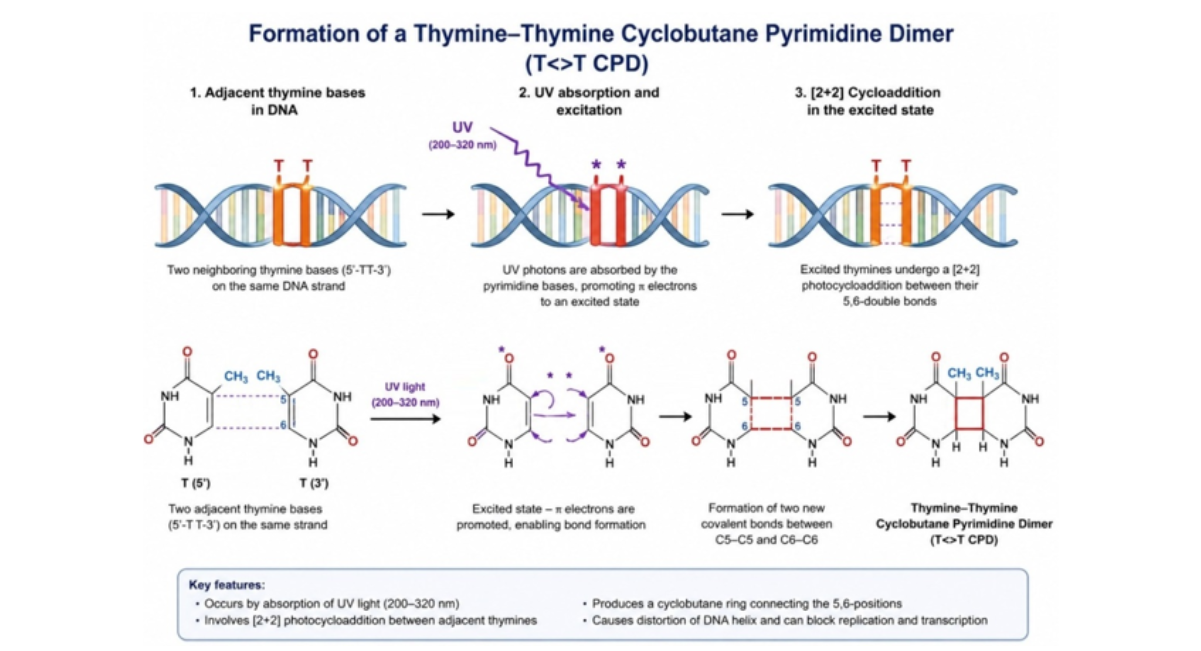
Figure 4: Photochemical formation of a thymine–thymine cyclobutane pyrimidine dimer (T<>T CPD) in DNA.
The figure illustrates the molecular mechanism by which ultraviolet (UV) radiation induces the formation of a thymine–thymine cyclobutane pyrimidine dimer (CPD), the most common DNA photolesion produced by solar UVB radiation. Two adjacent thymine bases on the same DNA strand absorb UV photons and become electronically excited. The excited C5=C6 double bonds subsequently undergo a [2+2] photocycloaddition, forming two new carbon–carbon bonds and generating a four-membered cyclobutane ring that covalently links the neighboring pyrimidines. This photochemical reaction distorts the normal DNA double-helical structure, interferes with DNA replication and transcription, and, if not efficiently repaired by photolyase or nucleotide excision repair, can lead to mutations characteristic of UV-induced skin damage and carcinogenesis. The reaction shown here represents the destructive counterpart of the same fundamental photochemical [2+2] cycloaddition that is exploited in nature and synthetic chemistry to generate cyclobutane-containing natural products, illustrating the dual role of sunlight as both a creator of molecular diversity and a source of genetic variation.
The occurrence of cyclobutane chemistry in both DNA photolesions and selected natural metabolites illustrates two distinct ways in which sunlight can influence biological systems. At the genetic level, UV radiation generates DNA lesions that may produce mutations when they escape repair and are replicated. Most UV-induced mutations in human skin occur in somatic cells and contribute to photoaging or carcinogenesis rather than heritable biological diversity. However, mutations arising in transmissible cellular lineages can contribute to population-level genetic variation on which natural selection may act [89-94]. At the chemical level, photochemical reactions can generate or modify molecular structures, including selected cyclobutane-containing compounds, thereby expanding the chemical diversity available to biological systems. Nevertheless, many natural cyclobutanes are produced through light-independent enzymatic pathways, and their occurrence should not automatically be attributed to direct photochemical synthesis.
Figure 5: Structure of the cis-syn thymine–thymine cyclobutane pyrimidine dimer (CPD).
The figure shows the chemical structure of the cis-syn thymine–thymine cyclobutane pyrimidine dimer (T<>T CPD), the predominant DNA photolesion produced by ultraviolet (UVB) irradiation. Absorption of UV light induces a [2+2] photocycloaddition between the C5=C6 double bonds of two adjacent thymine bases on the same DNA strand, generating a four-membered cyclobutane ring (highlighted in blue). Formation of this covalent linkage distorts the local DNA double-helical structure, interferes with DNA replication and transcription, and, if unrepaired, can result in characteristic UV-induced mutations associated with photoaging and skin carcinogenesis. In most organisms, CPDs are removed by photolyase-mediated photoreactivation or nucleotide excision repair. This lesion represents the destructive counterpart of the same fundamental photochemical reaction that forms cyclobutane-containing natural products, illustrating the dual role of sunlight as both a generator of molecular diversity and a source of genetic variation during evolution.
This duality supports a cautious view of sunlight as both a generator of molecular change and an environmental selective pressure [92-94]. Solar radiation can alter genomes through DNA photochemistry, transform metabolomes through direct or sensitized reactions, and favor organisms possessing effective photoprotective, antioxidant, repair, or stress-response mechanisms. Evolution acts primarily on organisms and their heritable biochemical capacities rather than directly selecting isolated molecular structures. Within this framework, cyclobutane provides a useful conceptual bridge connecting photochemical bond formation, UV-induced DNA damage, biosynthetic innovation, and biological adaptation. This relationship is also relevant to cosmetic photoprotection because it distinguishes direct DNA photolesions from oxidative damage and emphasizes that effective skin protection may require complementary strategies targeting photon absorption, reactive oxygen species, inflammation, and cellular repair responses.
Cyclobutane in Medicinal Chemistry and Cosmetic Molecular Design
The structural diversity of naturally occurring cyclobutanes has been paralleled by the increasing use of the four-membered ring in medicinal chemistry [16,17,88-91]. Cyclobutane is a valuable design element because it can modify molecular shape, conformational behavior, lipophilicity, metabolic susceptibility, and the spatial presentation of functional groups. Its growing use should not, however, be interpreted as evidence that cyclobutane is universally advantageous. The effects of its introduction depend on the complete molecular structure and the requirements of the intended biological target.
Medicinal chemists use cyclobutane rings to restrict conformational freedom, increase molecular three-dimensionality, and position pharmacophoric groups in defined orientations. Preorganization of a ligand may reduce the conformational-entropy penalty associated with binding, although improved affinity or selectivity must be demonstrated experimentally for each compound [95-97]. Cyclobutane can also serve as a replacement for aromatic or other cyclic groups, reducing molecular planarity and altering solubility, lipophilicity, membrane permeability, and metabolic stability. These effects are context-dependent: introduction of a cyclobutane ring may improve one property while adversely affecting another.
Cyclobutane-containing candidates have been investigated for cancer, inflammatory and metabolic diseases, viral infections, central nervous system disorders, and neurodegenerative conditions [16,17,88,95]. These applications demonstrate the versatility of the scaffold but do not establish that it was selected through a single evolutionary process. A more cautious interpretation is that natural-product biosynthesis and rational molecular design have independently exploited some of the same physicochemical characteristics, particularly conformational restriction and controlled three-dimensionality.
These design principles may also be relevant to cosmetic and trichological research. Cyclobutane-containing molecules could potentially be optimized to interact with enzymes or receptors involved in inflammation, pigmentation, extracellular-matrix degradation, oxidative-stress responses, or microbial growth. Modifying molecular rigidity and lipophilicity may also influence retention in the stratum corneum, penetration into viable epidermis, accumulation within follicular pathways, or deposition on the hair shaft. In addition, cyclobutane-containing fragrance or botanical constituents may contribute to the sensory and biological properties of natural cosmetic preparations.
However, the requirements for cosmetic ingredients differ from those for systemic pharmaceuticals. Cosmetic candidates must remain stable during manufacture and prolonged storage, tolerate exposure to oxygen, heat, UV radiation, and visible light, and remain compatible with surfactants, emulsifiers, preservatives, packaging materials, and other formulation components. Because many products are repeatedly applied to large skin areas, even weak irritation, sensitization, phototoxicity, or accumulation may become important. Metabolic stability may be advantageous for surface retention but undesirable if it increases persistence or delays elimination.
Cyclobutane-containing natural products and synthetic analogues should therefore undergo a staged evaluation that includes physicochemical characterization, photostability and oxidation studies, identification of degradation products, reconstructed-skin and hair-fiber testing, dermal and follicular penetration measurements, microbiome-selectivity assessment, and toxicological evaluation. Controlled human studies are ultimately required before claims concerning photoprotection, anti-aging, barrier support, scalp health, or hair protection can be substantiated.
The convergence of natural-product chemistry and rational molecular design makes cyclobutane a useful source of structural inspiration [17,89,90,94,97]. Its principal value lies not in an assumed intrinsic biological superiority but in the capacity of the four-membered ring to tune molecular geometry and physicochemical behavior. This structure-based perspective may support the development of new pharmaceutical compounds as well as carefully evaluated cosmetic and trichological ingredients.
Cyclopentane (C5): A Stable and Adaptable Platform for Biological Complexity
Cyclopentane occupies a distinct physicochemical region between the highly strained three- and four-membered rings and the comparatively stable six-membered ring. It possesses substantially lower strain energy than cyclopropane and cyclobutane and greater conformational flexibility, while retaining sufficient geometric constraint to support stereoselective molecular interactions [98-100]. These characteristics have made cyclopentane a widely used scaffold in natural products involved in signaling, defense, metabolism, and physiological regulation.
Cyclopentane should not be regarded as a discrete chronological stage in a linear evolution of carbocyclic compounds. Five-membered rings arise through diverse and independently evolved biosynthetic pathways, and their abundance reflects a favorable combination of biosynthetic accessibility, structural stability, conformational adaptability, and functional versatility. Cyclopentane-containing metabolites include both specialized defensive compounds and potent regulatory molecules. Their biological roles are therefore broader than a simple transition from environmental adaptation to multicellular signaling.
Chemistry of the Cyclopentane Ring
The strain energy of cyclopentane is approximately 6–7 kcal mol⁻¹, representing a marked decrease relative to cyclobutane. A planar five-membered ring would exhibit extensive eclipsing interactions, but cyclopentane minimizes torsional strain by adopting nonplanar envelope and half-chair conformations [98-100]. These conformations interconvert rapidly through a process often described as pseudorotation.
This conformational mobility allows substituents to occupy different spatial orientations while the ring preserves sufficient constraint to maintain stereochemical information. Such a balance can facilitate adaptation to different enzyme, receptor, membrane, or protein-binding environments. However, conformational flexibility does not invariably improve binding. In some cases, a bioactive conformation represents only a small fraction of the accessible ensemble, and the energetic cost of adopting that conformation may reduce affinity. Biological activity therefore depends on substitution pattern, stereochemistry, fusion with other rings, and interactions with the molecular target [99,100].
Cyclopentane can also be incorporated into fused, bridged, spirocyclic, or oxygenated molecular systems. Ring fusion may substantially restrict its conformational behavior, as occurs in steroids and many terpenoids. Oxidation to cyclopentanones, introduction of hydroxyl or epoxide groups, and attachment of unsaturated side chains can further alter polarity, redox behavior, membrane affinity, and biological activity.
These properties are relevant to cosmetic science because conformational adaptability and stereochemical organization influence interactions with inflammatory mediators, enzymes involved in pigmentation and extracellular-matrix turnover, lipid membranes, and sensory receptors. Nevertheless, the cyclopentane ring itself does not confer antioxidant, anti-inflammatory, or skin-protective activity. Such effects must be demonstrated for each complete molecule or standardized extract.
Distribution in Nature
Cyclopentane-containing natural products are widely distributed across plants, animals, fungi, bacteria, and marine organisms and occur in both primary and secondary metabolic pathways [101-103]. Major examples include prostaglandins and related prostanoids, iridoids, steroids, terpenoids, and numerous specialized lipid-derived metabolites.
Prostaglandins contain a cyclopentane or substituted cyclopentanoid core and form a major family of locally acting lipid mediators. They regulate inflammation, vascular tone, platelet activity, smooth-muscle contraction, reproduction, pain, and immune responses. Small differences in side-chain structure, oxidation state, and stereochemistry can produce major changes in receptor selectivity and physiological activity [99-103]. Prostaglandins therefore demonstrate the capacity of a cyclopentane scaffold to support highly specific biological signaling. However, their potency and broad physiological effects generally make them pharmacologically active substances rather than conventional cosmetic ingredients.
Iridoids constitute another important class of cyclopentanoid natural products. These plant metabolites commonly contain a cyclopentane ring fused to an oxygen-containing six-membered ring and often occur as glycosides. They participate in defense against herbivores and microorganisms, and selected iridoids or iridoid-rich extracts exhibit anti-inflammatory, antioxidant, antimicrobial, wound-related, or cytoprotective effects in experimental systems [104,105]. Their cosmetic potential is of interest, but chemical instability, hydrolysis, botanical variability, limited skin-permeation data, and insufficient clinical evidence remain important constraints.
The cyclopentane ring also forms the D-ring of the characteristic steroid nucleus, which additionally contains three fused six-membered rings. This framework occurs in cholesterol, steroid hormones, bile acids, phytosterols, and numerous plant and microbial steroids [7,8,106-109]. Vitamin D compounds derive from steroid precursors but are secosteroids in which one ring of the original steroid skeleton has been cleaved. Within intact steroids, the five-membered D-ring contributes to overall molecular shape, side-chain orientation, receptor recognition, and metabolic transformation.
Steroids are especially relevant to skin and hair biology. Cholesterol is an essential component of the epidermal lipid barrier, while endogenous steroid hormones influence sebaceous activity, inflammation, pigmentation, dermal structure, and hair-follicle cycling. Phytosterols and selected steroidal natural products are investigated for barrier-supporting and anti-inflammatory applications. Nevertheless, compounds capable of interacting with androgen, estrogen, glucocorticoid, mineralocorticoid, or other steroid receptors require careful safety evaluation because endocrine activity may be undesirable in cosmetic products.
Cyclopentane rings also occur in many mono-, sesqui-, di-, and triterpenoids. These compounds contribute to plant aroma, pigmentation, defense, signaling, and adaptation. Some are present in essential oils and botanical extracts used in fragrances, skin-care products, and scalp preparations. Their practical value depends on concentration, stability, odor profile, allergenic potential, and the composition of the complete extract.
The broad occurrence of cyclopentane-containing metabolites demonstrates the architectural versatility of the five-membered ring. It does not, however, imply that these structurally diverse compounds share a common biological activity or cosmetic function.
Physiological and Potential Cosmetic Functions
Cyclopentane-containing natural products participate in signaling, hormonal regulation, inflammation, defense, metabolism, and cellular differentiation [7,104-107]. Although regulatory functions are particularly prominent, many cyclopentanoid metabolites also serve ecological or structural roles.
Prostanoids provide the clearest examples of cyclopentane-based cellular signaling. Prostaglandins regulate inflammation, vascular homeostasis, smooth-muscle activity, pain, fever, reproduction, and immune function through specific receptors. In skin, prostanoid pathways contribute to erythema, inflammation, wound responses, pigmentation, epidermal homeostasis, and hair-follicle biology [110-112]. These pathways are relevant to cosmetic research, but direct manipulation may produce complex or unwanted effects. Inhibition or activation of one prostanoid pathway cannot be assumed to provide a uniformly beneficial cosmetic outcome.
Cyclopentane-containing terpenoids and iridoids participate in plant development, defense, and communication. Selected compounds exhibit antioxidant, anti-inflammatory, antimicrobial, or enzyme-modulating effects that could be relevant to photoaging, barrier disruption, uneven pigmentation, or scalp imbalance [104-112]. Much of the available evidence, however, is derived from chemical assays, cultured cells, animal models, or complex extracts. Direct effects on human skin or hair under realistic formulation conditions remain insufficiently characterized.
Steroidal cyclopentane-containing molecules have particularly important physiological roles. Steroid hormones regulate reproduction, metabolism, electrolyte balance, immune responses, stress physiology, sebaceous-gland activity, and hair growth. Cholesterol and related sterols contribute to membrane organization and epidermal-barrier function. Phytosterols may support barrier repair or modulate inflammation, but their efficacy depends on purity, delivery, concentration, and compatibility with other physiological lipids.
These functions create both opportunities and safety concerns. Compounds that influence inflammation, steroid receptors, prostanoid signaling, or follicular biology may produce biological effects at relatively low concentrations. Cosmetic evaluation must therefore address endocrine activity, reproductive toxicity, irritation, sensitization, phototoxicity, systemic exposure, and interactions with medications. “Natural” origin does not establish suitability for repeated topical use.
For hair and scalp applications, potential areas of research include modulation of inflammatory pathways, maintenance of scalp-barrier lipids, control of selected microorganisms, protection against oxidative injury, and effects on follicular signaling. Claims regarding stimulation of hair growth require particularly strong evidence because changes in hair cycling develop slowly and can be influenced by age, hormones, nutrition, disease, and medication. In vitro enzyme inhibition or follicular-cell responses alone cannot substantiate a clinical hair-growth claim.
Evolutionary and Translational Significance
The widespread occurrence of cyclopentane-containing metabolites illustrates the functional versatility made possible by relatively low strain, conformational mobility, and stereochemical organization [105-111]. These properties support structures ranging from locally acting lipid mediators to plant defensive metabolites and complex steroidal frameworks.
Cyclopentane should not be described as the first carbocyclic system devoted to regulation or as a necessary evolutionary step between cyclobutane and cyclohexane. Cyclopropane- and cyclobutane-containing metabolites can also participate in signaling, while cyclopentane-containing compounds frequently contribute to defense and environmental adaptation. The relationship between ring size and function is therefore probabilistic rather than absolute.
A more defensible evolutionary interpretation is that the five-membered ring offers a particularly useful balance of structural stability and conformational adaptability. Independent biosynthetic pathways have repeatedly exploited this balance to generate compounds capable of selective molecular recognition and functional diversification [103-107]. The success of cyclopentane reflects the biological utility of complete molecular architectures rather than natural selection acting on an isolated ring size.
This perspective also informs cosmetic and trichological development. Cyclopentane-containing natural products provide promising leads for anti-inflammatory, barrier-supporting, antimicrobial, pigmentation-related, and hair- or scalp-directed applications. At the same time, their potent signaling and hormonal activities demand greater caution than is often applied to botanical ingredients. Future studies should prioritize chemical standardization, stereochemical characterization, mechanism-specific assays, skin and follicular penetration, formulation stability, endocrine screening, toxicological assessment, and controlled clinical evaluation.
Cyclopentane therefore occupies an important position in the comparative framework of this review not as a chronological evolutionary stage, but as a chemically stable and conformationally adaptable scaffold capable of supporting both specialized ecological functions and complex physiological regulation.
Cyclohexane (C6): A Widely Used Biological Scaffold
Among small carbocyclic systems, cyclohexane provides one of the most favorable combinations of low strain, conformational adaptability, and stereochemical organization [113-115]. Unlike three- and four-membered rings, an isolated cyclohexane ring can adopt conformations in which bond angles approach the preferred tetrahedral value and torsional strain is minimized. Six-membered carbocyclic rings are consequently widespread in steroids, terpenoids, cyclitols, polyketides, and numerous other natural products involved in membrane organization, signaling, defense, metabolism, and molecular recognition [102-106,113,114].
Cyclohexane should not be described as the culmination or endpoint of a linear evolutionary progression. Six-membered rings did not necessarily arise after smaller carbocycles, and natural selection does not operate toward a predetermined structural optimum. Instead, multiple biosynthetic pathways have repeatedly generated six-membered carbocyclic frameworks because their low strain and adaptable three-dimensional geometry are compatible with many biological functions. Their abundance reflects functional versatility rather than evolutionary superiority.
It is also essential to distinguish cyclohexane-containing compounds from ordinary carbohydrates. Pyranose sugars contain five carbon atoms and one oxygen atom in the ring and are therefore heterocyclic, not carbocyclic. True six-membered carbocyclic carbohydrate analogues include cyclitols, such as myo-inositol, and carbasugars in which the ring oxygen of a sugar is replaced by carbon. This distinction is necessary for an accurate classification of carbocyclic natural products.
Chemistry of the Cyclohexane Ring
The structural stability of cyclohexane derives primarily from its conformational behavior. Rather than existing as a planar hexagon, the ring preferentially adopts the chair conformation, in which carbon–carbon–carbon bond angles approach the tetrahedral value and adjacent bonds are largely staggered [116-119]. This arrangement minimizes both angle and torsional strain, making the chair form substantially more stable than the boat conformation.
Cyclohexane can also adopt twist-boat, boat, and half-chair geometries, although these generally possess higher energy. Ring inversion interconverts two chair conformations and exchanges axial and equatorial positions while preserving the connectivity and relative stereochemistry of substituents [116,118]. Substituents usually favor equatorial positions when steric interactions make axial placement energetically unfavorable. In fused and highly substituted natural products, however, conformational behavior may be restricted, and the preferred geometry depends on ring junctions, functional groups, and intermolecular interactions.
This combination of low strain and controlled conformational mobility provides a versatile platform for biological recognition. Cyclohexane-containing compounds can maintain stable three-dimensional frameworks while adjusting the orientations of substituents to interact with enzymes, receptors, transport proteins, membranes, or other molecular targets. Ring fusion, unsaturation, oxidation, and substitution can further tune rigidity, polarity, lipophilicity, and reactivity.
Low strain does not mean that cyclohexane derivatives are chemically inert. Their reactivity depends on attached functional groups, allylic or benzylic activation, oxidation state, stereochemistry, and enzymatic environment. Hydroxylation, ketone formation, epoxidation, dehydrogenation, and oxidative cleavage can transform six-membered carbocyclic natural products into compounds with markedly different biological properties.
These structural features are relevant to cosmetic formulation. Many cyclohexane-containing terpenoids, sterols, triterpenoids, and cyclitols possess physicochemical properties that favor interaction with skin lipids, proteins, sensory receptors, or hair surfaces. However, their practical behavior depends on the entire molecule. Lipophilic derivatives may exhibit good surface retention but poor aqueous solubility, whereas polyhydroxylated cyclitols may be water-soluble but penetrate the stratum corneum only weakly.
Distribution in Nature
Six-membered carbocyclic rings are widely distributed in plants, animals, fungi, bacteria, and marine organisms [102-106]. They occur most prominently in steroids and terpenoids but are also found in cyclitols, alkaloids, polyketides, aromatic natural products, and many mixed biosynthetic structures.
Steroids contain three fused six-membered carbocyclic rings and one five-membered ring. Cholesterol, phytosterols, steroid hormones, bile acids, and numerous microbial and marine steroids derive from this conserved polycyclic framework [7,8,10,102-106]. Vitamin D compounds arise from steroid precursors but are secosteroids in which one ring has undergone cleavage. Steroidal ring fusion and substituent stereochemistry determine overall molecular shape, membrane behavior, metabolic transformation, and receptor recognition.
Terpenoids constitute another major source of six-membered carbocyclic structures. Numerous mono-, sesqui-, di-, and triterpenoids contain cyclohexane, cyclohexene, or oxygenated six-membered carbocyclic rings. These compounds contribute to plant defense, communication, pigmentation, aroma, membrane regulation, and hormone biosynthesis [119,120]. Many occur in essential oils, oleoresins, waxes, and botanical extracts used in fragrances, skin-care formulations, and scalp preparations.
Cyclitols are genuine carbocyclic analogues of sugars. Inositols and related polyhydroxylated cyclohexanes occur in plants, microorganisms, and animals, where they participate in signaling, osmotic regulation, membrane-lipid metabolism, and stress responses. Their high hydroxyl-group content distinguishes them physicochemically from lipophilic steroids and terpenoids despite their shared six-membered carbon ring.
Pentacyclic and tetracyclic triterpenoids, including numerous plant-derived compounds investigated in dermatological and cosmetic research, contain multiple six-membered carbocyclic rings. Selected members exhibit anti-inflammatory, antioxidant, wound-related, antimicrobial, or extracellular-matrix-modulating activity in experimental models. However, poor water solubility, limited skin penetration, botanical variability, and insufficient clinical evidence often restrict their translation.
The abundance of six-membered carbocyclic natural products demonstrates the compatibility of this framework with diverse biosynthetic pathways and biological functions. It does not indicate that cyclohexane is a universally preferred scaffold, nor does it imply that compounds sharing this ring possess similar activities.
Physiological and Cosmetic Functions
Cyclohexane-containing natural products participate in membrane organization, endocrine regulation, cellular signaling, molecular recognition, energy metabolism, defense, and environmental adaptation [102-106,121,122]. Their functions arise from complete molecular architectures rather than from the six-membered ring alone.
Sterols provide important examples of structural and regulatory roles. Cholesterol modulates membrane order and serves as a precursor of steroid hormones, bile acids, and vitamin D. In the epidermis, cholesterol is a major component of the extracellular lipid matrix that supports barrier integrity and limits transepidermal water loss. Topical lipid systems containing cholesterol, ceramides, and fatty acids can support barrier restoration when their composition and proportions are appropriately controlled. Phytosterols and related natural products may also exhibit anti-inflammatory or barrier-supporting effects, although efficacy depends on formulation, purity, concentration, and delivery.
Steroid hormones demonstrate the capacity of fused cyclohexane–cyclopentane frameworks to support highly specific receptor recognition. They regulate metabolism, immune responses, sebaceous activity, pigmentation, connective tissue, and hair-follicle cycling. These effects are biologically important but also raise safety concerns. Natural or synthetic compounds with estrogenic, androgenic, glucocorticoid, or mineralocorticoid activity should not be treated as routine cosmetic ingredients without appropriate endocrine and systemic-exposure assessment.
Cyclohexane-containing terpenoids and triterpenoids contribute to chemical defense and signaling in plants and other organisms. Selected compounds display antioxidant, anti-inflammatory, antimicrobial, soothing, sensory, or wound-related activities. Some six-membered terpenoid structures also contribute fragrance or cooling properties. These activities may be useful in skin-care or scalp-care formulations, but essential-oil constituents and their oxidation products can cause irritation or sensitization in susceptible individuals.
Cyclitols participate in intracellular signaling, osmotic regulation, and membrane-phospholipid metabolism. Myo-inositol and related compounds have been investigated in skin- and hair-related contexts, but their topical efficacy requires further clarification. High aqueous solubility does not guarantee penetration to viable epidermal or follicular targets, and formulation strategies may be necessary to achieve effective delivery.
Molecular recognition is another major function of six-membered carbocyclic systems, but it should not be attributed to “cyclohexane-based carbohydrates” in general. Ordinary carbohydrates are oxygen-containing heterocycles. Instead, stereochemically defined cyclitols, carbasugars, steroids, and terpenoids interact selectively with enzymes, receptors, transport proteins, antibodies, and membrane components. Such interactions may regulate inflammation, pigmentation, extracellular-matrix turnover, microbial growth, and cellular stress responses.
For cosmetic and trichological applications, potential benefits include epidermal-barrier support, modulation of inflammation and oxidative stress, protection of extracellular-matrix components, control of selected microorganisms, sensory effects, and possible influences on scalp or follicular biology. These claims require compound-specific evidence. Chemical antioxidant assays, molecular docking, or observations from crude extracts are insufficient without validation in relevant skin, scalp, follicular, or hair-fiber models.
Evolutionary and Translational Significance
The widespread occurrence of six-membered carbocyclic rings reflects their low strain, conformational adaptability, and ability to support diverse substitution patterns [119-122]. These properties have allowed independent biosynthetic pathways to generate steroids, terpenoids, cyclitols, and other natural products with structural, regulatory, defensive, and metabolic functions.
Cyclohexane should not be characterized as the final stage of carbocyclic evolution or as evidence that maximum thermodynamic stability produces maximum biological complexity. Highly stable scaffolds are valuable for persistent structural and recognition functions, but strained rings can provide specialized reactivity that six-membered rings cannot reproduce. Biological versatility arises from the interaction of ring geometry with functional groups, stereochemistry, biosynthetic context, and molecular environment.
The comparison developed in this review is therefore functional rather than chronological. Cyclopropane frequently supports specialized membrane and defensive functions; cyclobutane provides conformational restriction and context-dependent reactivity; cyclopentane combines moderate flexibility with regulatory versatility; and cyclohexane offers a low-strain framework for numerous structural, metabolic, and recognition processes. These are predominant tendencies, not exclusive rules.
This distinction is important when translating natural-product chemistry into cosmetic science. Six-membered carbocyclic scaffolds occur in many compounds with promising skin- and hair-related properties, but structural abundance does not establish efficacy. Development requires characterization of the active compound, stereochemistry, dose, mechanism, photostability, oxidation products, skin or follicular penetration, formulation compatibility, irritation and sensitization potential, endocrine activity, and clinical performance.
Taken together, the four ring systems illustrate how differences in strain, geometry, flexibility, and substitution can influence biological function. Sunlight and other environmental pressures may have contributed to the retention of protective or adaptive biochemical pathways, but the available evidence does not support a universal linear progression from C3 to C6. A comparative structure–property framework provides a more scientifically defensible basis for understanding carbocyclic natural products and evaluating their potential cosmetic and trichological applications.
Comparative Evolutionary Analysis
The preceding sections demonstrate that carbocyclic ring systems cannot be regarded simply as structural variants differing only in carbon number. Each ring size occupies a distinct region of physicochemical space defined by strain energy, molecular geometry, conformational flexibility, stereochemical organization, and substitution capacity. These characteristics influence but do not independently determine biosynthetic accessibility, chemical reactivity, molecular recognition, metabolic stability, and biological function [119,123].
The comparison from cyclopropane to cyclohexane should not be interpreted as a chronological evolutionary progression. Available evidence does not demonstrate that three-membered rings preceded four-, five-, and six-membered carbocycles or that biological evolution advanced toward progressively larger and more stable rings. Instead, these frameworks arose through diverse biosynthetic pathways and were retained in particular molecular contexts when the resulting metabolites contributed to organismal fitness. The series is therefore best understood as a comparative physicochemical continuum.
Environmental pressures, including solar radiation, temperature, oxidative stress, nutrient availability, pathogens, herbivores, and ecological competition, have influenced the evolution of metabolic pathways. Sunlight can generate or transform molecules through photochemical reactions and can impose selection on organisms through UV-induced DNA damage, oxidative stress, and tissue injury. However, natural selection acts primarily on organisms and their heritable biosynthetic, protective, and repair capacities rather than directly on isolated carbocyclic rings. Each ring system consequently occupies a characteristic region of biological chemical space, but its contemporary distribution reflects the combined effects of chemistry, biosynthesis, ecology, and evolutionary history (Figure 6).
Cyclopropane represents the highly strained and conformationally restricted limit of this comparison [75-79]. Its compact geometry and unusual bonding can support specialized functions such as modification of bacterial membrane properties, resistance to selected environmental stresses, and chemical defense. Despite its high strain energy, cyclopropane is not intrinsically unstable under physiological conditions. Many cyclopropane-containing compounds are kinetically persistent. Their relatively restricted distribution is more appropriately attributed to specialized biosynthetic requirements and lineage-specific functions than to ring instability alone.
Cyclobutane retains substantial strain but provides a larger, puckered scaffold with limited conformational mobility [16-22]. This geometry can constrain substituents in arrangements favorable for selective molecular recognition. Cyclobutane-containing natural products participate in diverse ecological and physiological processes, including defense, signaling, antimicrobial interactions, and other specialized functions. Selected members exhibit antioxidant, anti-inflammatory, or cytoprotective activities, but these properties cannot be generalized to the cyclobutane ring itself. Its repeated occurrence in phylogenetically distant organisms indicates independent biosynthetic recruitment rather than proof of a single evolutionary pathway or universal adaptation to UV radiation.
Cyclopentane possesses substantially lower strain and greater conformational mobility. Its envelope and half-chair conformations allow adaptation to different molecular environments while preserving stereochemical organization [98-103]. These characteristics support diverse compounds, including prostaglandins, iridoids, terpenoids, and the five-membered D-ring of steroids. Cyclopentane-containing metabolites participate in signaling, inflammation, hormonal regulation, defense, and metabolic control. Their regulatory importance does not imply that cyclopentane evolved exclusively for multicellular signaling, because many five-membered-ring metabolites also perform ecological and defensive functions.
Cyclohexane provides a low-strain framework capable of adopting a stable chair conformation while retaining controlled conformational adaptability [113-121]. Six-membered carbocyclic rings occur extensively in steroids, terpenoids, cyclitols, carbasugars, polyketides, and other natural products involved in membrane organization, molecular recognition, signaling, and metabolism. Ordinary pyranose carbohydrates should not be included in this category because their rings contain oxygen and are therefore heterocyclic. True carbocyclic carbohydrate-related examples include cyclitols and carbasugars.
The comparison summarized in Table 2 reveals a clear physicochemical trend: ring strain generally decreases from cyclopropane to cyclohexane, while conformational mobility tends to increase. The biological trend is less absolute. Smaller strained rings frequently occur in specialized adaptive or defensive molecules, whereas five- and six-membered rings are more extensively represented in regulatory and metabolic compounds. Considerable overlap nevertheless exists, and no ring size is restricted to a single functional category.
These structure–property relationships are also relevant to cosmetic science and trichology. Cyclopropane and cyclobutane scaffolds may offer conformational restriction, membrane interactions, or specialized antimicrobial activity. Cyclopentane-containing iridoids, terpenoids, prostanoid-related molecules, and steroids may affect inflammation, signaling, pigmentation, or follicular biology. Cyclohexane-containing sterols, triterpenoids, terpenes, and cyclitols may support barrier function, antioxidant defense, sensory effects, or molecular recognition. In every case, activity depends on the complete molecule, concentration, stereochemistry, delivery system, and biological context.
Physicochemical optimization should therefore not be presented as the sole force directing carbocyclic evolution. Natural-product diversity also reflects historical contingency, enzyme evolution, genetic drift, pathway duplication, ecological interactions, and the availability of biosynthetic precursors. A scientifically defensible interpretation is that ring size creates different structural opportunities and constraints, while evolutionary processes determine how particular organisms exploit those possibilities.
Accordingly, Figure 6 and Table 2 should be interpreted as comparative structure–property models rather than literal evolutionary timelines. Their purpose is to illustrate how ring strain, rigidity, conformational behavior, and chemical persistence can influence predominant biological roles and potential cosmetic applications without implying a predetermined progression from C3 to C6.
Figure 6: Evolutionary map of carbocyclic chemistry and functional differentiation of natural products.
This conceptual diagram illustrates the proposed evolutionary progression of carbocyclic natural products from simple carbon chemistry to specialized biological functions. Nature has generated carbocyclic frameworks of different ring sizes, each possessing characteristic physicochemical properties determined by ring strain, molecular geometry, and conformational flexibility. Among these, the four-membered cyclobutane ring occupies a unique evolutionary position, having been independently selected and repeatedly reinvented across plants, fungi, bacteria, marine organisms, and animals. This repeated emergence reflects its exceptional balance between structural rigidity and controlled chemical reactivity, enabling diverse physiological functions including chemical defense, molecular recognition, intercellular communication, and adaptation to ultraviolet radiation. These evolutionary innovations have subsequently inspired modern applications in medicinal chemistry and cosmetic science, illustrating how natural selection has optimized carbocyclic molecular architectures for biological performance over geological time. The figure summarizes the central hypothesis of this review that functional differentiation of carbocyclic natural products reflects long-term evolutionary selection acting on molecular architecture, with cyclobutane representing a pivotal scaffold linking photochemistry, biological adaptation, and modern molecular design.
|
Property |
Cyclopropane (C3) |
Cyclobutane (C4) |
Cyclopentane (C5) |
Cyclohexane (C6) |
|
Ring strain |
Very high |
High |
Moderate |
Low |
|
Molecular rigidity |
Very high |
High |
Moderate |
Moderate |
|
Conformational flexibility |
Very low |
Low |
Moderate |
High |
|
Photochemical origin |
Rare |
Common |
Rare |
Rare |
|
Dominant biological specialization |
Specialized |
Very high |
Broad |
Universal |
|
Principal evolutionary role |
Environmental adaptation |
Adaptive diversification |
Physiological regulation |
Structural and metabolic foundation |
Table 2: Comparative evolutionary characteristics of the four principal carbocyclic ring systems
Within this comparative framework, cyclobutane occupies a particularly informative position. Although it contains only four carbon atoms and retains substantial strain energy, its puckered geometry and kinetic stability permit incorporation into structurally complex natural products [124,125]. Cyclobutane-containing metabolites display diverse ecological and biological activities, but available evidence does not establish that their functional diversity exceeds that of cyclopentane-containing compounds. It is therefore more appropriate to describe cyclobutane as a distinctive physicochemical compromise between conformational restriction, strain, and chemical persistence rather than as a universal evolutionary optimum.
Cyclobutane also provides a useful connection between several areas considered in this review. Photochemical [2+2] cycloaddition can generate four-membered rings in selected natural products and produces cyclobutane pyrimidine dimers in UV-exposed DNA. Light-independent biosynthetic pathways have independently generated numerous additional cyclobutane-containing metabolites, while medicinal chemistry uses the same scaffold to control molecular shape and pharmacophore orientation. These observations demonstrate convergent use of cyclobutane chemistry but do not establish that it represents a pivotal chronological stage in carbocyclic evolution.
The repeated occurrence of the cyclobutane framework in phylogenetically distant organisms probably reflects multiple independent biosynthetic events followed by retention of particular metabolites when they provided ecological or physiological advantages. Such advantages arise from the complete molecular architecture including functional groups, stereochemistry, oxidation state, and molecular environment rather than from the four-membered ring alone. Similarly, its growing use in medicinal and cosmetic molecular design reflects its capacity to modify three-dimensionality, rigidity, lipophilicity, and metabolic behavior, all of which remain context-dependent.
Taken together, the comparison supports a general structure–function principle: carbocyclic ring size is more than a structural descriptor because it influences strain energy, geometry, conformational behavior, and substituent orientation. These properties help shape molecular function but do not determine it independently. Functional differentiation results from the interaction of molecular architecture with biosynthetic history, biological targets, ecological conditions, and natural selection.
Sunlight represents one environmental factor within this broader process. It can generate molecular transformations, damage biological structures, and favor organisms possessing effective protective or repair mechanisms. However, it should not be presented as the sole or principal selector of every carbocyclic framework. A more defensible conclusion is that solar radiation, together with oxidative stress, ecological competition, metabolic constraints, and lineage-specific biosynthetic innovation, contributed to the diversification and retention of selected carbocyclic natural products.
Photooxidation of Carbocyclic Natural Products: From Molecular Damage to Functional Diversification and Cosmetic Stability
Photochemical formation of carbocyclic frameworks represents only one aspect of the interaction among sunlight, natural products, and biological evolution. After their biosynthesis, carbocyclic compounds may undergo direct photochemical transformation or indirect oxidation initiated by light-generated reactive oxygen species (ROS) [1,16,126-128]. Relevant oxidants include singlet oxygen, hydroxyl radicals, superoxide-derived species, hydrogen peroxide, lipid-derived peroxyl radicals, and excited photosensitizers. Their formation and reactivity depend on wavelength, oxygen availability, endogenous or exogenous chromophores, metal ions, antioxidants, and the surrounding molecular environment.
Photooxidation can produce hydroxylated, epoxidized, carbonylated, hydroperoxidized, endoperoxidized, or ring-opened derivatives (Figure 7). Dioxetanes and other short-lived intermediates may also form in particular photochemical systems. However, these reactions should not be treated as a single universal pathway. Some oxygenated natural products are generated through highly regulated enzyme-catalyzed biosynthesis, whereas others arise through nonenzymatic photooxidation, autoxidation, metabolism, environmental weathering, or degradation during extraction and storage [129-134]. Distinguishing among these origins is essential when interpreting biological function.
Oxidation is likewise not inherently constructive or destructive. Controlled enzymatic oxygenation can generate signaling molecules, hormones, defense compounds, and metabolites with new biological activities. In contrast, uncontrolled oxidation may destroy active compounds, produce irritating or toxic products, impair cellular membranes, or accelerate deterioration of skin and hair. Evolution can act on organisms possessing pathways that synthesize, detoxify, compartmentalize, or repair oxidized molecules, but this does not mean that every oxidation product has been adaptively selected.
The susceptibility of a carbocyclic natural product to oxidation depends on more than ring size. Ring strain and conformational behavior can influence reaction pathways, but unsaturation, allylic or benzylic positions, functional groups, substituent stereochemistry, redox-active metals, photosensitizers, and local oxygen concentration are often more decisive. The resulting biological effects are similarly determined by the complete molecular structure, dose, localization, and target rather than by the carbocyclic ring alone.
These considerations are directly relevant to cosmetic science and trichology. Natural products incorporated into sunscreens, serums, creams, oils, scalp preparations, or hair-care formulations may be exposed repeatedly to oxygen, heat, UV radiation, visible light, water, metal contaminants, and other formulation ingredients. Photooxidation can reduce potency, change color or odor, destabilize emulsions, and generate products with different penetration, sensitization, or toxicological profiles. Conversely, controlled oxygenation may occasionally produce derivatives with useful antioxidant, anti-inflammatory, antimicrobial, or signaling activities.
Cosmetic evaluation must therefore distinguish four separate questions: whether a compound absorbs solar radiation; whether it prevents oxidation of other formulation or biological components; whether it remains chemically stable during irradiation; and whether its photoproducts are safe. A compound may show strong radical-scavenging activity in a chemical assay while remaining photolabile in a finished formulation. Likewise, an ingredient can protect bulk formulation lipids but provide little protection to viable skin or the hair cortex because it does not reach the relevant site.
For skin applications, photooxidation studies should examine effects on barrier lipids, sebum, proteins, DNA, inflammatory signaling, pigmentation, and extracellular-matrix integrity. For hair applications, relevant endpoints include oxidation of cystine, tryptophan and tyrosine residues, melanin degradation, loss of surface 18-methyleicosanoic acid, cuticle damage, discoloration, porosity, and tensile strength. Appropriate testing should combine analytical photochemistry with reconstructed-skin systems, ex vivo tissues, hair fibers, and, where justified, controlled human studies.
Oxidation of Cyclopropane (C3)Cyclopropane contains substantial strain energy, but this does not make every cyclopropane derivative intrinsically unstable or exceptionally susceptible to oxidation. Unsubstituted and many substituted cyclopropanes are kinetically persistent under physiological conditions. Oxidative ring opening generally requires an appropriate combination of electronic activation, radical generation, enzymatic catalysis, photosensitization, or strongly oxidizing conditions [135-137].
When oxidation does occur, radical or cationic intermediates may promote cleavage of a carbon–carbon bond and release ring strain, producing open-chain carbonyl compounds, alcohols, acids, hydroperoxides, or other oxygenated products. The preferred pathway depends strongly on adjacent functional groups and substituents. Activated cyclopropylcarbinyl systems, for example, may undergo rearrangement or ring opening more readily than isolated saturated cyclopropane rings.
Cyclopropane fatty acids provide a biologically important example. In bacterial membranes, conversion of an unsaturated fatty-acyl chain into a cyclopropane derivative removes a carbon–carbon double bond that would otherwise be susceptible to lipid peroxidation. Cyclopropanation may therefore increase resistance to some oxidative conditions, although the cyclopropane ring itself can be oxidized or cleaved under particular chemical or metabolic circumstances [137-140]. The net effect depends on microbial species, membrane composition, oxidant type, exposure intensity, and the presence of antioxidant defenses.
Oxidative metabolism of cyclopropane-containing natural products may produce metabolites with reduced, enhanced, or qualitatively different biological activity. Ring opening can eliminate the conformational restriction of the parent compound and expose new functional groups, whereas hydroxylation may increase polarity and facilitate elimination. Such transformations should not automatically be interpreted as adaptive membrane remodeling or controlled physiological regulation unless direct mechanistic evidence is available.
The cosmetic relevance of cyclopropane oxidation remains underexplored. Cyclopropane-containing terpenoids, fatty-acid derivatives, fragrance constituents, or botanical extracts may be incorporated into lipid-rich formulations in which oxygen and light promote gradual transformation. Oxidation products could alter odor, color, viscosity, antimicrobial activity, or dermal tolerance. Some products may become more reactive toward skin proteins and thereby increase sensitization risk.
Before cyclopropane-containing natural products are proposed as antioxidant, barrier-supporting, scalp-care, or hair-protective ingredients, their stability should be examined under realistic formulation and use conditions. Recommended studies include accelerated oxidation testing, simulated-sunlight exposure, headspace analysis of volatile products, chromatographic identification of nonvolatile photoproducts, peroxide-value monitoring, and comparison of fresh and aged formulations in irritation and sensitization assays.
Potential benefits should also be evaluated directly. Cyclopropane-containing lipids might influence membrane or surface-lipid packing, while selected metabolites could exhibit antimicrobial or anti-inflammatory effects. However, evidence from bacterial stress adaptation cannot be extrapolated directly to human epidermal lipids, scalp sebum, or hair fibers. Demonstration of cosmetic value requires compound-specific efficacy, delivery, stability, and safety data at concentrations achievable in finished products.
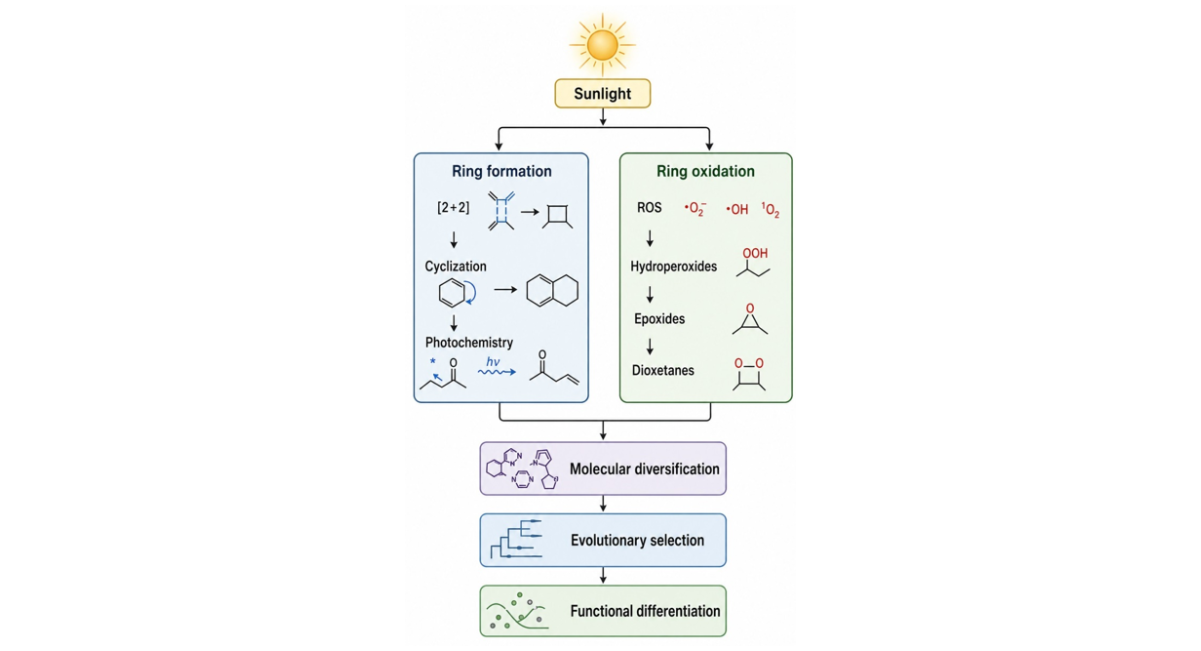
Figure 7: Dual role of sunlight in the evolution of carbocyclic natural products
Sunlight is proposed to have contributed to carbocyclic molecular evolution through two complementary photochemical pathways. On one hand, solar radiation promoted ring formation by driving photochemical cyclization reactions, including [2+2] photocycloadditions and other light-induced cyclization processes that generated strained and unstrained carbocyclic frameworks. On the other hand, sunlight initiated ring oxidation through the formation of reactive oxygen species (ROS), leading to hydroperoxides, epoxides, dioxetanes, and other oxygenated derivatives. Together, these constructive and oxidative photochemical processes greatly expanded carbocyclic chemical diversity, providing a broad repertoire of molecular scaffolds that were subsequently shaped by evolutionary selection into compounds with specialized structural, ecological, and physiological functions. This conceptual framework highlights sunlight as a major driver of both the generation and functional diversification of carbocyclic natural products throughout biological evolution.
Oxidation of Cyclobutane (C4)
Cyclobutane combines substantial ring strain with kinetic persistence under many physiological conditions. Its strain energy is only moderately lower than that of cyclopropane, and its oxidative behavior cannot be explained by ring strain alone. Susceptibility to oxidation depends strongly on substituents, unsaturation, adjacent functional groups, photosensitizers, enzymes, and the surrounding molecular environment [16,17,129-135].
Appropriately substituted cyclobutane-containing compounds can undergo hydroxylation, carbonyl formation, hydroperoxidation, or oxidative ring opening. Endoperoxides, dioxetanes, and related peroxide intermediates may form in particular unsaturated or photoexcited systems, but these pathways should not be generalized to all cyclobutane natural products. Epoxidation likewise occurs at carbon–carbon double bonds associated with the cyclobutane-containing molecule rather than at a saturated cyclobutane bond itself. Some reactions preserve the four-membered ring, whereas others produce fragmentation, rearrangement, or ring expansion.
Oxidative transformation can modify solubility, membrane affinity, target recognition, metabolic stability, and biological activity. Selected oxygenated derivatives may exhibit activities different from those of their precursors, but oxidation does not consistently enhance antioxidant, antimicrobial, anti-inflammatory, or signaling properties. It can equally cause loss of activity or generate unstable, cytotoxic, irritating, or sensitizing products. Claims of functional improvement therefore require direct comparison between chemically characterized parent compounds and oxidation products.
Oxidative diversification has been reported among selected cyclobutane-containing terpenoids, steroids, alkaloids, and lipid derivatives [128-134]. Some oxygenated products are formed enzymatically as part of regulated biosynthesis or metabolism, whereas others arise through nonenzymatic autoxidation or photooxidation. These processes must be distinguished experimentally because enzymatic oxygenation may generate a specific stereoisomer, while uncontrolled oxidation can produce complex mixtures with different biological and toxicological properties.
Cyclobutane oxidation provides a conceptual connection between constructive and destructive photochemistry [16]. Light and ROS can modify natural products, but they also damage DNA, proteins, membrane lipids, and extracellular-matrix components [27,28,93,94]. The biological outcome depends on molecular context, exposure, repair capacity, and whether the resulting products are detoxified, retained, or further metabolized.
This distinction is important in cosmetic science. Cyclobutane-containing botanical ingredients, fragrances, terpenoids, or synthetic candidates may undergo oxidation during extraction, storage, or exposure on sunlit skin and hair. Such transformations can alter odor, color, potency, solubility, and safety. Candidate ingredients should be tested in the finished formulation rather than only as isolated compounds because emulsifiers, oils, preservatives, metal contaminants, packaging, and other ingredients can influence their photochemical behavior.
Potential benefits including antioxidant, anti-inflammatory, antimicrobial, or photoprotective effects must be evaluated at realistic topical concentrations. Photostability testing should identify both transient and persistent products, while safety assessment should address irritation, sensitization, phototoxicity, genotoxicity, and effects on keratinocytes, fibroblasts, follicular cells, and skin microbiota. The presence of a cyclobutane ring alone neither ensures oxidative stability nor predicts cosmetic efficacy.
Oxidation of Cyclopentane (C5)
Oxidation of cyclopentane-containing natural products plays an important role in biological signaling and metabolic diversification. Because the five-membered ring has relatively low strain, oxidation often introduces hydroxyl, carbonyl, epoxide, or peroxide functions without cleaving the carbocyclic framework [131,141,142]. Ring opening can nevertheless occur under particular enzymatic, radical, or strongly oxidative conditions.
Prostaglandin biosynthesis illustrates how controlled oxygenation and cyclization transform polyunsaturated fatty-acid precursors into potent cyclopentanoid signaling molecules [143,144]. Cyclooxygenase enzymes first generate an endoperoxide-containing cyclic intermediate, which is subsequently converted into prostaglandins, prostacyclin, thromboxanes, and related mediators. These compounds regulate inflammation, vascular responses, pain, immune activity, reproduction, epidermal biology, and other physiological processes.
Jasmonates provide a plant example of oxidatively generated cyclopentanoid signaling compounds. Their biosynthesis proceeds from polyunsaturated fatty acids through enzymatic oxygenation, cyclization, reduction, and subsequent modification. Jasmonates regulate defense, development, wound responses, senescence, and adaptation to environmental stress [143,144]. They belong to the broader oxylipin family, but not all oxylipins contain cyclopentane rings. Oxylipins should therefore not be treated as a uniformly carbocyclic class.
Oxidation of iridoids, terpenoids, steroids, and other cyclopentane-containing natural products can likewise alter biological activity. Hydroxylation or carbonyl formation may increase polarity or enable new target interactions, whereas uncontrolled oxidation may degrade the active molecule. The effect depends on site, stereochemistry, degree of oxidation, and biological context.
Cyclopentanoid signaling is relevant to skin and hair biology. Prostanoid pathways influence inflammation, erythema, pigmentation, epidermal homeostasis, wound responses, sebaceous activity, and hair-follicle cycling. Pharmacologically active prostaglandin analogues demonstrate that cyclopentanoid signaling can affect hair growth, but such activity does not make prostaglandins conventional cosmetic ingredients. Potent receptor-mediated effects may be accompanied by local or systemic adverse reactions and require appropriate regulatory classification and clinical supervision.
Plant-derived iridoids and cyclopentanoid terpenoids may offer less pharmacologically intense approaches to antioxidant, soothing, antimicrobial, or barrier-supporting formulations. Nevertheless, evidence is often based on crude extracts, cell-free assays, or animal models. Cosmetic translation requires standardized composition, identification of active compounds, penetration data, stability testing, mechanism-specific assays, and controlled human evaluation.
Oxidation should therefore be regarded as both a biosynthetic tool and a potential degradation process. Regulated enzyme-mediated oxygenation creates specific bioactive cyclopentanoid mediators, whereas uncontrolled photooxidation in a cosmetic formulation may reduce efficacy or produce undesirable products. These two processes should not be conflated.
Oxidation of Cyclohexane (C6)
Cyclohexane-containing natural products can undergo extensive oxidative functionalization while often retaining their six-membered carbocyclic framework. Hydroxylation, ketone formation, dehydrogenation, epoxidation of associated double bonds, lactonization, and oxidative side-chain modification generate numerous derivatives with distinct physicochemical and biological properties [145-149].
In steroids, sequential enzyme-mediated oxidation produces steroid hormones, bile acids, oxysterols, and other signaling or metabolic compounds. Hydroxylation patterns and stereochemistry strongly influence receptor recognition, membrane behavior, solubility, and elimination. Vitamin D metabolites arise from secosteroids derived from steroid precursors; because one ring has been cleaved, mature vitamin D compounds should not be described simply as intact cyclohexane-containing steroids.
Terpenoids and triterpenoids also undergo extensive oxygenation. Oxidation can convert hydrocarbon precursors into alcohols, ketones, aldehydes, epoxides, acids, lactones, or peroxide derivatives with altered aroma, polarity, ecological function, and biological activity [145]. Some oxygenated terpenoids are valuable fragrance or skin-care constituents, while others can be unstable or sensitizing, particularly after air oxidation.
Ordinary carbohydrates should not be included as examples of cyclohexane oxidation because pyranose rings contain oxygen and are heterocyclic. Oxidation of glucose and related sugars produces sugar acids and uronic acids, but these transformations do not represent oxidation of a carbocyclohexane ring. Relevant carbocyclic examples include cyclitols and carbasugars, whose six-membered rings consist entirely of carbon atoms. Oxidation of cyclitols may generate ketones, acids, or other derivatives involved in metabolism and signaling [145,146].
Oxidation of six-membered carbocyclic scaffolds frequently increases functional complexity without disrupting the ring, but this is not universal. Strong oxidative conditions, metabolic activation, or prolonged photoexposure can cause cleavage, aromatization, or fragmentation. The outcome depends more strongly on functional groups and electronic activation than on ring size alone.
These reactions are highly relevant to cosmetic stability and safety. Sterols and triterpenoids used in lipid-rich formulations can form oxysterols or other oxidation products during exposure to heat, oxygen, light, or metals. Essential-oil terpenes may generate hydroperoxides and other products with greater sensitizing potential than the original compounds. Antioxidant protection of the formulation, oxygen-limiting packaging, metal chelation, appropriate pH, and light-resistant containers may therefore be necessary.
At the biological level, selected oxygenated steroids, terpenoids, triterpenoids, and cyclitols may modulate inflammation, barrier function, pigmentation, microbial growth, extracellular-matrix turnover, or cellular stress responses. However, oxidation can also generate compounds with endocrine, cytotoxic, pro-inflammatory, or sensitizing activity. Finished formulations should consequently be assessed after realistic aging and irradiation rather than only when freshly prepared.
Reactive Oxygen Species as Modifiers of Molecular Evolution and Cosmetic Performance
Reactive oxygen species are important modifiers of biological molecules and natural-product chemistry. They can introduce new functional groups, alter biological activity, initiate signaling, and expand chemical diversity. They also damage DNA, proteins, lipids, pigments, and membranes. ROS should therefore be understood as context-dependent chemical agents rather than exclusively destructive factors or inherently constructive drivers of evolution.
Sunlight contributes to oxidative chemistry principally through excitation of endogenous or exogenous photosensitizers, which transfer energy or electrons to oxygen and other substrates. Direct photochemical ring formation and indirect photooxidation are distinct processes. In some systems, light can create carbocyclic frameworks; in others, ROS modify existing molecules. Many natural-product oxygenations are instead performed by enzymes and do not require solar irradiation.
Oxidation should not be presented as a universal “second stage” of photochemical evolution. Carbocyclic scaffolds may be formed, oxygenated, reduced, rearranged, conjugated, or degraded in different sequences depending on the biosynthetic pathway. A more defensible model is that enzymatic oxygenation and nonenzymatic oxidation continually modify available molecular structures, while biological selection acts on organisms possessing heritable pathways that produce useful metabolites or limit harmful oxidative consequences [150,151].
The extensive diversity of oxygenated terpenoids, steroids, alkaloids, cyclitols, and lipid mediators reflects multiple processes: enzyme evolution, pathway duplication, substrate availability, ecological interactions, metabolism, spontaneous oxidation, and environmental photochemistry. Sunlight contributed to some of these transformations and imposed important selective pressures, but it was one factor among many.
This framework has direct implications for cosmetic science. ROS generated in skin after solar exposure contribute to lipid peroxidation, inflammatory signaling, mitochondrial dysfunction, pigment alteration, collagen degradation, elastin modification, and impairment of the epidermal barrier. In hair, oxidative processes damage keratin, cystine residues, melanin, and surface lipids, contributing to roughness, brittleness, discoloration, and reduced mechanical strength.
Carbocyclic natural products may intervene at several different levels. Some may absorb radiation, quench excited photosensitizers, scavenge radicals, chelate pro-oxidant metals, suppress inflammatory signaling, support endogenous antioxidant defenses, or protect lipid and protein structures. Others may become pro-oxidant or phototoxic under the same conditions. These mechanisms must be distinguished experimentally.
For cosmetic development, oxidative performance should be evaluated using complementary methods rather than a single chemical antioxidant assay. Appropriate studies include absorption spectroscopy, photostability testing, ROS measurements in relevant cellular models, lipid- and protein-oxidation biomarkers, assessment of DNA photolesions, inflammatory and matrix-degradation endpoints, hair-fiber analysis, and identification of formulation photoproducts. Safety testing should be conducted both before and after accelerated aging or simulated solar exposure.
Thus, photooxidation links natural-product chemistry, biological adaptation, skin aging, hair damage, and formulation stability. Its significance lies not in an assumed progression toward greater molecular sophistication but in the continuing balance among molecular generation, controlled metabolism, degradation, detoxification, and biological selection.
Future Perspectives
Carbocyclic natural products should be viewed as structurally diverse metabolites generated through biosynthetic innovation and retained within particular ecological and physiological contexts. Their contemporary distribution reflects the combined influence of molecular properties, enzyme evolution, environmental pressures, ecological interactions, and historical contingency. Although sunlight has contributed to molecular transformation and has imposed important selective pressures on exposed organisms, current evidence does not establish it as the direct or exclusive selector of individual carbocyclic scaffolds [16,130-132,152,153].
A comparative understanding of ring size, molecular geometry, conformational behavior, photochemical stability, and biological function may nevertheless provide useful principles for molecular design. Cyclopropane offers compactness and marked conformational restriction; cyclobutane combines rigidity with context-dependent strain-releasing reactivity; cyclopentane provides moderate flexibility and stereochemical organization; and cyclohexane supplies a low-strain, conformationally adaptable framework. These tendencies can guide future work in synthetic chemistry, medicinal chemistry, natural-product discovery, agriculture, cosmetic science, and trichology, provided that activity is evaluated at the level of the complete molecule rather than inferred from ring size alone.
Photochemistry-Inspired Organic Synthesis
Advances in visible-light photochemistry, photocatalysis, photosensitization, and continuous-flow technology provide powerful methods for constructing carbocyclic frameworks under relatively mild conditions. Photochemical [2+2] cycloaddition is particularly valuable for cyclobutane synthesis because it can generate molecular complexity and stereochemical organization that may be difficult to achieve through conventional thermal reactions [24-26].
Future research should focus on energy-efficient light sources, earth-abundant photocatalysts, renewable starting materials, safer solvents, improved quantum yields, and scalable flow processes. Biomimetic substrate preorganization through supramolecular assemblies, enzyme active sites, templates, membranes, or solid-state systems may further improve regio- and stereoselectivity.
For cosmetic manufacturing, “mild” photochemical synthesis should not automatically be equated with sustainable or safe production. Complete assessment requires consideration of energy consumption, catalyst recovery, solvent use, reaction selectivity, photoproduct formation, purification burden, and process scalability. Residual photocatalysts or sensitizers must also be removed or controlled because they could initiate unwanted reactions in finished formulations exposed to light.
Structure-Guided Medicinal and Cosmetic Chemistry
Natural-product biosynthesis and rational molecular design sometimes converge on similar structural solutions [16,17,24,26,89,91]. Ring size can influence rigidity, three-dimensional shape, target recognition, metabolic transformation, lipophilicity, solubility, and membrane permeability. These relationships make carbocyclic scaffolds useful design elements in medicinal chemistry and may also inform the development of cosmetic ingredients.
For topical applications, molecular optimization must address requirements that differ from those of systemic pharmaceuticals. A useful cosmetic ingredient may need to remain primarily on the skin or hair surface, penetrate only the stratum corneum, reach viable epidermal layers, or enter the follicular pathway, depending on its intended function. Molecular rigidity and lipophilicity can influence these distribution patterns, but delivery also depends on formulation composition, particle size, ionization, concentration, and interactions with skin lipids.
Structure-guided research could optimize carbocyclic compounds for inhibition of enzymes involved in extracellular-matrix degradation, modulation of inflammatory or pigmentation pathways, selective control of undesirable microorganisms, stabilization of epidermal lipids, or binding to damaged hair keratin. However, potent receptor or enzyme activity may create pharmacological or endocrine effects inconsistent with cosmetic use. Candidate selection should therefore integrate efficacy, local exposure, systemic absorption, toxicology, and regulatory classification from the beginning.
Sustainable Discovery and Production of Natural Products
Evolutionary ecology may help identify organisms that produce unusual carbocyclic metabolites. Plants, algae, fungi, bacteria, marine invertebrates, and symbiotic microorganisms living under intense solar radiation, oxidative stress, salinity, temperature extremes, herbivory, or ecological competition may contain specialized protective or defensive compounds [16,129,133,154]. These associations should be used as discovery hypotheses rather than proof that a metabolite is photoprotective.
Combining metabolomics, molecular networking, genome mining, transcriptomics, dereplication, machine learning, and pathway analysis can accelerate the discovery of new compounds and help distinguish metabolites produced by hosts from those originating in associated microorganisms. Artificial intelligence may assist with spectral annotation, activity prediction, and prioritization, but computational predictions require experimental confirmation.
Sustainable supply is essential for cosmetic translation. Destructive harvesting of rare plants or marine organisms is unsuitable for high-volume production. Future strategies should prioritize renewable plant tissues, agricultural by-products, microbial fermentation, plant-cell culture, heterologous biosynthesis, semisynthesis, and total synthesis. Standardization must account for species identity, chemotype, cultivation conditions, harvest stage, extraction method, storage, and batch-to-batch variability.
Cosmetic and Dermatological Applications
Carbocyclic natural products offer several potential applications in skin care, although evidence ranges from established use of particular ingredient classes to preliminary observations from biochemical or cellular models [1,156]. Their ecological functions may suggest useful research directions, but adaptation in a plant or microorganism cannot be directly extrapolated to efficacy in human skin.
Photoprotection and Prevention of Photoaging
Selected carbocyclic terpenoids, triterpenoids, sterols, iridoids, and related metabolites exhibit antioxidant, anti-inflammatory, or cytoprotective activity. These properties may complement conventional photoprotection by reducing ROS formation, inflammatory signaling, lipid peroxidation, mitochondrial injury, or activation of collagen- and elastin-degrading enzymes [27,30].
Such ingredients must not be described as sunscreens unless they satisfy the applicable requirements for authorized UV filters and demonstrate reproducible protection across relevant wavelengths. General antioxidant activity does not establish prevention of cyclobutane pyrimidine dimers because these DNA lesions arise predominantly through direct UV absorption. Future studies should distinguish among UV absorption, quenching of photosensitizers, radical scavenging, modulation of endogenous defenses, suppression of inflammatory responses, and actual reduction of DNA photolesions [27,30-33].
Promising candidates should be evaluated under simulated solar radiation in reconstructed human epidermis, full-thickness skin models, ex vivo skin, and controlled human studies. Relevant endpoints include CPDs, oxidative DNA damage, inflammatory mediators, matrix metalloproteinases, collagen integrity, elastin modification, pigmentation, erythema, and barrier recovery.
Antioxidant and Anti-inflammatory Skin Care
Oxidative stress and chronic low-grade inflammation contribute to visible aging, barrier dysfunction, uneven pigmentation, and reduced resilience. Carbocyclic natural products may act through direct radical scavenging, inhibition of pro-oxidant enzymes, metal chelation, activation of endogenous antioxidant pathways, or modulation of inflammatory signaling [155,156].
Chemical assays such as DPPH or ABTS provide only preliminary information and should not be treated as evidence of anti-aging efficacy. Future studies should use physiologically relevant concentrations and demonstrate effects in keratinocytes, fibroblasts, immune cells, reconstructed skin, and human subjects. Because some antioxidants become pro-oxidant under light or in the presence of metals, both dark and irradiated conditions must be evaluated.
Epidermal-Barrier Support
Sterols and other lipophilic carbocyclic compounds may support membrane organization or contribute to topical lipid systems intended to restore the epidermal barrier. Cholesterol is a physiological component of stratum-corneum lipid lamellae, but effective barrier formulations usually require an appropriate balance among cholesterol, ceramides, and fatty acids. Addition of a single sterol does not necessarily reproduce the structure or function of the native barrier [6,9,12,13,65].
Future work should assess lipid organization, transepidermal water loss, hydration, barrier recovery after disruption, and compatibility with physiological lipid mixtures. Penetration and metabolism should also be examined because some steroid-like natural products may interact with nuclear or membrane receptors.
Pigmentation and Skin-Tone Regulation
Carbocyclic terpenoids, steroids, iridoids, and related natural products may influence melanogenesis through antioxidant effects, inflammatory modulation, enzyme inhibition, receptor signaling, or changes in melanosome transfer. These mechanisms could be relevant to uneven pigmentation and post-inflammatory hyperpigmentation [6-10].
However, inhibition of tyrosinase in a cell-free assay is insufficient to establish depigmenting efficacy. Studies should examine melanocyte viability, melanin synthesis, melanosome transfer, inflammatory pathways, phototoxicity, rebound pigmentation, and effects across diverse skin phototypes. Long-term safety is especially important because excessive suppression of melanin may reduce natural photoprotection [157,158].
Antimicrobial and Microbiome-Directed Applications
Selected carbocyclic natural products exhibit antibacterial or antifungal activity and may be relevant to acne-prone skin, body odor, scalp imbalance, or preservation systems. Future development should move beyond broad antimicrobial screening toward selective modulation of clinically or cosmetically relevant microorganisms [159].
A desirable ingredient should control problematic microbial activity without causing extensive disruption of commensal communities. Studies should therefore assess minimum inhibitory concentrations, biofilm effects, resistance development, interactions with conventional preservatives, and changes in microbiome composition. Cytotoxicity toward keratinocytes and follicular cells must be evaluated at the same concentrations required for antimicrobial activity.
Trichological and Scalp Applications
The trichological potential of carbocyclic natural products remains less developed than their dermatological use and represents an important research gap. Solar radiation, pollution, heat, chemical treatments, and mechanical stress damage hair proteins, pigments, and surface lipids [160-162]. The scalp is additionally affected by sebum oxidation, inflammation, barrier disruption, and microbial imbalance.
Protection of the Hair Shaft
Lipophilic carbocyclic terpenoids, sterols, and related compounds may deposit on the hair surface, reduce friction, limit moisture loss, or protect cuticular lipids. Antioxidant or UV-absorbing compounds may help reduce melanin degradation, protein oxidation, discoloration, and loss of tensile strength [163]. However, protection demonstrated in solution does not establish deposition or persistence on hair.
Future studies should measure combing force, friction, gloss, tensile strength, cuticle morphology, porosity, protein loss, cystine oxidation, color change, and resistance to repeated washing and irradiation. Comparisons with established conditioning and UV-protective ingredients are necessary.
Scalp Barrier and Microbial Balance
Anti-inflammatory, barrier-supporting, or selectively antimicrobial carbocyclic natural products may be useful in scalp-care formulations. Relevant endpoints include scalp hydration, transepidermal water loss, erythema, itching, sebum composition, microbial balance, and user tolerance. Essential oils and terpenoids require particular caution because oxidation can increase their sensitizing potential [164].
Hair-Follicle Biology
Steroidal, prostanoid-related, and other carbocyclic compounds can influence follicular signaling, but these pathways are biologically complex and may involve pharmacological or endocrine effects. Evidence from enzyme inhibition, molecular docking, or isolated follicular cells is insufficient to support hair-growth claims [165]. Robust evaluation requires organ-cultured follicles, appropriate animal models where justified, and randomized controlled human studies covering a biologically meaningful period.
Formulation, Stability, Safety, and Clinical Translation
Poor solubility, limited penetration, volatility, oxidation, photodegradation, and incompatibility with formulation components may prevent promising carbocyclic compounds from reaching their intended targets. Delivery approaches such as emulsions, liposomes, lipid nanoparticles, cyclodextrin complexes, polymeric carriers, or encapsulation may improve stability and localization, but each system requires independent safety and performance testing.
Photostability is especially important. Candidate ingredients and finished formulations should be exposed to standardized UVA, UVB, visible-light, heat, and oxygen conditions, followed by chromatographic and spectrometric identification of degradation products. Testing only the freshly prepared parent compound may overlook sensitizing or toxic products formed during storage or use [6,9,54,62,127,128].
Safety assessment should include irritation, sensitization, phototoxicity, photoallergy, genotoxicity, reproductive and endocrine activity where structurally relevant, systemic exposure, and compatibility with the skin microbiome. Botanical extracts require additional control of pesticides, heavy metals, microbial contamination, residual solvents, and natural allergens.
Finally, clinical studies should use standardized formulations, adequate sample sizes, appropriate controls, prespecified outcomes, relevant skin and hair types, and sufficient treatment duration. This translational framework will help distinguish genuinely useful cosmetic and trichological ingredients from compounds supported only by attractive chemical structures or preliminary laboratory observations.
CONCLUSIONS
Carbocyclic natural products demonstrate how relatively small changes in ring size can produce substantial differences in molecular properties and biological performance. Cyclopropane, cyclobutane, cyclopentane, and cyclohexane differ by only one carbon atom at each step, yet they occupy distinct regions of chemical space defined by ring strain, geometry, conformational mobility, stereochemical organization, and context-dependent reactivity. These properties influence biosynthetic accessibility, molecular recognition, membrane interactions, metabolic stability, and physiological activity.
The four ring systems should not be interpreted as a chronological evolutionary sequence progressing from C3 to C6. Their present distributions reflect independent biosynthetic origins, enzyme evolution, ecological interactions, precursor availability, and lineage-specific selection. Ring size creates particular structural opportunities and constraints, but biological function is determined by the complete molecule, including its substituents, stereochemistry, oxidation state, lipophilicity, and cellular environment.
Within this comparative framework, cyclopropane frequently supports specialized membrane and defensive functions; cyclobutane provides conformational restriction, substantial strain, and photochemical relevance; cyclopentane combines moderate flexibility with extensive signaling and regulatory roles; and cyclohexane supplies a low-strain framework found widely in steroids, terpenoids, cyclitols, and other natural products. Ordinary pyranose carbohydrates are not carbocyclic because their rings contain oxygen and should therefore be distinguished from true carbocyclic compounds such as cyclitols and carbasugars.
Cyclobutane is especially informative because it connects several forms of chemistry. Photochemical [2+2] cycloaddition generates selected cyclobutane-containing compounds and also produces cyclobutane pyrimidine dimers in UV-exposed DNA. Independent light-driven and enzyme-mediated pathways have generated numerous additional natural cyclobutanes, while medicinal chemistry uses the ring to control molecular shape and pharmacophore orientation. This convergence demonstrates the structural versatility of cyclobutane but does not establish it as a universal evolutionary optimum or a pivotal chronological stage.
Sunlight has played an important but complex role in chemical and biological evolution. Solar radiation can initiate photochemical reactions, generate reactive oxygen species, damage DNA and other biomolecules, and impose environmental pressures on exposed organisms. Natural selection acts primarily on organisms and their heritable biosynthetic, protective, and repair capacities rather than directly selecting isolated molecular rings. Sunlight should therefore be regarded as one contributor together with oxidative stress, ecological competition, metabolic constraints, and biosynthetic innovation to the diversification and retention of selected carbocyclic natural products.
This perspective has direct relevance to cosmetic science and trichology. Carbocyclic terpenoids, triterpenoids, sterols, iridoids, cyclitols, and related metabolites provide leads for photoprotective, antioxidant, anti-inflammatory, antimicrobial, pigmentation-modulating, barrier-supporting, scalp-care, and hair-protective applications. Their structural properties may influence skin and follicular penetration, membrane affinity, target recognition, deposition on hair, and compatibility with delivery systems.
However, ecological protection or activity in a chemical or cellular assay does not establish cosmetic efficacy. Evidence for many proposed applications remains limited by reliance on crude extracts, inadequate chemical standardization, nonphysiological concentrations, insufficient photostability data, and a scarcity of controlled human studies. Some carbocyclic natural products may also exhibit irritation, sensitization, phototoxicity, cytotoxicity, or endocrine activity. Oxidation products formed during processing, storage, or solar exposure may differ substantially from the original ingredients in both activity and safety.
Future development should therefore integrate structural characterization, mechanism-specific biological assays, skin and follicular penetration studies, hair-fiber testing, formulation science, photochemical analysis, microbiome assessment, and comprehensive toxicology. Finished formulations should be evaluated after realistic aging and irradiation, and cosmetic claims should ultimately be supported by appropriately controlled clinical studies.
Carbocyclic natural products are valuable not because evolution has produced universally optimized ingredients, but because nature provides a chemically diverse set of molecular templates with experimentally testable structure–property relationships. A critical integration of photochemistry, natural-product chemistry, dermatology, trichology, safety science, and formulation technology can translate selected members of this chemical space into effective and responsible cosmetic innovations.
AUTHOR CONTRIBUTIONS:
Conceptualization, V.M.D.; methodology, V.M.D.; software, O.A.R. and A.O.T.; investigation, V.M.D.; resources, O.A.R. and V.M.D.; writing original draft preparation, A.O.T. and V.M.D.; writing review and editing, A.O.T. and V.M.D. All authors have read and agreed to the published version of the manuscript.
FUNDING
This research received no external funding.
INSTITUTIONAL REVIEW BOARD STATEMENT
Not applicable.
INFORMED CONSENT STATEMENT
Not applicable.
DATA AVAILABILITY STATEMENT
No new data were created or analyzed in this study. Data sharing is not applicable to this article.
REFERENCES
- Dembitsky VM, Terent'ev AO. Solar-Light-Activated Photochemical Skin Injury Induced by Highly Oxygenated Compounds of Sosnovsky's Hogweed. Photochem. 2026;6(1):7. [Crossref] [Google Scholar]
- Dembitsky VM, Terent'ev AO. Boron--Vicinal Diol Xanthophyll Complexes as Emerging Photoprotective Adjuvants. Photochem. 2026;6(2):22. [Crossref] [Google Scholar]
- Sang Y, Liu H, Umar A. Photocatalysis from UV/Vis to Near-Infrared Light: Towards Full Solar-Light Spectrum Activity. ChemCatChem. 2015;7(4):559-573. [Crossref] [Google Scholar]
- Scholes GD, Fleming GR, Olaya-Castro A, van Grondelle R. Lessons from Nature about Solar Light Harvesting. Nat Chem. 2011;3(10):763-774. [Crossref] [Google Scholar] [PubMed]
- Stroyuk O, Raevskaya A, Gaponik N. Solar Light Harvesting with Multinary Metal Chalcogenide Nanocrystals. Chem Soc Rev. 2018;47(14):5354-5422. [Crossref] [Google Scholar] [PubMed]
- Singha T, Kadam GA, Hari DP. Photocatalyzed Dowd--Beckwith Radical--Polar Crossover Reaction for the Synthesis of Medium-Sized Carbocyclic Compounds. Chem Sci. 2023;14(25):6930-6935. [Crossref] [Google Scholar] [PubMed]
- Dembitsky VM, Gloriozova TA, Poroikov VV. Antitumor Profile of Carbon-Bridged Steroids and Triterpenoids. Mar Drugs. 2021;19(6):324. [Crossref] [Google Scholar] [PubMed]
- Dembitsky VM. Steroids Bearing Heteroatoms as Potential Drugs for Medicine. Biomedicines. 2023;11(10):2698. [Crossref] [Google Scholar] [PubMed]
- Colquhoun HM, Holton J, Thompson DJ, Twigg MV. Formation of Carbocyclic Compounds. In: New Pathways for Organic Synthesis. Boston, MA, USA: Springer; 1984: Chapter 3. [Crossref] [Google Scholar]
- Dembitsky VM. Fascinating Furanosteroids and Their Pharmacological Profile. Molecules. 2023;28(14):5669. [Crossref] [Google Scholar] [PubMed]
- Granik VG. Influence of Ring Size on Properties and Reactivity of Cyclic Systems. Russ Chem Rev. 1982;51(2):119-134. [Crossref] [Google Scholar]
- Herndon JW. The Use of Fischer Carbene Complexes for the Preparation of Five-Membered Carbocyclic Rings. Tetrahedron. 2000;56(10):1257-1280. [Crossref] [Google Scholar]
- Wang MS, Wang Z, Chen W, Yang X, Zhang H. Synthesis of Oxa-Bridged Medium-Sized Carbocyclic Rings via Prins Cyclization. Org Lett. 2019;21(6):1881-1884. [Crossref] [Google Scholar] [PubMed]
- de Meijere A, Kozhushkov SI, Schill H. Three-Membered-Ring-Based Molecular Architectures. Chem Rev. 2006;106(12):4926-4996. [Crossref] [Google Scholar] [PubMed]
- Dembitsky VM. Naturally Occurring Bioactive Cyclobutane-Containing Alkaloids in Fungi, Fungal Endophytes, and Plants. Phytomedicine. 2014;21(12):1559-1581. [Crossref] [Google Scholar] [PubMed]
- Dembitsky VM. Highly Oxygenated Cyclobutane Rings in Biomolecules: Insights into Structure and Activity. Oxygen. 2024;4(2):181-235. [Crossref] [Google Scholar]
- Dembitsky VM. Bioactive Cyclobutane-Containing Alkaloids. J Nat Med. 2008;62(1):1-33. [Crossref] [Google Scholar] [PubMed]
- Pitzer KS, Donath WE. Conformations and Strain Energy of Cyclopentane and Its Derivatives. J Am Chem Soc. 1959;81(13):3213-3218. [Crossref] [Google Scholar]
- Luttrell WE, Lyiza C. Cyclohexane. J Chem Health Saf. 2010;17(4):33-34. [Crossref] [Google Scholar]
- Dunitz JD, Schomaker V. The Molecular Structure of Cyclobutane. J Chem Phys. 1952;20(11):1703-1707. [Crossref] [Google Scholar]
- Rappoport Z, Liebman JF. The Chemistry of Cyclobutanes. Chichester, UK: John Wiley & Sons; 2005. [Crossref] [Google Scholar]
- Protić-Sabljić M, Tuteja N, Munson PJ, Hauser J, Kraemer KH, Dixon K. UV Light-Induced Cyclobutane Pyrimidine Dimers Are Mutagenic in Mammalian Cells. Mol Cell Biol. 1986;6(10):3349-3356. [Crossref] [Google Scholar] [PubMed]
- Vink AA, Roza L. Biological Consequences of Cyclobutane Pyrimidine Dimers. J Photochem Photobiol B. 2001;65(2-3):101-104. [Crossref] [Google Scholar] [PubMed]
- Poplata S, Tröster A, Zou YQ, Bach T. Recent Advances in the Synthesis of Cyclobutanes by Olefin [2+2] Photocycloaddition Reactions. Chem Rev. 2016;116(17):9748-9815. [Crossref] [Google Scholar] [PubMed]
- Sarkar D, Bera N, Ghosh S. [2+2] Photochemical Cycloaddition in Organic Synthesis. Eur J Org Chem. 2020;2020(10):1310-1326. [Crossref] [Google Scholar]
- Winkler JD, Bowen CM, Liotta F. [2+2] Photocycloaddition/Fragmentation Strategies for the Synthesis of Natural and Unnatural Products. Chem Rev. 1995;95(6):2003-2020. [Crossref] [Google Scholar]
- Carpenter MA, Ginugu M, Khan S, Kemp MG. DNA Containing Cyclobutane Pyrimidine Dimers Is Released from UVB-Irradiated Keratinocytes in a Caspase-Dependent Manner. J Investig Dermatol. 2022;142(12):3062-3070. [Crossref] [Google Scholar] [PubMed]
- Moirangthem R, Gamage MN, Rokita SE. Dynamic Accumulation of Cyclobutane Pyrimidine Dimers and Its Response to Changes in DNA Conformation. Nucleic Acids Res. 2023;51(11):5341-5350. [Crossref] [Google Scholar] [PubMed]
- Rodríguez-Muñiz GM, Fraga-Timiraos AB, Navarrete-Miguel M, Borrego-Sánchez A, Roca-Sanjuán D, Miranda MA, Lhiaubet-Vallet V. Reductive Photocycloreversion of Cyclobutane Dimers Triggered by Guanines. J Org Chem. 2023;88(15):10111-10121. [Crossref] [Google Scholar] [PubMed]
- Nieradko-Iwanicka B, Wysokińska K. Chemical and Physical UV Filters. Pol J Public Health. 2022;132:48-51. [Crossref] [Google Scholar]
- Řezanka T, Temina M, Tolstikov AG, Dembitsky VM. Natural Microbial UV Radiation Filters---Mycosporine-Like Amino Acids. Folia Microbiol. 2004;49(4):339-352. [Crossref] [Google Scholar] [PubMed]
- Torres A, Hochberg M, Pergament I, Smoum R, Niddam V, Dembitsky VM, et al. A New UV-B Absorbing Mycosporine with Photoprotective Activity from the Lichenized Ascomycete Collema cristatum. Eur J Biochem. 2004;271(4):780-784. [Crossref] [Google Scholar] [PubMed]
- Enk CD, Hochberg M, Torres A, Lev O, Dor I, Srebnik M, Dembitsky VM. Photoprotection by Cichorium endivia Extracts: Prevention of UVB-Induced Erythema, Pyrimidine Dimer Formation and IL-6 Expression. Skin Pharmacol Physiol. 2004;17(1):42-48. [Crossref] [Google Scholar] [PubMed]
- Cockell CS. The Ultraviolet History of the Terrestrial Planets---Implications for Biological Evolution. Planet Space Sci. 2000;48(2-3):203-214. [Crossref] [Google Scholar]
- Zahnle KJ, Walker JCG. The Evolution of Solar Ultraviolet Luminosity. Rev Geophys. 1982;20(2):280-292. [Crossref] [Google Scholar]
- Michaelian K, Simeonov A. Fundamental Molecules of Life Are Pigments Which Arose and Co-Evolved as a Response to the Thermodynamic Imperative of Dissipating the Prevailing Solar Spectrum. Biogeosciences. 2015;12(16):4913-4937. [Crossref] [Google Scholar]
- Canuto VM, Levine JS, Augustsson TR, Imhoff CL, Giampapa MS. The Young Sun and the Atmosphere and Photochemistry of the Early Earth. Nature. 1983;305(5932):281-286. [Crossref] [Google Scholar]
- Russell HN. The Solar Spectrum and the Earth's Crust. Science. 1914;39(1005):791-794. [Crossref] [Google Scholar] [PubMed]
- Zhang ZY, Dong D, Bösking T, Dang T, Liu C, Sun W, et al. Solar Azo-Switches for Effective E→Z Photoisomerization by Sunlight. Angew Chem Int Ed. 2024;63(17):e202404528. [Crossref] [Google Scholar] [PubMed]
- Alex W, Lorenz P, Henkel C, Clark T, Hirsch A, Guldi DM. Solar Energy Storage: Competition between Delocalized Charge Transfer and Localized Excited States in the Norbornadiene-to-Quadricyclane Photoisomerization. J Am Chem Soc. 2022;144(1):153-162. [Crossref] [Google Scholar] [PubMed]
- Sun W, Shangguan Z, Zhang X, Dang T, Zhang ZY, Li T. Solar Efficiency of Azo-Photoswitches for Energy Conversion: A Comprehensive Assessment. ChemSusChem. 2023;16(12):e202300582. [Crossref] [Google Scholar] [PubMed]
- Horne JE, Goldblatt C, Kump L. An Early Origin of Oxygenic Photosynthesis Delays the Great Oxidation. Philos Trans R Soc B. 2025;380(1916):20240094. [Crossref] [Google Scholar] [PubMed]
- Ruiz DG, Goldblatt C, Ahm AS. Climate Shapes the Oxygenation of Earth's Atmosphere across the Great Oxidation Event. Earth Planet Sci Lett. 2023;607:118071. [Crossref] [Google Scholar]
- Jaziri AY, Charnay B, Selsis F, Leconte J, Lefèvre F. Dynamics of the Great Oxidation Event from a 3D Photochemical--Climate Model. Clim Past Discuss. 2021;1-39. [Crossref] [Google Scholar]
- Sessions AL, Doughty DM, Welander PV, Summons RE, Newman DK. The Continuing Puzzle of the Great Oxidation Event. Curr Biol. 2009;19(14):R567-R574. [Crossref] [Google Scholar] [PubMed]
- Hart MH. The Evolution of the Atmosphere of the Earth. Icarus. 1978;33(1):23-39. [Crossref] [Google Scholar]
- Lundin R, Lammer H, Ribas I. Planetary Magnetic Fields and Solar Forcing: Implications for Atmospheric Evolution. Space Sci Rev. 2007;129(1-3):245-278. [Crossref] [Google Scholar]
- Nunn JF. Evolution of the Atmosphere. Proc Geol Assoc. 1998;109(1):1-13. [Crossref] [Google Scholar] [PubMed]
- Hoffmann N. Photochemical Reactions as Key Steps in Organic Synthesis. Chem Rev. 2008;108(3):1052-1103. [Crossref] [Google Scholar] [PubMed]
- Oelgemöller M, Hoffmann N. Studies in Organic and Physical Photochemistry---An Interdisciplinary Approach. Org Biomol Chem. 2016;14(31):7392-7442. [Crossref] [Google Scholar] [PubMed]
- Dauben WG, Salem L, Turro NJ. Classification of Photochemical Reactions. Acc Chem Res. 1975;8(2):41-54. [Crossref] [Google Scholar]
- Roth HD. The Beginnings of Organic Photochemistry. Angew Chem Int Ed Engl. 1989;28(9):1193-1207. [Crossref] [Google Scholar]
- Samadi MT, Rezaie A, Ebrahimi AA, Hossein Panahi A, Kargarian K, Abdipour H. The utility of ultraviolet beam in advanced oxidation-reduction processes: a review on the mechanism of processes and possible production free radicals. Environ Sci Pollut Res. 2024;31(6):6628-6648. [Crossref] [Google Scholar] [PubMed]
- Herrling T, Jung K, Fuchs J. UV-Generated Free Radicals in Skin and Hair: Formation, Action, Elimination and Prevention. SÖFW J. 2007;133:2-11. [Google Scholar]
- Tyrrell RM. Ultraviolet Radiation and Free Radical Damage to Skin. Biochem Soc Symp. 1995;61:47-53. [Crossref] [Google Scholar] [PubMed]
- Zhao J, Brosmer JL, Tang Q, Yang Z, Houk KN, Diaconescu PL, Kwon O. Intramolecular Crossed [2+2] Photocycloaddition through Visible Light-Induced Energy Transfer. J Am Chem Soc. 2017;139(29):9807-9810. [Crossref] [Google Scholar] [PubMed]
- Tröster A, Alonso R, Bauer A, Bach T. Enantioselective Intermolecular [2+2] Photocycloaddition Reactions of 2(1H)-Quinolones Induced by Visible Light Irradiation. J Am Chem Soc. 2016;138(25):7808-7811. [Crossref] [Google Scholar] [PubMed]
- Skubi KL, Blum TR, Yoon TP. Dual Catalysis Strategies in Photochemical Synthesis. Chem Rev. 2016;116(17):10035-10074. [Crossref] [Google Scholar] [PubMed]
- Oelgemöller M. Solar Photochemical Synthesis: From the Beginnings of Organic Photochemistry to the Solar Manufacturing of Commodity Chemicals. Chem Rev. 2016;116(17):9664-9682. [Crossref] [Google Scholar] [PubMed]
- Schultz DM, Yoon TP. Solar synthesis: prospects in visible light photocatalysis. Science. 2014;343(6174):1239176. [Crossref] [Google Scholar] [PubMed]
- Xie X, Hu Y, Cheng H. Mechanism, Kinetics, and Pathways of Self-Sensitized Sunlight Photodegradation of Phenylarsonic Compounds. Water Res. 2016;96:136-147. [Crossref] [Google Scholar] [PubMed]
- Kawabata K, Sugihara K, Sanoh S, Kitamura S, Ohta S. Photodegradation of Pharmaceuticals in the Aquatic Environment by Sunlight and UV-A, UV-B, and UV-C Irradiation. J Toxicol Sci. 2013;38(2):215-223. [Crossref] [Google Scholar] [PubMed]
- Chen Y, Liang Q, Zhou D, Wang Z, Tao T, Zuo Y. Photodegradation Kinetics, Products, and Mechanism of Timolol under Simulated Sunlight. J Hazard Mater. 2013;252-253:220-226. [Crossref] [Google Scholar] [PubMed]
- Gahman TC, Overman LE. Stereoselective Synthesis of Carbocyclic Ring Systems by Pinacol-Terminated Prins Cyclizations. Tetrahedron. 2002;58(32):6473-6483. [Crossref] [Google Scholar]
- Weber L. Statistics and Ontology of Published Small Molecule Ring Systems. Mol Inform. 2026;45(1):e70022. [Crossref] [Google Scholar] [PubMed]
- Chen Y, Rosenkranz C, Hirte S, Kirchmair J. Ring Systems in Natural Products: Structural Diversity, Physicochemical Properties, and Coverage by Synthetic Compounds. Nat Prod Rep. 2022;39(8):1544-1556. [Crossref] [Google Scholar] [PubMed]
- Dudev T, Lim C. Ring Strain Energies from Ab Initio Calculations. J Am Chem Soc. 1998;120(18):4450-4458. [Crossref] [Google Scholar]
- Bach RD, Dmitrenko O. Strain Energy of Small Ring Hydrocarbons: Influence of C--H Bond Dissociation Energies. J Am Chem Soc. 2004;126(14):4444-4452. [Crossref] [Google Scholar] [PubMed]
- Khoury PR, Goddard JD, Tam W. Ring Strain Energies: Substituted Rings, Norbornanes, Norbornenes and Norbornadienes. Tetrahedron. 2004;60(37):8103-8112. [Crossref] [Google Scholar]
- Hendrickson JB. Molecular Geometry. I. Machine Computation of the Common Rings. J Am Chem Soc. 1961;83(22):4537-4547. [Crossref] [Google Scholar]
- Hendrickson JB. Molecular Geometry. V. Evaluation of Functions and Conformations of Medium Rings. J Am Chem Soc. 1967;89(26):7036-7043. [Crossref] [Google Scholar]
- Hoffmann RW. Flexible Molecules with Defined Shape---Conformational Design. Angew Chem Int Ed Engl. 1992;31(9):1124-1134. [Crossref] [Google Scholar]
- Smurnyy YD, Elyashberg ME, Blinov KA, Lefebvre BA, Martin GE, Williams AJ. Computer-Aided Determination of Relative Stereochemistry and 3D Models of Complex Organic Molecules from 2D NMR Spectra. Tetrahedron. 2005;61(42):9980-9989. [Crossref] [Google Scholar]
- Vermeeren P, Hamlin TA, Bickelhaupt FM. Chemical Reactivity from an Activation Strain Perspective. Chem Commun. 2021;57(48):5880-5896. [Crossref] [Google Scholar] [PubMed]
- de Meijere A. Introduction: Cyclopropanes and Related Rings. Chem Rev. 2003;103(4):931-932. [Crossref] [Google Scholar]
- de Meijere A, Kozhushkov SI, Schill H. Three-Membered-Ring-Based Molecular Architectures. Chem Rev. 2006;106(12):4926-4996. [Crossref] [Google Scholar] [PubMed]
- Fowler PW, Baker J, Lillington M. The Ring Current in Cyclopropane. Theor Chem Acc. 2007;118(1):123-127. [Crossref] [Google Scholar]
- Sansinenea E, Ortiz A. The Chemistry of Cyclopropanes and New Insights into Organocatalyzed Asymmetric Cyclopropanation. Eur J Org Chem. 2022;2022(20):e202200210. [Crossref] [Google Scholar]
- Lei X, Cao X, Wang J, Li X. A Comparative Study on the Autoignition Characteristics of Cyclopropane and Propane at High Temperatures. Combust Flame. 2022;237:111881. [Crossref] [Google Scholar]
- Ma S, Mandalapu D, Wang S, Zhang Q. Biosynthesis of Cyclopropane in Natural Products. Nat Prod Rep. 2022;39(5):926-945. [Crossref] [Google Scholar] [PubMed]
- Wessjohann LA, Brandt W, Thiemann T. Biosynthesis and Metabolism of Cyclopropane Rings in Natural Compounds. Chem Rev. 2003;103(4):1625-1648. [Crossref] [Google Scholar] [PubMed]
- Fan YY, Gao XH, Yue JM. Attractive Natural Products with Strained Cyclopropane and/or Cyclobutane Ring Systems. Sci China Chem. 2016;59(9):1126-1141. [Crossref] [Google Scholar]
- Talele TT. The Cyclopropyl Fragment Is a Versatile Player That Frequently Appears in Preclinical and Clinical Drug Molecules. J Med Chem. 2016;59(19):8712-8756. [Crossref] [Google Scholar] [PubMed]
- Hanus LO, Goldshlag P, Dembitsky VM. Identification of Cyclopropyl Fatty Acids in Walnut (*Juglans regia* L.) Oil. Biomed Pap Med Fac Univ Palacky Olomouc. 2008;152(1):1-6. [Crossref] [Google Scholar] [PubMed]
- Dobson G. Cyclic Fatty Acids: Qualitative and Quantitative Analysis. In: Lipid Analysis in Oils and Fats. Boston, MA, USA: Springer; 1998:136-180. [Crossref] [Google Scholar]
- Grogan DW, Cronan JE Jr. Cyclopropane Ring Formation in Membrane Lipids of Bacteria. Microbiol Mol Biol Rev. 1997;61(4):429-441. [Crossref] [Google Scholar] [PubMed]
- Kumar A. Brief Review on Cyclopropane Analogs: Synthesis and Their Pharmacological Applications. Int J Pharm Pharm Sci. 2013;5(2):467-472. [Google Scholar]
- Hong YJ, Tantillo DJ. How Cyclobutanes Are Assembled in Nature---Insights from Quantum Chemistry. Chem Soc Rev. 2014;43(14):5042-5050. [Crossref] [Google Scholar] [PubMed]
- Yang P, Jia Q, Song S, Huang X. [2+2]-Cycloaddition-Derived Cyclobutane Natural Products: Structural Diversity, Sources, Bioactivities, and Biomimetic Syntheses. Nat Prod Rep. 2023;40(6):1094-1129. [Crossref] [Google Scholar] [PubMed]
- Yan P. Research Advances in Ladderane Lipids of Anammox Bacteria. China Environ Sci. 2023;43(7):4886-4895. [Google Scholar]
- Beniddir MA, Evanno L, Joseph D, Skiredj A, Poupon E. Emergence of Diversity and Stereochemical Outcomes in the Biosynthetic Pathways of Cyclobutane-Centered Marine Alkaloid Dimers. Nat Prod Rep. 2016;33(7):820-842. [Crossref] [Google Scholar] [PubMed]
- van der Kolk MR, Janssen MA, Rutjes FPJT, Blanco-Ania D. Cyclobutanes in Small-Molecule Drug Candidates. ChemMedChem. 2022;17(21):e202200020. [Crossref] [Google Scholar] [PubMed]
- Roca-Sanjuán D, Olaso-González G, González-Ramírez I, Serrano-Andrés L, Merchán M. Molecular Basis of DNA Photodimerization: Intrinsic Production of Cyclobutane Cytosine Dimers. J Am Chem Soc. 2008;130(32):10768-10779. [Crossref] [Google Scholar] [PubMed]
- Mitchell DL, Jen J, Cleaver JE. Sequence Specificity of Cyclobutane Pyrimidine Dimers in DNA Treated with Solar (Ultraviolet B) Radiation. Nucleic Acids Res. 1992;20(2):225-229. [Crossref] [Google Scholar] [PubMed]
- Bauer MR, Di Fruscia P, Lucas SC, Michaelides IN, Nelson JE, Storer RI, Whitehurst BC. Put a Ring on It: Application of Small Aliphatic Rings in Medicinal Chemistry. RSC Med Chem. 2021;12(4):448-471. [Crossref] [Google Scholar] [PubMed]
- Sergeiko A, Poroikov VV, Hanuš LO, Dembitsky VM. Cyclobutane-Containing Alkaloids: Origin, Synthesis, and Biological Activities. Open Med Chem J. 2008;2:26-37. [Crossref] [Google Scholar] [PubMed]
- Throup A, Zraikat MS, Gordon A, Jafarinejad Soumehsaraei S, Haase KD, Patterson LH, Sheldrake HM. Sidechain Structure--Activity Relationships of Cyclobutane-Based Small-Molecule αvβ3 Antagonists. RSC Med Chem. 2024;15(10):3616-3624. [Crossref] [Google Scholar] [PubMed]
- Kilpatrick JE, Pitzer KS, Spitzer R. The Thermodynamics and Molecular Structure of Cyclopentane. J Am Chem Soc. 1947;69(10):2483-2488. [Crossref] [Google Scholar]
- Pitzer KS, Donath WE. Conformations and Strain Energy of Cyclopentane and Its Derivatives. J Am Chem Soc. 1959;81(13):3213-3218. [Crossref] [Google Scholar]
- Tsang W. Thermal Decomposition of Cyclopentane and Related Compounds. Int J Chem Kinet. 1978;10(6):599-617. [Crossref] [Google Scholar]
- Heasley B. Recent Developments in the Stereocontrolled Synthesis of Highly Substituted Cyclopentane Core Structures: From Drug Discovery Research to Natural Product Synthesis. Curr Org Chem. 2014;18(6):641-686. [Crossref] [Google Scholar]
- Barrero AF, Quílez del Moral JF, Herrador MM, Rodríguez H, Pérez Morales MC. Cyclopentane Sesquiterpenes from Fungi: Occurrence, Bioactivity, Biosynthesis and Chemical Synthesis. Curr Org Chem. 2009;13(12):1164-1181. [Crossref] [Google Scholar]
- Zhang CL, Hao ZY, Liu YF, Wang Y, Shi GR, Jiang ZB, Yu DQ. Polycycloiridals with a Cyclopentane Ring from Iris tectorum. J Nat Prod. 2017;80(1):156-161. [Crossref] [Google Scholar] [PubMed]
- Sampaio-Santos MI, Kaplan MAC. Biosynthetic Significance of Iridoids in Chemosystematics. J Braz Chem Soc. 2001;12(2):144-153. [Crossref] [Google Scholar]
- Bai M, Xiang H, Ding K, Wei S, Wang X, Pan X, Xu J. Modification of Iridoids in Focus: Bridging Structural Complexity with Biological Innovation. Bioorg Chem. 2025;161:108519. [Crossref] [Google Scholar] [PubMed]
- Dembitsky VM. Bioactive Steroids Bearing Oxirane Rings. Biomedicines. 2023;11(8):2237. [Crossref] [Google Scholar] [PubMed]
- Dembitsky VM. Biological Activity and Structural Diversity of Steroids Containing Aromatic Rings, Phosphate Groups, or Halogen Atoms. Molecules. 2023;28(15):5549. [Crossref] [Google Scholar] [PubMed]
- Pounina TA, Gloriozova TA, Savidov N, Dembitsky VM. Sulfated and Sulfur-Containing Steroids and Their Pharmacological Profile. Mar Drugs. 2021;19(5):240. [Crossref] [Google Scholar] [PubMed]
- Dembitsky VM. Antitumor and Hepatoprotective Activity of Natural and Synthetic Neosteroids. Prog Lipid Res. 2020;79:101048. [Crossref] [Google Scholar] [PubMed]
- Straus DS, Glass CK. Cyclopentenone Prostaglandins: New Insights into Biological Activities and Cellular Targets. Med Res Rev. 2001;21(3):185-210. [Crossref] [Google Scholar] [PubMed]
- Fulghum DD. The Skin and the Prostaglandins. Arch Dermatol. 1970;102(2):225-226. [Crossref] [Google Scholar]
- Di Costanzo F, Di Dato V, Ianora A, Romano G. Prostaglandins in Marine Organisms: A Review. Mar Drugs. 2019;17(7):428. [Crossref] [Google Scholar] [PubMed]
- Beckett CW, Pitzer KS, Spitzer R. The Thermodynamic Properties and Molecular Structure of Cyclohexane, Methylcyclohexane, Ethylcyclohexane and the Seven Dimethylcyclohexanes. J Am Chem Soc. 1947;69(10):2488-2495. [Crossref] [Google Scholar] [PubMed]
- Orloff HD. The Stereoisomerism of Cyclohexane Derivatives. Chem Rev. 1954;54(2):347-447. [Crossref] [Google Scholar]
- Wiberg KB, Hammer JD, Castejon H, Bailey WF, DeLeon EL, Jarret RM. Conformational studies in the cyclohexane series. 1. Experimental and computational investigation of methyl, ethyl, isopropyl, and tert-butylcyclohexanes. J Org Chem. 1999;64(6):2085-2095. [Crossref] [Google Scholar]
- Testa B, Vistoli G, Pedretti A. Organic stereochemistry. Part 4: Isomerisms about single bonds and in cyclic systems. Helvetica Chimica Acta. 2013;96(4):564-623. [Crossref] [Google Scholar]
- Schultz AG. Enantioselective Methods for Chiral Cyclohexane Ring Synthesis. Acc Chem Res. 1990;23(7):207-213. [Crossref] [Google Scholar]
- Hassel O. Stereochemistry of Cyclohexane. Q Rev Chem Soc. 1953;7(3):221-230. [Crossref] [Google Scholar]
- Akhmetdinova N, Biktagirov I, Faizullina LK. Transformation of the Cyclohexane Ring to the Cyclopentane Fragment of Biologically Active Compounds. Beilstein J Org Chem. 2025;21:2416-2446. [Crossref] [Google Scholar] [PubMed]
- Hanssens J, Meneses D, Saya JM, Orru RVA. Terpenes and Terpenoids: How Can We Use Them?. Eur J Org Chem. 2025;28(1):e202401151. [Crossref] [Google Scholar]
- Shende VV, Bauman KD, Moore BS. The Shikimate Pathway: Gateway to Metabolic Diversity. Nat Prod Rep. 2024;41(4):604-648. [Crossref] [Google Scholar] [PubMed]
- Gribble GW. Natural Products Containing a Cyclohexane, Cyclohexene, or Cyclohexadiene Subunit. In: Rodd's Chemistry of Carbon Compounds. 2nd ed. Amsterdam, The Netherlands: Elsevier; 1991:375-445. [Google Scholar]
- Tang C, Tang Y, Ye Y, Yan Z, Chen Z, Chen L, Hong W. Identifying the Conformational Isomers of Single-Molecule Cyclohexane at Room Temperature. Chem. 2020;6(10):2770-2781. [Crossref] [Google Scholar]
- Agrofoglio LA, Challand SR. Acyclic, Carbocyclic and L-Nucleosides. Berlin/Heidelberg, Germany: Springer; 2012. [Crossref] [Google Scholar]
- Lloyd D. Topics in Carbocyclic Chemistry. Volume 1. Berlin/Heidelberg, Germany: Springer; 2012. [Google Scholar]
- Lu B, Zhao Y. Photooxidation of Phytochemicals in Food and Its Control: A Review. Ann N Y Acad Sci. 2017;1398(1):72-82. [Crossref] [Google Scholar] [PubMed]
- Ravanat JL, Douki T, Cadet J. Direct and Indirect Effects of UV Radiation on DNA and Its Components. J Photochem Photobiol B. 2001;63(1-3):88-102. [Crossref] [Google Scholar] [PubMed]
- Golimowski J, Golimowska K. UV Photooxidation as a Pretreatment Step in Inorganic Analysis of Environmental Samples. Anal Chim Acta. 1996;325(3):111-133. [Crossref] [Google Scholar]
- Dembitsky VM, Terent'ev AO. Hydroperoxides: Plant Steroids and Triterpenoids as Promising Candidates for Anti-Dementia Therapy. Oxygen. 2026;6(3):15. [Crossref] [Google Scholar]
- Dembitsky VM. Natural Polyether Ionophores and Their Pharmacological Profile. Mar Drugs. 2022;20(5):292. [Crossref] [Google Scholar] [PubMed]
- Dembitsky VM, Yaremenko IA. Stable and Unstable 1,2-Dioxolanes: Origin, Synthesis, and Biological Activities. In: Science of Synthesis: Knowledge Updates. Vol 38. Stuttgart, Germany: Thieme; 2020:277-321. [Crossref] [Google Scholar]
- Dembitsky VM, Vil VA. Medicinal Chemistry of Stable and Unstable 1,2-Dioxetanes: Origin, Formation, and Biological Activities. In: Science of Synthesis. Vol 3. Stuttgart, Germany: Thieme; 2019:333-381. [Crossref] [Google Scholar]
- Vil VA, Terent'ev AO, Savidov N, Gloriozova TA, Poroikov VV, Pounina TA, Dembitsky VM. Hydroperoxy Steroids and Triterpenoids Derived from Plants and Fungi: Origin, Structures and Biological Activities. J Steroid Biochem Mol Biol. 2019;190:76-87. [Crossref] [Google Scholar] [PubMed]
- Vil VA, Terent'ev AO, Al Quntar AAA, Gloriozova TA, Savidov N, Dembitsky VM. Oxetane-Containing Metabolites: Origin, Structures, and Biological Activities. Appl Microbiol Biotechnol. 2019;103(6):2449-2467. [Crossref] [Google Scholar] [PubMed]
- DeSain JD, Klippenstein SJ, Taatjes CA, Hurley MD, Wallington TJ. Product Formation in the Cl-Initiated Oxidation of Cyclopropane. J Phys Chem A. 2003;107(11):1992-2002. [Crossref] [Google Scholar]
- Franz AJ, Ranney JT, Gland JL, Bare SR. Oxidation of Cyclopropane with Coadsorbed Oxygen on Pt(111). Surf Sci. 1997;374(1-3):162-168. [Crossref] [Google Scholar]
- Broatch WN, McEwan AC, Tipper CFH. The Effect of the Surface on the Oxidation of Cyclopropane. Trans Faraday Soc. 1954;50:576-580. [Crossref] [Google Scholar]
- Sivanandan ST, Bharath Krishna R, Baiju TV, Mohan C. Visible-Light-Mediated Ring-Opening Reactions of Cyclopropanes. Eur J Org Chem. 2021;2021(47):6781-6805. [Crossref] [Google Scholar]
- Hoops MD, Ault BS. Matrix Isolation Study of the Photochemical Reaction of Cyclohexane, Cyclohexene, and Cyclopropane with Ozone. J Mol Struct. 2009;929(1-3):22-31. [Crossref] [Google Scholar]
- Buenker RJ, Peyerimhoff SD. Theoretical Study of the Geometry, Reactivity, and Spectrum of Cyclopropane. J Phys Chem. 1969;73(5):1299-1313. [Crossref] [Google Scholar]
- Sheps L, Dewyer AL, Demireva M, Zádor J. Quantitative Detection of Products and Radical Intermediates in Low-Temperature Oxidation of Cyclopentane. J Phys Chem A. 2021;125(20):4467-4479. [Crossref] [Google Scholar] [PubMed]
- Christianson MG, Doner AC, Koritzke AL, Frandsen K, Rotavera B. Vacuum-Ultraviolet Absorption Cross Sections of Functionalized Cyclic Hydrocarbons: Five-Membered Rings. J Quant Spectrosc Radiat Transfer. 2021;258:107274. [Crossref] [Google Scholar]
- Mosblech A, Feussner I, Heilmann I. Oxylipins: Structurally Diverse Metabolites from Fatty Acid Oxidation. Plant Physiol Biochem. 2009;47(6):511-517. [Crossref] [Google Scholar] [PubMed]
- Gabbs M, Leng S, Devassy JG, Monirujjaman M, Aukema HM. Advances in Our Understanding of Oxylipins Derived from Dietary PUFAs. Adv Nutr. 2015;6(5):513-540. [Crossref] [Google Scholar] [PubMed]
- Aliyeva AZ, Karimova UA, Yunusov SG, Vigdorowitsch M, Mammadkhanova SA. Catalytic Oxidation of Alkanes and Cycloalkanes: Overview. ChemEngineering. 2026;10(1):25. [Crossref] [Google Scholar]
- Ha X, Hua Y, Xu GQ. Photoredox-Catalyzed Nucleophilic Addition of α-Amino Radicals to Unsaturated Compounds. Chem Commun. 2025;61(84):17989-18016. [Crossref] [Google Scholar] [PubMed]
- Schuchardt U, Cardoso D, Sercheli R, Pereira R, Da Cruz RS, Guerreiro MC, et al. Cyclohexane Oxidation Continues to Be a Challenge. Appl Catal A Gen. 2001;211(1):1-17. [Crossref] [Google Scholar]
- Dhakshinamoorthy A, López-Francés A, Navalon S, Garcia H. Porous Metal--Organic Frameworks as Multifunctional Catalysts for Cyclohexane Oxidation. ChemCatChem. 2022;14(21):e202201036. [Crossref] [Google Scholar]
- Xiong L, Tang J. Strategies and Challenges on Selectivity of Photocatalytic Oxidation of Organic Substances. Adv Energy Mater. 2021;11(11):2003216. [Crossref] [Google Scholar]
- Rivera-Utrilla J, López-Ramón MV, Sánchez-Polo M, Álvarez MÁ, Velo-Gala I. Characteristics and Behavior of Different Catalysts Used for Water Decontamination in Photooxidation and Ozonation Processes. Catalysts. 2020;10(12):1485. [Crossref] [Google Scholar]
- Golimowski J, Golimowska K. UV Photooxidation as Pretreatment Step in Inorganic Analysis of Environmental Samples. Anal Chim Acta. 1996;325(3):111-133. [Crossref] [Google Scholar]
- Matsumi Y, Kawasaki M. Photolysis of Atmospheric Ozone in the Ultraviolet Region. Chem Rev. 2003;103(12):4767-4782. [Crossref] [Google Scholar] [PubMed]
- Wayne RP. The Photochemistry of Ozone. Atmos Environ. 1987;21(8):1683-1694. [Crossref] [Google Scholar]
- Dembitsky VM, Terent'ev AO. Endoperoxides: Highly Oxygenated Terpenoids with Anticancer and Antiprotozoal Activities. Compounds. 2026;6(1):7. [Crossref] [Google Scholar]
- Saewan N, Jimtaisong A. Natural Products as Photoprotection. J Cosmet Dermatol. 2015;14(1):47-63. [Crossref] [Google Scholar] [PubMed]
- Milutinov J, Pavlović N, Ćirin D, Atanacković Krstonošić M, Krstonošić V. The Potential of Natural Compounds in UV Protection Products. Molecules. 2024;29(22):5409. [Crossref] [Google Scholar] [PubMed]
- Zolghadri S, Bahrami A, Hassan Khan MT, Munoz-Munoz J, Garcia-Molina F, Garcia-Canovas F, Saboury AA. A comprehensive review on tyrosinase inhibitors. J Enzyme Inhib Med Chem. 2019;34(1):279-309. [Crossref] [Google Scholar] [PubMed]
- Kim YJ, Uyama H. Tyrosinase inhibitors from natural and synthetic sources: structure, inhibition mechanism and perspective for the future. Cell Mol Life Sci. 2005;62(15):1707-1723. [Crossref] [Google Scholar] [PubMed]
- Guimarães AC, Meireles LM, Lemos MF, Guimarães MCC, Endringer DC, Fronza M, Scherer R. Antibacterial activity of terpenes and terpenoids present in essential oils. Molecules. 2019;24(13):2471. [Crossref] [Google Scholar] [PubMed]
- Chen Y. Development of bioinformatics solutions to enable hair-based exposome research. [Doctoral dissertation]. University of British Columbia; 2023. [Google Scholar]
- Dembitsky VM, Terent'ev AO. Hydroperoxides: Plant Steroids and Triterpenoids as Promising Candidates for Anti-Dementia Therapy. Oxygen. 2026;6(3):15. [Crossref] [Google Scholar]
- Trüeb RM, Vañó-Galván S, Kopera D, Jolliffe VM, Ioannides D, Gavazzoni Dias MFR, et al. Trichologist, dermatotrichologist, or trichiatrist? A global perspective on a strictly medical discipline. Skin Appendage Disord. 2018;4(4):202-207. [Crossref] [Google Scholar] [PubMed]
- Borges CR, Roberts JC, Wilkins DG, Rollins DE. Relationship of melanin degradation products to actual melanin content: application to human hair. Anal Biochem. 2001;290(1):116-125. [Crossref] [Google Scholar] [PubMed]
- Sarkic A, Stappen I. Essential oils and their single compounds in cosmetics---A critical review. Cosmetics. 2018;5(1):11. [Crossref] [Google Scholar]
- Alanazi R, Alshammari S, Aldossari K, Alwatban R, Aljeribah D, Alanazi S, et al. Evaluating the Effectiveness of Commercial Oral Supplements for Hair Growth: A Systematic Review and Meta-Analysis. J Cosmet Dermatol. 2026;25(4):e70817. [Crossref] [Google Scholar] [PubMed]